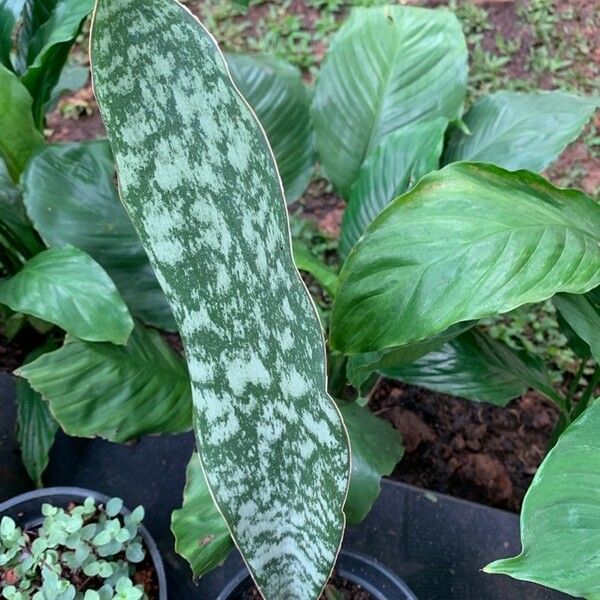
Plant Overview
Often called the African Bowstring Hemp, this rugged beauty is a wilder, more elegant cousin to the common Snake Plant. Native to Southern Africa, it has been prized for centuries not just for its striking, sword-like foliage, but for the incredibly strong fibers hidden within its leaves. It is a master of survival, perfect for busy plant parents who want a touch of the African savannah without the high-maintenance demands.
🔍 How to Identify
- 🍃 Leaf Shape: Broad, flat, and slightly leathery leaves that taper to a point, typically growing in a loose rosette pattern.
- 🎨 Mottled Patterns: The foliage features dark green surfaces decorated with pale, wavy horizontal bands that resemble ripples of water.
- 🔴 The Margin: A key identifying feature is the thin, distinct reddish-brown or hardened white border along the leaf edges.
- 🌸 Fragrant Blooms: It produces tall, slender stalks of pale green to white flowers that release a heavy, sweet scent similar to hyacinths, usually opening at night.
🏡 In Your Garden
- 🌍 Spreading Habit: This plant grows via thick underground rhizomes. While it stays contained in a pot, if planted outdoors in warm climates, it can spread to form a dense, architectural groundcover.
- 🏜️ Drought Specialist: It hates "wet feet." The most common mistake is overwatering; it prefers its soil to dry out completely, mimicking the dry, rocky slopes of its native habitat.
- 💪 Light Adaptation: While it thrives and patterns best in bright, indirect light, it is a legendary "low-light survivor," making it ideal for dim hallways or office corners.
⚠️ Safety & Toxicity
- 🐾 Toxic to Pets: Like most members of its genus, it contains saponins, which are toxic to dogs and cats.
- 🤢 Symptoms: If nibbled, it can cause drooling, nausea, vomiting, and diarrhea. It is best kept on high shelves or stands away from curious pets and toddlers.
✨ Fun Fact
As the name "Bowstring Hemp" suggests, the fibers extracted from the leaves are exceptionally strong and resilient. Historically, they were harvested and twisted into high-quality strings for hunting bows and durable fishing nets!

Detailed Care Instructions
| Humidity | Normal |
| Lighting | Full Sun |
| Difficulty | Medium |
| Temperature | 20°C - 36°C |
| Hardiness Zones | 10 - 12 |
To grow Sansevieria hyacinthoides (also known as Sansevieria Cylindrica or African Spear), you can follow these steps:
- Choose a well-draining pot: Select a pot that has drainage holes at the bottom to ensure excess water can escape. Use a pot with a diameter slightly larger than the plant's root ball.
- Soil: Sansevieria plants prefer well-draining soil. You can use a cactus or succulent potting mix or create your own mix by combining regular potting soil with perlite or sand to aid in drainage.
- Light: Sansevieria hyacinthoides thrives in bright indirect light. Place the plant in a location where it receives bright, filtered sunlight for a few hours each day, but avoid exposing it to direct sunlight.
- Watering: These plants are drought-tolerant and prefer to be slightly underwatered rather than overwatered. Allow the soil to dry out completely between waterings and then water thoroughly, ensuring the excess water drains out of the pot. Avoid letting the plant sit in standing water.
- Temperature and humidity: Sansevieria hyacinthoides are adaptable to a wide range of temperatures. Keep them in a room with temperatures between 60-85°F (16-29°C). They can tolerate low humidity levels but will benefit from occasional misting in dry environments.
- Fertilizer: Sansevieria plants do not require frequent fertilization. You can use a balanced, water-soluble houseplant fertilizer diluted to half-strength during the growing season (spring and summer) once every 2-3 months.
- Repotting: Sansevieria hyacinthoides has a slow growth rate and usually doesn't require frequent repotting. Repot only when the plant becomes root-bound or outgrows its current pot.
- Propagation: Sansevieria can be propagated through division, leaf cuttings, or rhizome cuttings. Division is the easiest method. Carefully separate the offsets from the parent plant and replant them in their own pots.
- Maintenance: Sansevieria hyacinthoides is relatively low-maintenance. Remove any dead or yellow leaves regularly to keep the plant tidy. Gently wipe the leaves with a damp cloth occasionally to remove dust and maintain their glossiness.
By following these guidelines, you can successfully grow Sansevieria hyacinthoides and enjoy its attractive, architectural appearance.

Place in a window with dappled sun or a spot in the middle of a room. Or directly in a window facing west or east.

Sansevieria Hyacinthoides plant should be watered thoroughly but only when the soil is completely dry. It is important to ensure that the water is able to drain through the pot to prevent the roots from becoming waterlogged. Overwatering can cause the plant to rot, so it is better to err on the side of under watering.
When watering the plant, pour water slowly at the base of the plant until it begins to drain from the bottom of the pot. Do not water the leaves or the center of the plant, as this can cause damage or rotting.
During the winter months, when the plant is in a dormant phase, it requires less water than during the summer months when it is actively growing. Keep the soil slightly drier during the winter months.
It is also important to pay attention to the humidity levels around the plant. Sansevieria Hyacinthoides thrives in moderate to high humidity levels. If the air is dry, consider increasing the humidity by placing a humidifier nearby or placing a tray of pebbles filled with water beneath the pot.
To properly fertilize this plant, use a balanced, water-soluble fertilizer once every month during the growing season (spring and summer). Dilute the fertilizer according to the instructions on the packaging and apply it to the soil around the base of the plant. Avoid getting fertilizer on the leaves as it can cause burning. Reduce or stop fertilizing during the plant's dormant period (fall and winter).
The ideal soil mixture for this plant should have a high proportion of sand and perlite to promote drainage as the plant does not like to sit in overly moist soil. The soil should also have a good amount of organic matter such as compost or peat moss to provide nutrients for the plant. A slightly acidic to neutral pH level is also recommended for this plant. It is important to use a well-draining soil mixture to prevent root rot and to ensure the plant thrives.
Sansevieria Hyacinthoides is a type of tropical houseplant that can be propagated through various techniques. One such technique is by using leaf cuttings, which involves taking a cutting from a mature leaf and allowing it to develop roots and new growth.
To propagate Sansevieria Hyacinthoides through leaf cuttings, select a mature leaf that is healthy and free from damage or disease. Using a clean, sharp knife or scissors, cut the leaf as close to the soil level as possible.
Next, divide the leaf into several segments, each of which should be at least 2-3 inches long and contain several nodes or bumps on the surface. Make sure to use a clean, sharp knife or scissors to avoid damaging the cutting.
Then, fill a small pot or container with well-draining soil, and make a small hole in the center. Place the cutting into the hole, making sure that the nodes are in contact with the soil.
Water the cutting lightly, and place the pot in a warm, bright location out of direct sunlight. Water the cutting regularly, but be careful not to overwater or allow the soil to become waterlogged.
Within a few weeks, the cutting should begin to develop roots and new growth. Once it has established a strong root system, it can be transplanted into a larger pot or directly into the garden.








