Plant Overview
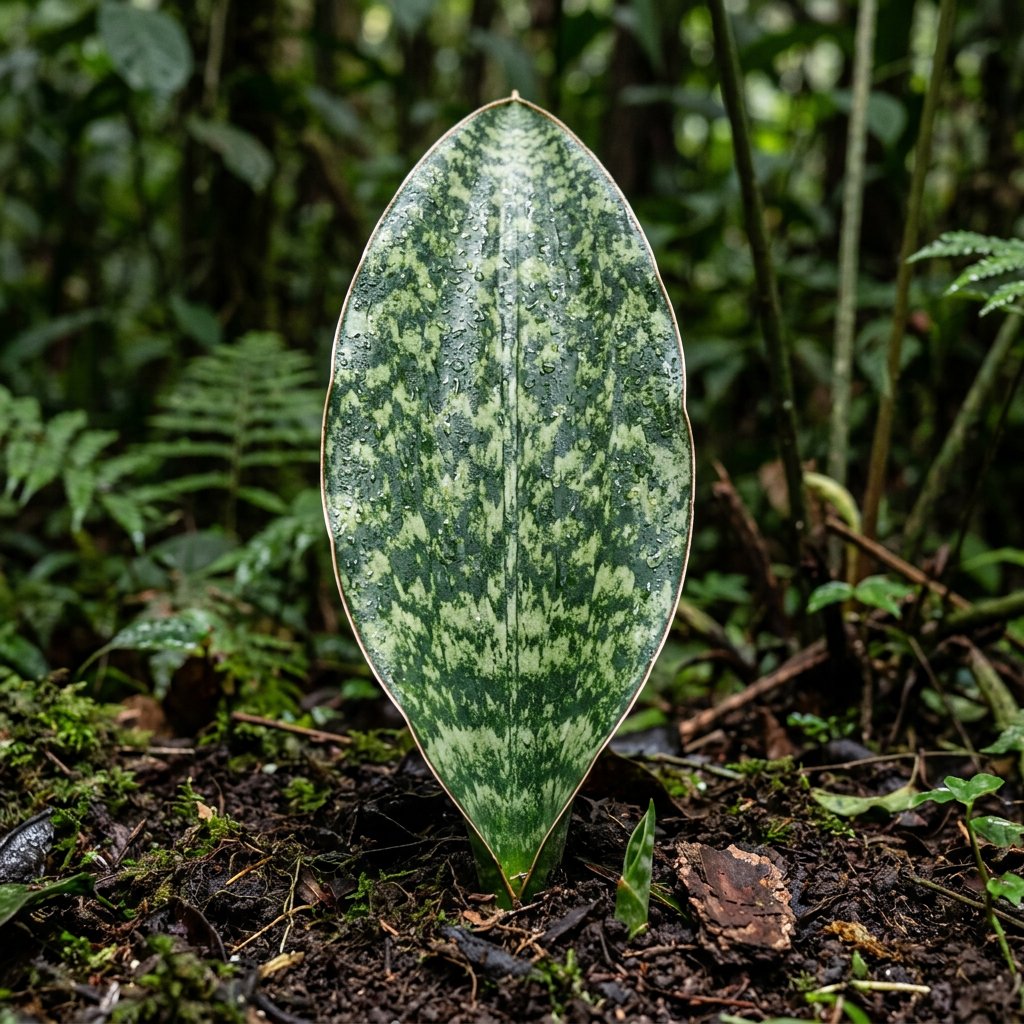
Known affectionately as the Whale Fin Snake Plant, this architectural marvel is the heavyweight champion of its genus. Named after Maurice Mason, a renowned English plant collector who discovered it in the Congo, its massive silhouette looks less like a typical houseplant and more like a breaching whale frozen in green stone. It is the ultimate "statement piece" for those who want a bold, sculptural look with almost zero maintenance.
🔍 How to Identify
- 🐳 Giant Foliage: Unlike its thin-leaved cousins, this plant produces massive, wide, paddle-shaped leaves that can reach up to 10 inches across and several feet tall.
- 🎨 Mottled Patterns: The surface is decorated with a beautiful "snake-skin" pattern of dark and light green spots, often resembling the play of light on deep-sea water.
- 🟣 Sheathed Base: New leaves emerge from a distinct purple-tinted, papery sheath at the soil line, a hallmark characteristic of this specific variety.
🏡 In Your Garden
- 🏜️ The Art of Patience: This is a notoriously slow grower. It might take a year or more to produce a new "fin," so don't be discouraged if it seems dormant; it is simply focusing its energy underground.
- 💧 Storage Master: Because the leaves are so thick and succulent, they store a massive reservoir of water. It prefers its soil to be bone-dry for weeks rather than having "wet feet," which can quickly lead to crown rot.
- ☀️ Light & Color: While it is incredibly "hard to kill" in low light, providing bright, indirect sun will help it maintain its vibrant mottling and prevent the leaf from becoming floppy.
⚠️ Safety & Toxicity
- 🐾 Mildly Toxic: Like most members of the Sansevieria (now Dracaena) family, it contains saponins, which are natural defense chemicals.
- 🤢 The Risk: If ingested by curious cats, dogs, or small children, it can cause mouth irritation, nausea, and vomiting. Its tough, fibrous texture usually discourages a second bite, but it's best kept on a sturdy stand.
✨ Fun Fact
NASA’s famous Clean Air Study highlighted Snake Plants for their ability to filter indoor toxins like formaldehyde and benzene. Even more impressive? While most plants release CO2 at night, the Whale Fin continues to produce oxygen and "breathe" through the dark hours!

Detailed Care Instructions
| Color | Greenish-White |
| Soil Ph | Slightly Acidic To Slightly Alkaline |
| Humidity | Dry |
| Lighting | Part Sun |
| Toxicity | Poisonous |
| Soil Type | Fast-Draining, Sandier Soil |
| Difficulty | Easy |
| Plant Type | Evergreen Perennial In Zones 9 Thru 11; A Houseplant In Colder Zones |
| Mature Size | 6 Inches To 12 Feet Tall |
| Native Area | Tropical West Africa |
| Temperature | 20°C - 35°C |
| Sun Exposure | Part Shade, Low Light Conditions |
| Hardiness Zones | 9-11 |
To grow a Sansevieria Masoniana plant, also known as a Whale's Fin or Shark's Fin Sansevieria, you can follow these steps:
- Choose a suitable pot: Select a pot that is slightly larger than the current root ball of the Sansevieria Masoniana plant. Ensure the pot has drainage holes to prevent waterlogging.
- Soil selection: Use well-draining soil specifically formulated for cacti and succulents. Alternatively, you can create your own potting mix by combining equal parts of potting soil, perlite, and sand for improved drainage.
- Planting: Place the Sansevieria Masoniana plant in the pot, ensuring its roots are spread out. Add the potting mix around the root ball, covering it completely. Gently press the soil to secure the plant.
- Light requirements: Sansevieria Masoniana thrives in bright, indirect light. Place the plant near a window where it can receive bright, filtered light throughout the day. Avoid placing it in direct sunlight, as it can scorch the leaves.
- Temperature and humidity: Sansevieria Masoniana prefers temperatures between 60-85°F (15-29°C). It can tolerate a wide range of humidity levels but fares best in average room humidity.
- Watering: Allow the top inch (2.5 cm) of soil to dry out between waterings. Sansevieria Masoniana is a drought-tolerant plant, so it's better to underwater than overwater. Reduce watering in winter when the plant goes into dormancy.
- Fertilizing: Use a balanced, diluted houseplant fertilizer once a month during the growing season (spring to early autumn). Follow the instructions on the fertilizer packaging for proper dilution ratios.
- Repotting: Sansevieria Masoniana doesn't require frequent repotting. Repot only when the root system becomes overcrowded, typically every 2-3 years. Choose a pot slightly larger than the current one and follow similar planting steps.
- Maintenance: Remove any yellow or dying leaves by cutting them off at the base. Wipe the leaves occasionally with a damp cloth to keep them clean and free from dust.
- Propagation: Sansevieria Masoniana can be propagated by dividing the rhizomes. When repotting, carefully separate the rhizomes and plant them in their individual pots with appropriate soil. Alternatively, leaf cuttings can be taken, allowing them to callus for a few days before planting them in moist soil.
By following these care tips, you can successfully grow a Sansevieria Masoniana plant. Enjoy the unique appearance and minimal care requirements of this striking houseplant!

Place in a window with dappled sun or a spot in the middle of a room. Or directly in a window facing west or east.

To water this plant, wait until the top inch of soil is dry and then water it thoroughly until water drains out of the bottom of the pot, allowing excess water to escape. Avoid allowing it to sit in standing water as it can lead to root rot. In addition, this plant prefers to dry out between waterings and can tolerate drought, so be cautious not to overwater it.
The Sansevieria Masoniana plant should be fertilized every other week during the growing season (spring and summer). Use a well-balanced fertilizer with equal amounts of nitrogen, phosphorus, and potassium. Dilute the fertilizer to half the recommended strength and apply it to the soil around the plant. Avoid getting fertilizer on the leaves, as this can cause burning or scorching. During the winter months, reduce fertilization to once a month or stop altogether. Be sure to water the plant before and after fertilizing to prevent damage.
The Sansevieria Masoniana plant prefers a well-draining and porous soil that is rich in nutrients. A mixture of peat, perlite, and sand is ideal for growing this plant. The soil should be slightly acidic with a pH range of 6.0 to 7.5. It is important to avoid using heavy soils that hold too much moisture as it can lead to root rot. The plant prefers to be in a pot that provides good drainage and allows air to circulate around the roots. The potting mix should be changed every 2-3 years to ensure proper nutrient uptake and to avoid overcrowding of the roots. It is also recommended to add compost or other organic matter to the soil annually to improve its quality.
To propagate this plant, you will need to carefully remove one of the smaller, healthy leaves from the mother plant. Make sure to use a sharp, sterile tool to prevent damage or infection. Once you have the leaf, leave it in a cool, dry place for a few days to callous over.
Next, fill a pot with fresh, well-draining soil and plant the leaf about an inch deep. Water the soil thoroughly, but do not soak it. Keep the soil moist but not waterlogged, and place the pot in a warm, bright area but not in direct sunlight.
After a few weeks, you should start to see small shoots emerging from the soil around the leaf. These are new plants! Continue to care for the plants as you would any other Sansevieria plant, and they should grow into healthy, mature plants over time.
Common pests of the whale fin snake plant include Scale insect. Make a habit of checking your whale fin snake plant frequently for pests so that any infestations can be caught and managed early.








