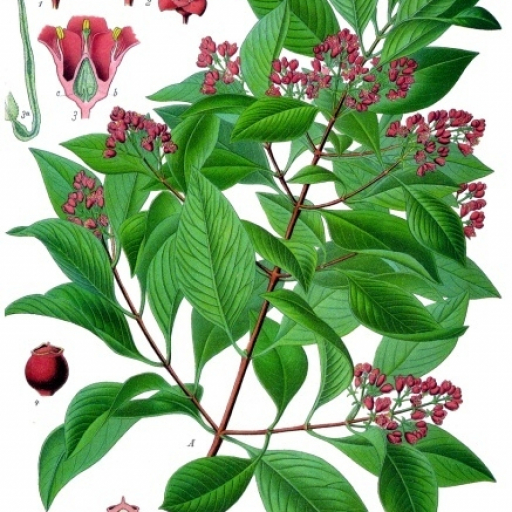
Plant Overview
Known as "Liquid Gold" in the world of perfumery, Santalum album, or Indian Sandalwood, is one of the most sacred and valuable trees on Earth. For thousands of years, its aromatic heartwood has been used in spiritual rituals, traditional medicine, and high-end fragrances. While it looks like an ordinary evergreen tree, it hides a fascinating secret: it is a "vampire" of the plant world, relying on its neighbors to survive.
🔍 How to Identify
- 🍃 The Foliage: Look for smooth, thin, lance-shaped leaves that grow in pairs directly opposite each other. They have a bright, waxy green upper surface and a paler underside.
- 🌸 Changing Blooms: It produces small, bell-shaped flowers that appear in clusters. These flowers are unique because they begin as a pale straw-yellow and gradually turn a deep, dark maroon or purple as they mature.
- 🪵 The Bark: Young trees have smooth, dark grey-brown bark, but as the tree reaches maturity, the bark becomes rough, dark, and develops deep vertical cracks.
🏡 In Your Garden
- 🔗 The "Vampire" Root: Sandalwood is a hemi-parasite. It cannot thrive alone; its roots develop special suckers called haustoria that attach to the roots of neighboring plants to steal water and nutrients. If you plant one, it must have a "host" plant (like Acacia or Hibiscus) nearby.
- ⏳ Patience is Key: This is a legacy plant. It takes nearly 15 to 20 years for the tree to begin developing the fragrant heartwood that makes it famous. It prefers well-drained, sandy soil and hates having "wet feet" (waterlogged roots).
⚠️ Safety & Toxicity
- ✅ Safe Status: Generally considered non-toxic to humans and common household pets if touched or grown in the landscape.
- 💧 Oil Concentration: While the wood is safe, pure Sandalwood essential oil is incredibly potent. It should never be ingested and should be diluted before skin contact to avoid allergic reactions or irritation.
✨ Fun Fact
Unlike many other aromatic woods (like Cedar), Sandalwood retains its intense fragrance for decades. In fact, some Sandalwood artifacts and carvings from over 100 years ago still smell as fresh as the day they were crafted!

Detailed Care Instructions
To grow Santalum album, also known as Indian sandalwood, you will need to follow these steps:
- Seed selection: Obtain high-quality Santalum album seeds from a reputable source. Ensure they have been collected from fully matured and healthy sandalwood trees.
- Nursery setup: Create a well-draining nursery bed or potting mix consisting of equal parts perlite, sand, and organic compost. Plant the seeds at a depth of approximately 1 inch (2.5 cm) in the soil. Water the soil lightly to keep it moist but not waterlogged.
- Germination: The germination period for sandalwood seeds can be quite long, often taking up to two years or more. Ensure the nursery bed or potting mix remains moist throughout this period to enhance germination. Some growers also employ the technique of soaking the seeds in water for 24 hours before planting to speed up the germination process.
- Transplanting: Once the seedlings have grown to a height of around 8-12 inches (20-30 cm) and developed a well-established root system, they can be transplanted into larger pots or directly into the ground. Ensure that the soil in the new location is well-draining and rich in organic matter.
- Care and maintenance: Sandalwood plants require a warm, tropical climate with high humidity. Provide partial shade to protect them from direct sunlight. Water the plants regularly, aiming to keep the soil consistently moist but not waterlogged. Ensure that the plants receive regular fertilization with nitrogen-rich organic fertilizers.
- Pruning and training: As the sandalwood plants grow, it is important to prune and train them to develop a well-branched structure. This will promote better growth and higher yield of heartwood, which is the valuable part of the sandalwood tree.
- Pest and disease control: Monitor the plants regularly for any signs of pests or diseases such as scale insects or root rot. Utilize organic pest control methods, such as neem oil or insecticidal soap, to control pests if necessary. Ensure proper drainage and avoid overwatering to prevent root rot.
- Patience: Growing sandalwood is a long-term investment, as it takes approximately 15-20 years for the trees to reach maturity and produce heartwood suitable for harvesting. Be patient and persistent in caring for your sandalwood plants.
Remember to research and comply with any local regulations and permits required for growing sandalwood in your area, as some regions have restrictions due to its endangered status in the wild.

Place in a bright room that is sun drenched almost all day. Or directly in a south-facing window.

To water this plant properly, you should take care not to overwater it. The soil should be allowed to dry out slightly between waterings. When you do water, be sure to water deeply, so that the roots receive enough moisture. Avoid watering the foliage, as this could promote diseases. You may want to use a drip irrigation system or a watering can with a narrow spout to ensure that the water is applied directly to the soil. It is also important to ensure good drainage, as these plants do not like to sit in water. Finally, be sure to monitor the plant for signs of stress, such as wilting or yellowing leaves, as this could indicate a need for more water.
To fertilize this plant, use a balanced fertilizer with an NPK ratio of 6-6-6 or 8-8-8. Apply the fertilizer once every three months during the growing season, which is from spring to early fall. Avoid over-fertilizing this plant as it can cause leaf burn and damage to the roots. Water the plant before and after fertilizing to prevent fertilizer burn.
The ideal soil for Santalum Album plant is a nutrient-rich, well-draining and slightly acidic soil. It should have good water holding capacity and be able to retain moisture without becoming waterlogged. The soil should also have good aeration to ensure the proper health of the root system. Additionally, the soil should be free from any contaminants, pests, or diseases that can affect the growth of the plant. To maintain soil health, it's recommended to fertilize with organic matter or slow-release fertilizers. Lastly, it's important to avoid using heavy clay or compacted soils that can hinder root growth and lead to poor plant development.
To propagate this plant, collect mature seeds when the fruits of the plant begin to turn brown. Soak the seeds in water for about a day before sowing them in a well-draining potting mix. Place the pot in a warm, partially shaded location and water regularly. The seeds should begin to sprout within 2-3 months. Alternatively, the plant can be propagated by taking cuttings from established plants, dipping the cuttings in rooting hormone, and planting them in moist soil. Keep the cuttings in partial shade and keep the soil moist until roots develop.








