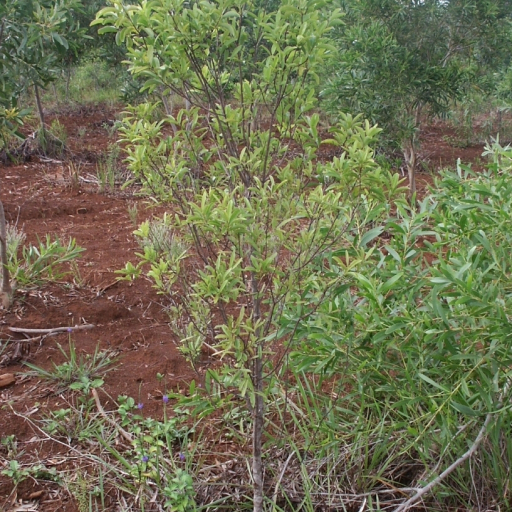
Plant Overview
Known as the New Caledonian Sandalwood, this precious evergreen is often referred to as "liquid gold" by the perfume industry. Native to the islands of New Caledonia and Vanuatu, it is celebrated for its incredibly creamy, woody fragrance that is considered among the finest in the world. Unlike most plants, this sandalwood has a "vampiric" nature, living a secret double life below the soil.
🔍 How to Identify
- 🍃 Leathery Foliage: The leaves are typically oval or lance-shaped with a glossy, leathery texture that helps the plant retain moisture in tropical breezes.
- 🌸 Color-Changing Blooms: It produces small, star-shaped flowers that emerge a pale yellowish-green before maturing into a deep, moody purple or red.
- 🍒 Fleshy Fruit: After flowering, it grows small, round fruits (drupes) that turn a dark purple or black when they are fully ripe.
🏡 In Your Garden
- 🌳 The Root Thief: This tree is a "hemiparasite," meaning it cannot survive alone. It must attach its roots to a "host" plant (like grasses or legumes) to steal water and nutrients to thrive.
- ☀️ Slow and Steady: It is a very slow grower that prefers well-drained, slightly acidic soil and plenty of sunshine. Because of its root system, it does not like being moved once established.
⚠️ Safety & Toxicity
- 🟢 Generally Safe: New Caledonian Sandalwood is not considered toxic to humans or common household pets through touch or proximity.
- 🐕 Essential Oil Caution: While the plant is safe, the concentrated essential oil extracted from the wood is very potent. Keep concentrated oils away from cats and dogs, as their livers cannot process certain aromatic compounds.
✨ Fun Fact
The New Caledonian Sandalwood doesn't start producing its famous fragrant oil until it is at least 15 to 20 years old! The scent is concentrated in the "heartwood," the very center of the trunk, which acts as a natural chemical defense against fungi and insects.

Detailed Care Instructions







