Plant Overview
Often called the Mountain Sandalwood or 'Iliahi, this Hawaiian treasure is as legendary as it is fragrant. Found primarily on the Big Island, it was once so abundant that China referred to Hawaii as the "Sandalwood Mountains." This slow-growing evergreen is famous for its precious heartwood oil, which has been used for centuries in incense, medicine, and perfumery.
🔍 How to Identify
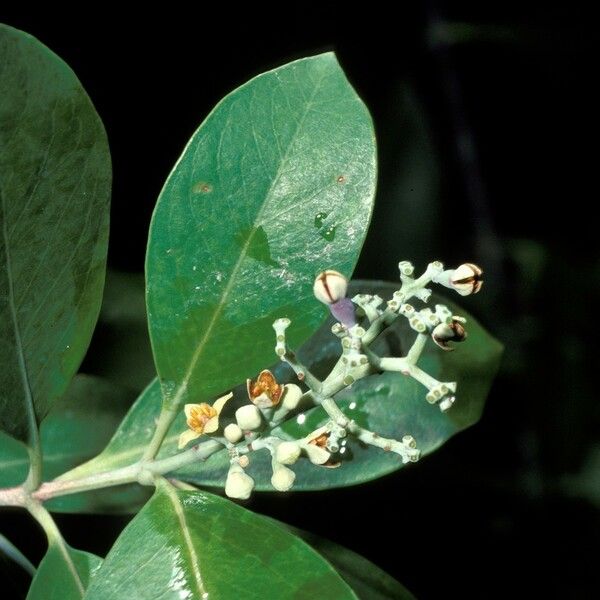
- 🍃 The Foliage: Look for leathery, oval-shaped leaves that grow in opposite pairs. They often have a slightly glossy sheen and can vary from bright green to a muted olive tone.
- 🌸 The Blooms: It produces small, cluster-like flowers that are shaped like tiny bells. These blooms start as a pale green or peach color and deepen into a rich, burnt orange or crimson as they mature.
- 🫐 The Fruit: After flowering, the plant develops small, fleshy drupes that turn a dark purple or black when ripe, appearing almost like tiny plums.
- 🪵 The Bark: On older specimens, the bark is rough and dark gray, hiding the intensely aromatic, pale yellow heartwood inside.
🏡 In Your Garden
- 🔗 The "Vampire" Root: One of the most fascinating aspects of Sandalwood is that it is a hemiparasite. It doesn't grow well alone; it uses specialized roots called haustoria to "plug into" the roots of neighboring plants (like Koa trees or native grasses) to steal water and minerals.
- ⛰️ Elevation & Soil: In its native habitat, it thrives in volcanic soil and can handle various altitudes. If you are trying to cultivate it, you must provide it with a "host" plant nearby, or it will likely wither despite your best watering efforts.
- ⏳ Patience is Key: This is not a plant for those seeking instant gratification. It grows incredibly slowly, taking decades to develop the fragrant heartwood that makes the species so famous.
⚠️ Safety & Toxicity
- ✅ Status: Generally non-toxic to humans and pets.
- 🧴 Skin Sensitivity: While the plant itself is safe, the concentrated essential oil extracted from the wood is very potent. It should always be diluted before skin contact to avoid irritation, and it is not meant for internal consumption.
✨ Fun Fact
In the early 19th century, the sandalwood trade was so intense that King Kamehameha I eventually had to place a "taboo" (protection) on the young trees to save the species from total extinction after the mountains were nearly stripped bare for export!

Detailed Care Instructions
Santalum paniculatum, also known as the Hawaiian sandalwood plant, can be grown successfully in a variety of conditions. Here are some tips on how to grow and care for this plant:
- Location: Choose a location that receives bright, indirect sunlight. The plant can also tolerate some shade.
- Soil: Use well-draining, sandy soil with a slightly acidic pH (around 6.0-7.0).
- Watering: Water the plant regularly, keeping the soil evenly moist but not waterlogged. Allow the top inch of soil to dry out before watering again.
- Fertilization: Fertilize the plant with a balanced fertilizer once a month during the growing season (spring and summer).
- Pruning: Prune the plant to promote healthy growth and shape the plant as desired.
- Pests and diseases: Keep an eye out for pests such as aphids, scale insects, and spider mites. Treat infestations promptly with insecticidal soap or neem oil. Watch for any signs of disease, such as leaf spot or root rot, and take appropriate measures to control them.
- Propagation: Hawaiian sandalwood plants can be propagated from seeds or cuttings. Seeds should be scarified before planting to improve germination rates.
- Climate: Hawaiian sandalwood plants thrive in warm, tropical climates. If you live in a cooler climate, consider growing the plant in a greenhouse or indoors.
By following these tips, you can successfully grow and care for Santalum paniculatum, the Hawaiian sandalwood plant. Enjoy the beautiful foliage and fragrant sandalwood scent that this plant has to offer.
Santalum paniculatum plants need to be watered thoroughly but infrequently. It is important to let the soil dry out slightly between waterings to prevent root rot. Water the plant at the base, making sure not to wet the leaves. Use room temperature water to avoid shocking the plant. It is recommended to use a well-draining soil mix to prevent water from pooling around the roots. Additional humidity can be provided by misting the plant occasionally. Overall, it is important to monitor the plant's watering needs and adjust accordingly based on the environment and season.
To fertilize the plant, apply a balanced fertilizer with an N-P-K ratio of 10-10-10 during the growing season. Apply the fertilizer around the base of the plant, avoiding direct contact with the roots. Water the plant thoroughly after fertilizing to help the nutrients penetrate the soil. Repeat this process every 4-6 weeks during the growing season. Be sure to follow the manufacturer's instructions for the specific fertilizer you are using. Avoid over-fertilizing, as this can damage the plant.
Santalum paniculatum is a plant that typically thrives in well-draining soil with a pH level ranging from slightly acidic to neutral. The soil should be nutrient-rich and loamy, with a good balance of sand, silt, and clay to provide adequate aeration and drainage for the roots. It is also important to ensure that the soil is moist but not waterlogged, as excessive moisture can lead to root rot. Adding organic matter such as compost or peat moss can help improve soil structure and fertility for optimal growth and development of the Santalum paniculatum plant.
Propagation of Santalum Paniculatum plants can be done through several methods, including seeds and cuttings. To propagate this plant from seeds, collect mature seeds from a healthy plant and sow them in a well-draining potting mix. Keep the soil consistently moist and provide indirect sunlight for the seeds to germinate.
Another method of propagation is through stem cuttings. Take cuttings from healthy branches of the plant and remove any lower leaves. Dip the cut end of the stem in rooting hormone and place it in a potting mix. Keep the soil moist and provide indirect sunlight for the cutting to root and establish itself.
It is important to provide proper care and attention to the propagated plants to ensure their successful growth. Regular watering, fertilizing, and monitoring for pests and diseases are essential for the health of Santalum Paniculatum plants.








