Plant Overview
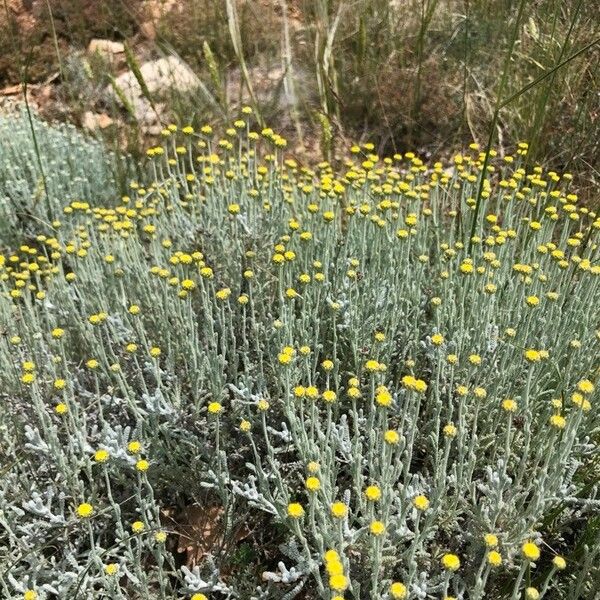
Known as the shimmering Mediterranean gem, Santolina corsica (often called Corsican Cotton Lavender) brings a touch of the wild, sun-drenched hills of Corsica and Sardinia to your landscape. Despite the name, it isn't a true lavender, but it shares that same silvery, aromatic charm that makes it a favorite for rock gardens and xeriscaping. This hardy evergreen shrub is beloved for its ability to thrive where other plants wither, acting as a drought-tolerant "living sculpture."
🔍 How to Identify
- 🌿 Silvery Foliage: The leaves are finely divided, almost needle-like, and covered in a dense coating of white hairs that give the plant a distinct frosted or woolly appearance.
- 🟡 Button Flowers: In midsummer, it produces small, bright yellow, disc-shaped flower heads that look like miniature buttons. Notably, these flowers lack the outer "petals" (ray florets) found on daisies.
- 👃 Aromatic Scent: When the leaves are crushed or brushed against, they release a pungent, herbal fragrance that is often described as a mix of resin and camphor.
🏡 In Your Garden
- ☀️ Sun-Drenched Survival: This plant is a true sun-worshiper. It evolved to handle intense heat and poor, rocky soil, meaning it actually performs better when left alone rather than being over-pampered with fertilizer.
- ✂️ The Pruning Secret: Because it has a woody base, it can become "leggy" or split open in the center over time. To keep it in a tight, silvery mound, it’s best to give it a hard prune after the flowers fade in late summer.
- 💧 Dry Feet Only: Its biggest enemy is soggy soil. If planted in heavy clay or over-watered, the roots are prone to rot. Always ensure it is placed in a spot with excellent drainage, such as a raised bed or a gravel garden.
⚠️ Safety & Toxicity
- 🐾 Pet Safety: While not considered highly toxic, the essential oils in the foliage can cause digestive upset (vomiting or drooling) if ingested in large quantities by cats or dogs.
- 🖐️ Skin Irritation: Some gardeners find that the sap or the fine hairs on the leaves can cause mild skin irritation or dermatitis. It’s a good idea to wear gloves when doing heavy pruning.
✨ Fun Fact
In traditional Mediterranean culture, dried bunches of Santolina were often hung in wardrobes or tucked into linens. Much like true lavender, its strong scent acts as a natural deterrent for moths and other hungry insects!

Detailed Care Instructions
To grow Santolina Corsica plants, follow these steps:
- Choose a suitable location: Santolina Corsica plants thrive in full sun and well-drained soil. Select a spot in your garden or landscape that receives at least 6-8 hours of direct sunlight each day. The soil should be sandy or loamy with good drainage.
- Prepare the soil: Before planting, prepare the soil by removing any weeds, rocks, or debris. Loosen the soil with a garden fork or tiller to a depth of about 12 inches. Add organic matter such as compost or well-rotted manure to improve soil fertility and drainage.
- Planting: Santolina Corsica can be propagated from seeds or cuttings. If using seeds, sow them directly into the prepared soil, covering them lightly with a thin layer of soil. Water gently to settle the soil. If using cuttings, take 3-4 inch long stem cuttings during spring or early summer. Remove the lower leaves and plant the cuttings in a well-draining potting mix or directly in the garden soil. Water thoroughly after planting.
- Watering: Water the Santolina Corsica plants regularly during their first growing season to establish deep root systems. Afterward, they are drought-tolerant and require minimal watering. Overwatering may cause root rot, so it is important to allow the soil to dry out between waterings.
- Pruning: Prune Santolina Corsica plants in early spring to maintain their desired shape. Remove any dead or damaged branches and trim back any excessive growth. This will promote compactness and bushiness.
- Fertilization: Santolina Corsica is a low-maintenance plant and does not require heavy fertilization. Apply a slow-release balanced fertilizer, such as a 10-10-10, in early spring to provide essential nutrients. Follow the manufacturer's instructions for dosage.
- Protection: Santolina Corsica plants are relatively pest-resistant. However, they can be susceptible to aphids, spider mites, and powdery mildew in humid conditions. Monitor the plants regularly and address any pest or disease issues promptly. Organic insecticidal soaps or neem oil can be used for control.
By following these guidelines, you can successfully grow Santolina Corsica plants and enjoy their aromatic foliage and delicate yellow flowers.

Place in a bright room that is sun drenched almost all day. Or directly in a south-facing window.

To water this plant, you should ensure that the soil is dry to the touch before watering. Overwatering can cause root rot and other issues. When watering, apply water slowly to the base of the plant and avoid getting water on the leaves. Allow the soil to drain completely after watering, and do not let the plant sit in standing water. It is best to water this plant in the morning or evening when temperatures are cooler.
To fertilize this plant, use a balanced fertilizer with an equal ratio of nitrogen, phosphorus, and potassium. Apply the fertilizer once a month during the growing season, which is typically from spring to early fall. Make sure to follow the manufacturer's instructions for the amount to use. Avoid fertilizing during the winter months when the plant is dormant. Always water the plant thoroughly before and after applying fertilizer to prevent burning the roots.
Santolina Corsica plant prefers well-draining soil that is low in nutrients and organic matter. The soil should be slightly alkaline and have a pH of around 7.5. It grows well in sandy or gravelly soils with good water infiltration rates. It is important not to over-water this plant as it can easily develop root rot. To promote healthy growth and flowering, it is recommended to mix sand or gravel with the soil to improve drainage. Additionally, the use of a slow-release fertilizer every 4-6 weeks during the growing season can help to promote healthy growth.
To propagate this plant, take semi-hardwood cuttings around 10-15 cm long from the parent plant during the growing season. Ensure that the cuttings are not too young or too old. Remove the leaves from the bottom half of the stem and dip it in rooting hormone powder. Prepare a pot with well-drained soil and create holes using a pencil or stick. Insert the cuttings into the holes and cover them with soil, ensure that the soil is not too wet. Place the pot in a bright and warm place, but avoid direct sunlight. Water the cuttings regularly and keep them moist. After a month, check for roots by gently tugging on the stem. Once there are roots, transplant the new plant into a larger pot or in the ground.








