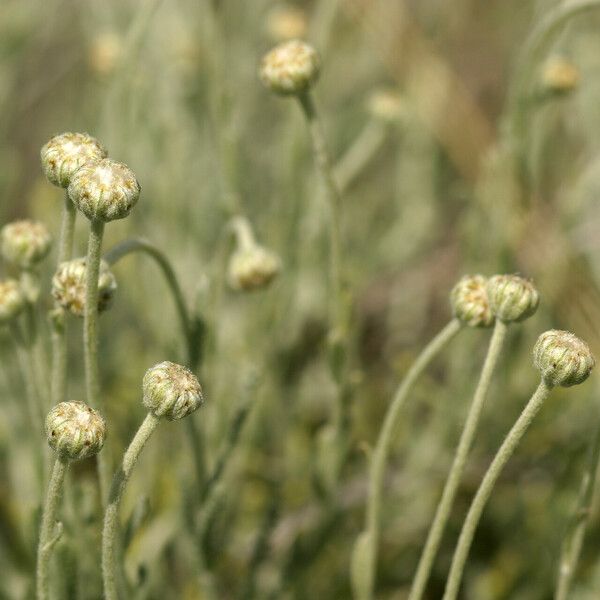
Plant Overview
Known as the "Olive-scented Santolina," this Mediterranean beauty is a master of the dry landscape. Native to the sandy coastal regions of the Iberian Peninsula, it creates a shimmering, silver-green cushion that smells remarkably like freshly pressed olives when brushed. It is the sophisticated, fine-textured cousin of the common Cotton Lavender, prized by garden designers for its structural elegance and "see-through" airy quality.
🔍 How to Identify
- 🌿 The Foliage: Unlike its chunkier relatives, Santolina impressa has incredibly narrow, needle-like leaves that are deeply "impressed" (hence the name) and covered in fine, silvery-white hairs.
- 🌼 The Bloom: In mid-to-late summer, it sends up long, slender stems topped with bright, golden-yellow "button" flowers that lack traditional petals.
- 🌬️ The Texture: The plant grows in a dense, rounded mound that looks soft and woolly from a distance but feels surprisingly firm to the touch.
🏡 In Your Garden
- 🏜️ The Dry Life: This plant is a "xeriscaping" champion. It has evolved to survive in poor, sandy soils where other plants would wither; its biggest enemy is actually "kindness" in the form of overwatering or rich fertilizers.
- ✂️ The Haircut Rule: To prevent the plant from splitting open and becoming woody in the center, it needs a firm pruning after the flowers fade. This keeps the silver mound tight and vibrant for the next season.
- ☀️ Sun Worship: It requires a full-sun position to maintain its silver color; in the shade, the leaves will turn a dull green and the stems will become "leggy" as they reach for light.
⚠️ Safety & Toxicity
- 🟢 Status: Generally non-toxic and safe for home gardens.
- 🧴 Skin Sensitivity: While not poisonous, the aromatic oils in the leaves can cause mild skin irritation (contact dermatitis) in sensitive individuals. It is best to wear gloves when doing heavy pruning.
- 🐾 Pets: It is not listed as a major toxic threat to cats or dogs, though ingestion of any aromatic woody shrub can cause minor stomach upset.
✨ Fun Fact
In its native Spain and Portugal, the dried branches of Santolina were traditionally used as a natural moth repellent in linen closets, and the plant's intense fragrance was once used to help "mask" the smells of busy medieval households.

Detailed Care Instructions








