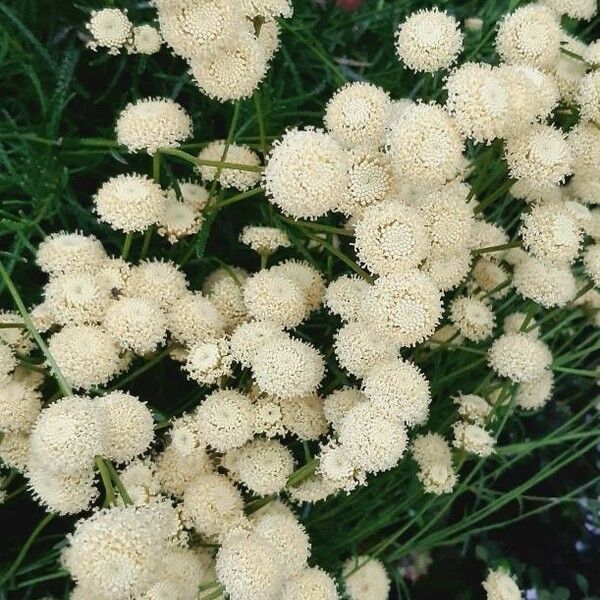
Plant Overview
The Santolina Virens, more commonly known as Green Lavender Cotton, is a Mediterranean treasure that brings a splash of emerald to rock gardens and borders. Unlike its silver-colored cousins, this variety stays a deep, vibrant green all year long, earning it the nickname "Holy Flax." In historical European gardens, it was a staple of intricate "knot gardens," where its dense growth was clipped into living sculptures.
🔍 How to Identify
- 🌿 The Foliage: Look for very fine, needle-like leaves that are bright green and slightly fleshy. They have a rough texture and release a strong, herbal scent when crushed.
- 🟡 The Flowers: In mid-summer, the plant produces distinctive "button" flowers. These are bright yellow, perfectly round, and lack the traditional petals seen on daisies.
- 🪴 Growth Habit: It forms a tight, mounded cushion or dome shape. If left unpruned, it can look a bit "shaggy," but it naturally maintains a compact, shrubby appearance.
🏡 In Your Garden
- ☀️ Sun & Drainage: This plant is a true sun-worshiper. Because it originated in rocky Mediterranean soils, it has a "fear of wet feet." If the soil stays soggy, the roots may rot, so always prioritize sandy or gravelly spots.
- ✂️ The Haircut Rule: To keep it from becoming "leggy" or splitting open in the middle, it needs a good prune after the yellow flowers fade. Think of it as a structural plant that loves being kept in shape.
- 🦋 Pollinator Magnet: While humans enjoy the scent of the leaves, bees and butterflies are absolutely captivated by the nectar-rich yellow buttons.
⚠️ Safety & Toxicity
- 🐾 Pet Safety: Santolina is generally considered non-toxic to dogs and cats, but it contains essential oils that can cause stomach upset if eaten in large quantities.
- 🖐️ Skin Sensitivity: Some gardeners experience mild skin irritation (dermatitis) from the oils in the leaves when pruning. It is always a good idea to wear gloves if you have sensitive skin.
✨ Fun Fact
In the Middle Ages, the dried leaves of Santolina were used as a natural moth repellent. People would stuff small cloth bags with the foliage and place them in wardrobes to keep their woolens safe from hungry insects!

Detailed Care Instructions
To grow Santolina virens (also known as lavender cotton), you can follow these steps:
- Choose a suitable location: Santolina virens prefers full sun and well-draining soil. It can tolerate dry and rocky conditions, making it an ideal choice for rock gardens or sandy areas.
- Prepare the soil: If your soil is heavy or poorly draining, amend it with organic matter like compost or sand to improve drainage. Santolina virens thrives in alkaline soil with a pH level of around 7.0 to 8.0.
- Planting: Dig a hole slightly larger than the root ball of your Santolina virens plant. Place the plant in the hole, making sure the top of the root ball is level with the soil surface. Backfill the hole with soil and gently firm it around the plant.
- Watering: While Santolina virens is drought-tolerant, it still requires regular watering to establish roots. Water deeply and infrequently, allowing the soil to dry out between waterings. Once established, it will only require occasional watering during extended dry periods.
- Mulching: Apply a layer of organic mulch around the base of the plant to retain moisture and suppress weeds.
- Pruning: To maintain a compact and bushy shape, trim back the plant after flowering or in early spring. Prune about one-third of the plant's height, cutting just above a leaf node or bud. This will help promote dense growth and prevent the plant from becoming leggy.
- Fertilization: Santolina virens does not require heavy fertilization. However, you can apply a balanced slow-release fertilizer in early spring to provide some nutrients.
- Pests and diseases: This plant is relatively resistant to pests and diseases. However, be on the lookout for aphids or spider mites. If necessary, you can use insecticidal soap or neem oil to control them.
- Propagation: Santolina virens can be propagated by taking semi-ripe cuttings in summer or by dividing mature plants in early spring.
By following these steps, you can successfully grow Santolina virens and enjoy its aromatic foliage and yellow flowers.

Place in a bright room that is sun drenched almost all day. Or directly in a south-facing window.

Santolina virens is a drought-tolerant perennial plant that requires proper watering to maintain its health and vigor. Here is a detailed guide on watering this plant effectively without mentioning its common names:
1. Understand the plant's water requirements: Santolina virens is naturally adapted to dry, arid environments and prefers well-drained soil. It is important to remember that overwatering can lead to root rot or other fungal diseases, so watering should be done judiciously.
2. Check the soil moisture: Before watering, assess the soil moisture level by inserting your finger or a moisture meter into the soil up to a depth of about 2-3 inches. Avoid watering if the soil feels damp or moist, as it indicates that watering is not required at the moment.
3. Follow a watering schedule: Instead of watering frequently, it is better to water Santolina virens deeply but infrequently. Generally, this plant benefits from a deep watering once every 7-10 days, depending on the weather conditions and soil type. This allows the plant to develop deep roots, making it more resilient to drought.
4. Water in the early morning or late afternoon: Choose to water your Santolina virens plant during the cooler parts of the day, such as early morning or late afternoon. This helps minimize water loss due to evaporation and ensures the plant has ample time to absorb the moisture before evening.
5. Use the right watering technique: To promote deep root growth, apply water slowly and evenly to the base of the plant. Using a soaker hose or a drip irrigation system is ideal, as it delivers water directly to the root zone and minimizes water wastage.
6. Avoid wetting the foliage: Since Santolina virens is susceptible to fungal diseases, it is important to avoid wetting the foliage while watering. Direct the water towards the base of the plant, keeping the foliage as dry as possible.
7. Consider rainfall: Take into account natural rainfall when determining your watering schedule. If significant rainfall has occurred recently, adjust your watering accordingly and reduce the frequency or amount of water applied.
8. Monitor the plant's health: Regularly inspect your Santolina virens plant for signs of over or under-watering. Wilting, yellowing leaves, or root rot indicate overwatering, while overly dry soil, stunted growth, or leaves losing vigor are signs of under-watering. Adjust your watering practices accordingly based on these visual cues.
Remember, the goal is to strike a balance between providing enough water to sustain the plant without excessively saturating the soil. By following these watering guidelines, you can ensure the health and longevity of your Santolina virens plant.
- Choose a well-draining soil mixture – Santolina Virens prefers sandy or loamy soil that drains well. Avoid heavy clay or compacted soil as it can cause root rot.
- Select a sunny location – This plant thrives in full sun to partial shade. Ensure that it receives at least 6 hours of direct sunlight daily.
- Watering – Water the plant deeply at the base, but only when the top inch of soil feels dry. Avoid overwatering as it can lead to root diseases. Once established, Santolina Virens is drought-tolerant and requires less frequent watering.
- Fertilizer application – Apply a balanced slow-release fertilizer with an NPK ratio of 10-10-10 or 14-14-14 in early spring, just as new growth begins. Follow the manufacturer's instructions for appropriate dosage. Avoid fertilizing during the winter months.
- Mulch – Apply a layer of organic mulch around the base of the plant to help retain moisture, control weeds, and provide additional nutrients as it breaks down over time.
- Pruning – Lightly trim the plant in early spring to maintain its desired shape. Remove any dead, damaged, or overcrowded branches. Avoid heavy pruning as it can weaken the plant.
- Pest and disease management – Santolina Virens is generally resistant to most pests and diseases. However, regularly inspect the plant for any signs of infestation or diseases such as root rot or powdery mildew. Treat as needed with appropriate organic or chemical controls.
- Propagation – If you wish to propagate Santolina Virens, you can do so through seed or by taking softwood cuttings in spring or semi-hardwood cuttings in summer. Follow appropriate propagation methods for best results.
Remember, each plant's care requirements can vary slightly, so it's always beneficial to research specific instructions or consult local gardening resources for more detailed guidance.
When selecting soil for Santolina virens, it is important to consider its specific requirements. This plant thrives in well-draining soil that is not overly rich or fertile. It prefers soil with a sandy or gritty texture and a pH level that is slightly alkaline. The ideal soil should be able to retain some moisture without becoming waterlogged.
To achieve these conditions, you can mix sandy soil with a small amount of loam or organic matter such as compost. This mixture will improve water retention while ensuring proper drainage. It is important to avoid clay-heavy soil, as it tends to retain too much water and can cause root rot.
In addition to soil texture, the level of alkalinity is crucial for Santolina virens. Adding lime to the soil can help raise the pH level to the desired slightly alkaline range, which is typically between 7.0 and 8.0. However, it is essential to be cautious with lime application and to test the soil's pH level before making any adjustments to avoid over-alkalizing the soil.
Finally, it is important to note that Santolina virens is a drought-tolerant plant. Therefore, it is advisable to avoid over-watering and to ensure the soil dries out between watering. This will help prevent root rot and other moisture-related issues.
Santolina virens is a perennial plant that can be propagated through several methods, including seeds, cuttings, and division. Here are some details about each propagation method:
- Seed propagation: Collect the seeds from mature Santolina virens plants. Sow the seeds in well-draining soil in early spring or late summer. Cover them lightly with soil and keep the soil moist. Germination usually takes about 2-4 weeks. Once the seedlings have grown a few inches tall, transplant them into individual pots or to their permanent outdoor location.
- Cutting propagation: Take stem cuttings from healthy Santolina virens plants in the late spring or early summer when the plant is actively growing. Choose non-flowering stems, around 4-6 inches long, and remove the lower leaves. Dip the cut end into a rooting hormone powder to encourage root formation. Place the cuttings in a pot filled with a well-draining soil mixture (such as a mix of sand and peat moss). Mist the cuttings and cover them with a plastic bag or a plastic dome to create a humid environment. Keep the soil evenly moist until roots develop, which usually takes 4-8 weeks. Once roots have formed, transplant the cuttings into individual pots or to their permanent outdoor location.
- Division propagation: Divide mature Santolina virens plants in early spring or fall. Dig up the entire plant and gently separate the root ball into smaller sections, making sure each section has healthy roots and shoots. Replant the divided sections in a prepared site or pots with well-draining soil, ensuring they are at the same depth as they were previously. Water thoroughly after planting and continue regular watering until the plants are established.
It's important to note that Santolina virens prefers full sun and well-drained soil. Regular pruning after flowering and occasional fertilization can help maintain the plant's shape and health.








