Plant Overview
Known as the "Wind Protector" or Fang Feng in traditional herbalism, Saposhnikovia divaricata is a resilient perennial native to the cold steppes of Siberia, Mongolia, and Northern China. This plant belongs to the carrot family (Apiaceae) and is famous for its long, sturdy taproot, which has been used for centuries to treat "wind-related" ailments like chills and joint pain. Its wispy, delicate foliage belies its tough-as-nails nature, as it thrives in harsh, exposed landscapes where few other plants can survive.
🔍 How to Identify
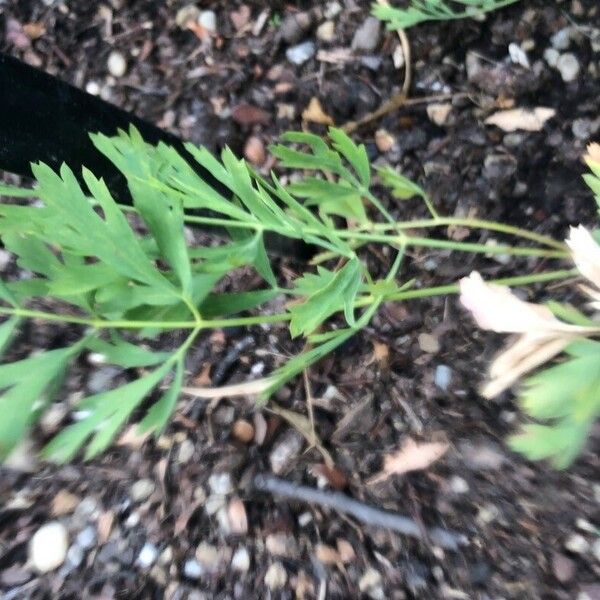
- 🌿 The Foliage: The leaves are deeply divided and feathery, resembling a more delicate version of carrot or parsley leaves, often turning a subtle purplish-bronze in colder weather.
- 🌼 The Flowers: In mid-to-late summer, it produces "umbels"—flat-topped clusters of tiny, star-shaped white flowers that act as magnets for beneficial pollinators.
- 🥕 The Root: Beneath the surface lies a thick, vertical taproot with a wrinkled, greyish-brown exterior and a fragrant, yellowish-white interior.
- 📐 Growth Habit: It typically grows in a low, bushy mound before sending up branched flowering stalks that can reach about 1 to 2 feet in height.
🏡 In Your Garden
- 🏜️ The Taproot Rule: Because of its deep, central taproot, this plant is notoriously difficult to transplant. Choose its permanent home carefully; it prefers loose, sandy, or well-drained soil that allows the root to grow straight down without obstruction.
- ❄️ Siberian Resilience: This is an exceptionally cold-hardy species. It handles frost and wind with ease, making it an excellent choice for northern gardens or exposed rockeries where other plants might wither.
- ☀️ Sun Seeker: To develop its medicinal properties and maintain its compact shape, it requires full sun. In too much shade, the stems may become "leggy" and flop over.
⚠️ Safety & Toxicity
- ✅ Status: Generally considered non-toxic to humans and frequently used in traditional teas, but caution is required.
- 🚫 The Lookalike Danger: As a member of the Apiaceae family, it looks strikingly similar to Poison Hemlock and Water Hemlock. Never forage this plant in the wild unless you are 100% certain of the ID, as its cousins are among the most deadly plants on earth.
- 🐾 Pet Safety: While not specifically listed as a high-risk plant for pets, ingestion of any garden plant in large quantities can cause digestive upset in dogs or cats.
✨ Fun Fact
The Chinese name Fang Feng literally translates to "Defend against Wind." In ancient lore, it was believed that because the plant could stand perfectly still and upright while the fierce Mongolian winds howled around it, it could pass that same stability and "wind-defying" energy to anyone who consumed its roots!

Detailed Care Instructions

Place in a bright room that is sun drenched almost all day. Or directly in a south-facing window.

Some plants require more regular watering than others, which should be done every few days. It's critical to maintain the soil moist all of the time. The water requirements of the same plant placed in pots with varying sizes will differ. Because the water in the smaller pot evaporates faster than the water in the larger pot, it will require more watering. Regardless of pot size, the surface should constantly be maintained moist.








