Plant Overview
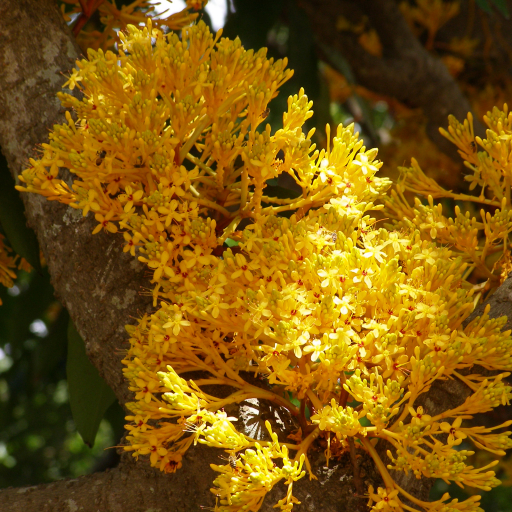
Known as the Yellow Saraca or the "Giam Chuam," this Southeast Asian treasure is a masterpiece of tropical architecture. It is most famous for its spectacular "cauliflorous" blooming habit, where vibrant clusters of flowers erupt directly from the trunk and older branches. In its native rainforests, it is often found leaning over streams, creating a golden reflection on the water’s surface.
🔍 How to Identify
- 🌼 Golden Clusters: The tree produces dense, rounded pom-poms of fragrant flowers that transition from a bright lemon yellow to a deep, burnt orange as they mature.
- 🧣 Handkerchief Leaves: One of its most charming features is the new growth; young leaves emerge limp, thin, and pendulous in shades of pale purple or pink, looking exactly like delicate silk handkerchiefs draped over the branches.
- 🌿 Large Pinnate Foliage: Once matured, the leaves become large, dark green, and leathery, providing a dense, umbrella-like canopy that offers deep shade.
🏡 In Your Garden
- 💧 Thirst for Humidity: This is not a "set it and forget it" plant for dry climates. It thrives on high humidity and consistently moist soil. If you are planting one, placing it near a pond or water feature will help mimic its natural riverside habitat.
- 🌥️ The Shady Youth: While a mature Yellow Saraca can handle full sun, young saplings are easily scorched. They prefer "dappled sunlight," acting much like they would under the protection of a larger rainforest canopy.
- 🌱 Root Stability: It develops a deep system and dislikes being moved once established. Choose its "forever home" carefully, ensuring there is plenty of room for its wide-spreading roots to breathe.
⚠️ Safety & Toxicity
- ✅ Safe Status: Saraca thaipingensis is generally considered non-toxic to humans, cats, and dogs. It does not possess irritating saps or thorns, making it a "friendly" giant for family gardens.
- 🌰 Seed Pod Caution: After flowering, the tree produces large, leathery purple pods. While not known to be poisonous, these pods are quite hard and could present a choking hazard for large dogs if chewed.
✨ Fun Fact
In many Southeast Asian cultures, Saraca trees are known as "Asoka" trees, a name derived from Sanskrit meaning "without sorrow." It was believed that sitting under the shade of a blooming Saraca would take away one's worries.

Detailed Care Instructions
To grow Saraca thaipingensis, also known as the Thaiping rain tree, follow these steps:
- Climate and Location: This plant thrives in tropical and subtropical climates. Ensure that your location has a warm and humid environment with temperatures between 70-90°F (21-32°C). The plant prefers partial shade or filtered sunlight.
- Soil: The Thaiping rain tree requires well-draining soil that is slightly acidic to neutral in pH. Use a good quality potting mix or create a loamy soil mixture with organic matter.
- Watering: Keep the soil consistently moist but not overly saturated to prevent waterlogging. Water the plant regularly, especially during the growing season, and reduce watering during the dormant phase in winter.
- Fertilization: Apply a balanced, slow-release fertilizer every two to three months during the growing season. Follow the instructions on the fertilizer package for proper dosage.
- Pruning: Trim and shape the plant as desired during the active growing season to maintain its size and shape. Remove dead or damaged leaves as needed.
- Propagation: Saraca thaipingensis can be propagated from seeds or stem cuttings. Seeds need scarification before planting to enhance germination. Stem cuttings should be taken from healthy, young shoots and treated with a rooting hormone before planting in a well-draining rooting medium.
- Pests and Diseases: Keep an eye out for common pests like aphids or mealybugs, and treat infestations promptly with insecticidal soap or neem oil. Maintain good air circulation to prevent fungal diseases.
- Winter Care: If you live in a colder region, it's advisable to grow Saraca thaipingensis as a potted plant, so you can bring it indoors during the winter. Place it near a sunny window and reduce watering frequency during the dormant period.
By following these guidelines, you should be able to successfully grow Saraca thaipingensis and enjoy its vibrant blooms.
To water this plant, first check the soil moisture level before watering. Insert a finger or a moisture meter into the soil to check if it feels dry. If the soil feels dry, water the plant thoroughly until water runs out of the drainage holes in the container. Avoid overwatering or allowing the plant to sit in standing water, as this can lead to root rot. Water this plant consistently, but allow the top layer of soil to dry out slightly before watering again. Avoid getting water on the leaves or flowers as this can cause damage. Use room temperature water to avoid shocking the roots.
Saraca Thaipingensis plant prefers rich, well-drained soil with a pH between 5.5 and 6.5. To fertilize, use a balanced, water-soluble fertilizer with equal parts of nitrogen, phosphorus, and potassium, applied every two weeks during the growing season. Reduce the frequency of fertilization during the dormant season, applying once a month. Be careful not to overfertilize, as this can lead to root burn and damage to the plant.
When planting the Saraca Thaipingensis plant, it is important to choose the appropriate soil to ensure healthy growth. The plant requires a well-draining soil that is rich in nutrients, with a pH level ranging from slightly acidic to neutral. A good soil mix for the Saraca Thaipingensis plant would include a combination of peat moss, perlite, vermiculite, and a high-quality potting soil. Adding organic matter, such as compost or aged manure, can also help to enrich the soil and improve its fertility. It is recommended to avoid heavy clay soils or soils that are too compacted, as these can lead to poor drainage and poor root growth. Additionally, it is important to provide regular fertilization and ensure that the plant is watered adequately to maintain soil moisture.
To propagate this plant, take a cutting of about 4-6 inches in length from the stem of the parent plant. Make sure the cutting has at least one node, which is a small bump on the stem where leaves emerge. Remove any leaves along the lower half of the cutting.
Dip the cut end of the stem in rooting hormone powder, which can be purchased at a garden center. This helps stimulate the growth of roots. Plant the stem cutting in a pot filled with well-draining soil, leaving the top few leaves above the surface.
Water the cutting regularly to keep the soil moist but not waterlogged. Use a spray bottle to mist the leaves with water, which helps prevent dehydration. Keep the cutting in a warm, bright location but out of direct sunlight.
After a few weeks, the cutting should start to grow roots and new leaves. Once it has established a healthy root system, it can be transplanted into a larger pot or into the ground.








