Plant Overview
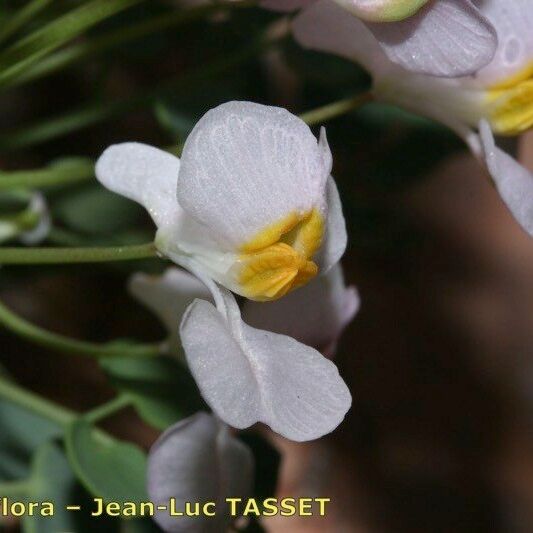
Known as the "Fleshy-leaved Sarcocapnos" or the "Cliff-Hanging Poppy," this Mediterranean marvel is a true specialist. It is most famous for its gravity-defying lifestyle, preferring to grow in the narrowest cracks of vertical limestone cliffs rather than in traditional soil. Its delicate, snapdragon-like blooms look almost ethereal against the rugged, sun-drenched rocks of Spain and North Africa.
🔍 How to Identify
- 🍃 Fleshy Foliage: The leaves are its most distinctive feature—thick, succulent, and heart-shaped or triangular, often with a dusty, blue-grey (glaucous) coating to protect against the sun.
- 🌸 Spurred Blooms: It produces small, tubular flowers that look like tiny white or pale-pink hoods with bright yellow or dark purple "lips" at the tips.
- 🧗 Cushion Habit: It grows in low, rounded tufts or cushions that rarely exceed 15 centimeters in height, hugging the stone surface for protection.
🏡 In Your Garden
- 🪨 Vertical Specialist: Because it is a "lithophyte" (a rock-dweller), this plant will fail in standard potting soil or heavy garden beds. It requires a rock garden, a dry-stone wall, or a "crevice garden" setup where its roots can stay dry and cool.
- 💧 Drainage is Vital: In the wild, water runs off its vertical home instantly. If its roots sit in standing water for even a day, the plant is likely to succumb to root rot, so gritty, mineral-heavy substrate is a must.
- 🌬️ Air Circulation: It thrives in breezy locations. Stagnant, humid air can lead to fungal issues on those thick, fleshy leaves.
⚠️ Safety & Toxicity
- 🟢 Generally Non-Toxic: Sarcocapnos crassifolia is not known to be highly dangerous, but it belongs to the Papaveraceae (Poppy) family, which often contains mild alkaloids.
- 🐾 Keep Away from Pets: While not listed as a major toxin, it is always best to prevent curious pets or toddlers from grazing on the foliage, as it may cause minor stomach upset if ingested in large quantities.
✨ Fun Fact
This plant has a secret partnership with ants! Its seeds have a fleshy attachment called an "elaiosome" that is rich in fats. Ants carry the seeds back to their nests in rock crevices to eat the fatty bit, effectively "planting" the seeds in the perfect high-altitude cracks for the next generation.

Detailed Care Instructions








