Plant Overview
Known affectionately as the "Fragrant Sweet Box," Sarcococca ruscifolia is the secret weapon of the winter garden. While most plants are dormant and gray, this hardy evergreen wakes up to release a powerful, honey-vanilla perfume that can be caught from several meters away. Native to the cool mountain forests of China, it is prized by gardeners for its ability to bring life and scent to the darkest, shadiest corners of the yard.
🔍 How to Identify
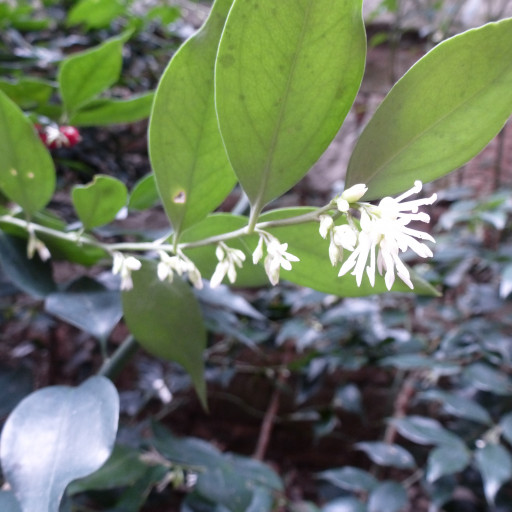
- 🍃 Polished Foliage: The leaves are a rich, dark green with a high-gloss finish, shaped like elegant pointed ovals that remain vibrant all year long.
- ⚪ Whisper-Thin Flowers: The blooms are tiny, creamy-white, and lack traditional petals; they look like delicate tufts of silken thread tucked into the base of the leaves.
- 🔴 Winter Jewels: After the flowers fade, the plant produces small, round berries that start a bright, glossy red and provide a beautiful contrast against the dark leaves.
🏡 In Your Garden
- 🌚 The Shade Specialist: This is one of the few plants that truly thrives in deep, "dry shade." It is perfect for planting under large trees or against north-facing walls where other shrubs might struggle.
- 🚶 Strategic Placement: Because the flowers are small and hidden, it is best planted near a walkway, a doorway, or a patio where you can appreciate the incredible fragrance as you pass by during the winter months.
- 🧤 Slow and Steady: It has a graceful, arching growth habit and grows quite slowly, meaning it rarely needs pruning and will never outgrow its welcome in a small space.
⚠️ Safety & Toxicity
- 🐾 Mildly Toxic: While not considered high-risk, the berries and foliage contain alkaloids that can cause stomach upset, drooling, or vomiting if ingested by curious cats or dogs.
- 👶 Keep an Eye Out: The bright red berries may look like candy to small children; while not deadly, they can cause nausea, so it is best to supervise little ones around the plant during the fruiting season.
✨ Fun Fact
The name Sarcococca actually comes from the Greek words "sarx" (flesh) and "kokkos" (berry), referring to the fleshy nature of its fruit. Despite its delicate scent, the plant is incredibly tough and is often used in "smell-scapes" designed for the visually impaired.

Detailed Care Instructions
To grow Sarcococca Ruscifolia plants, also known as Christmas box or sweet box, follow these steps:
- Select a suitable planting location: Sarcococca Ruscifolia plants prefer partial to full shade, so choose a location that offers protection from direct sunlight. They also tolerate a wide range of soil conditions but prefer moist, well-draining soil.
- Prepare the soil: Loosen the soil in the planting area and mix in organic matter such as compost or leaf mulch to improve drainage and fertility.
- Dig the planting hole: Dig a hole that is approximately twice the width and the same depth as the root ball of the Sarcococca Ruscifolia plant.
- Plant the shrub: Gently remove the shrub from its container and place it in the center of the hole. Make sure the top of the root ball is level with or slightly above the surrounding soil surface. Backfill the hole with soil, firming it gently around the roots as you go.
- Water thoroughly: After planting, water the Sarcococca Ruscifolia plant deeply to settle the soil and eliminate any air pockets around the roots. Maintain regular watering to keep the soil moist but not waterlogged throughout the plant's establishment period.
- Mulch the area: Apply a layer of organic mulch, such as shredded bark or wood chips, around the base of the plant to conserve moisture, suppress weeds, and regulate soil temperature. Keep the mulch a few inches away from the stem to prevent rotting.
- Prune as needed: Sarcococca Ruscifolia plants generally require minimal pruning. However, if necessary, you can trim them after flowering to maintain their shape and remove any dead, damaged, or crowded branches.
- Fertilize sparingly: Sarcococca Ruscifolia plants are not heavy feeders, but you can apply a slow-release balanced fertilizer in early spring to promote healthy growth. Follow the manufacturer's instructions for proper application.
- Monitor for pests and diseases: Keep an eye out for common pests like aphids or spider mites and promptly address any infestations. Sarcococca Ruscifolia plants are generally resistant to diseases but may occasionally encounter leaf-spotting fungi in excessively wet conditions.
- Enjoy the fragrance: Sarcococca Ruscifolia plants are prized for their fragrant flowers, which bloom in late winter or early spring. Take pleasure in their sweet scent and the attractive glossy evergreen foliage they provide year-round.

Place in a window with dappled sun or a spot in the middle of a room. Or directly in a window facing west or east.

To properly water this plant, it is important to first consider the conditions of its environment. This plant prefers consistently moist soil, but not overly saturated soil. It is important to allow the soil to dry slightly between waterings, but not to the point where it becomes dry throughout.
When watering, be sure to water the soil directly around the plant and avoid watering the leaves. Aim to keep the soil evenly moist, but not waterlogged. Avoid letting the soil completely dry out, as this can lead to stress and damage to the plant.
If grown in a container, be sure there is adequate drainage to prevent water from pooling or stagnating in the soil. If grown in the ground, mulching can help retain moisture in the soil and reduce the need for frequent watering.
Overall, it is important to monitor the moisture level of the soil regularly and adjust watering accordingly to ensure the plant remains healthy and hydrated.
To fertilize this plant, use a balanced, slow-release fertilizer in the early spring. Spread the fertilizer evenly around the base of the plant, being careful not to get it on the leaves or stems. Water the plant thoroughly after fertilizing. Avoid fertilizing during hot, dry weather or when the soil is extremely dry.
For optimal growth and health of this plant, it is best to use a well-draining soil that is rich in organic matter. A mix of perlite, peat moss, and vermiculite can create an ideal growing environment for this plant. It is important to avoid compacted or heavy soils that may trap water and cause root rot. Additionally, adding a layer of mulch around the base of the plant can help retain moisture and suppress weeds. Regular fertilization with a balanced fertilizer and adequate watering is also important for promoting healthy growth.
Sarcococca ruscifolia can be easily propagated through hardwood cuttings during the late autumn and winter months. Take cuttings that are around 15 cm in length using a sharp, sterile cutting tool. Make the cut just below a leaf node. Remove the bottom set of leaves and any flower buds or side shoots as these can take away valuable energy and nutrients from the cutting.
Dip the base of the cutting in rooting hormone powder to encourage the development of roots, although this step isn’t essential. Insert the cutting into a container filled with sharp sand or a mixture of compost and perlite.
Water the container to settle the soil around the cutting then cover the container with a plastic bag. Place the container in a warm position that is not in direct sunlight, and wait for the cutting to root. This will typically take between 2-3 months, and it’s important to mist the cutting regularly during this period to maintain humidity levels.
Once the cutting has rooted, plant it in a suitable container or directly into the ground. Ensure the plant receives adequate sunlight, and water it regularly to encourage healthy growth.








