Plant Overview
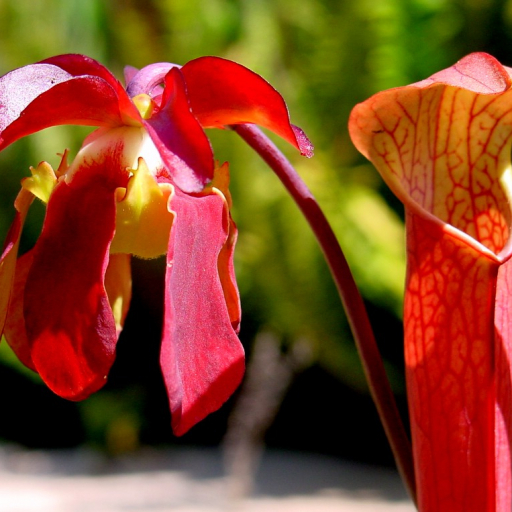
Known as the "Sweet Pitcher Plant," Sarracenia rubra is a deceptive beauty of the American Southeast. This carnivorous masterpiece doesn't just sit and wait; it lures its prey with a scent so sugary and intoxicating that it smells like a field of raspberries. It is a slow-growing bog dweller that turns the tables on the insect world, using elegant, vein-patterned tubes to digest its visitors.
🔍 How to Identify
- 🚩 The Pitchers: Look for slender, upright tubes that typically reach 12 to 18 inches. They are usually green at the base and transition into a deep maroon or burgundy toward the top.
- ☂️ The Hood: A distinct, pointed "lid" sits atop the pitcher. This isn't just for show; it acts as a fixed umbrella to prevent rainwater from diluting the digestive enzymes inside.
- 🌸 The Sweet Bloom: In early spring, it produces nodding, five-petaled flowers that are deep red or mahogany. Unlike many plants, these blooms appear before the pitchers to ensure pollinators don't accidentally become lunch.
🏡 In Your Garden
- 💧 The "Pure" Requirement: This plant is a "purist" when it comes to hydration. It evolved in nutrient-poor bogs, meaning tap water or bottled minerals will eventually poison it. Always use rainwater, distilled water, or reverse osmosis water to keep the "wet feet" it craves.
- ☀️ Sun Worshiper: To get those deep, blood-red veins, the Sweet Pitcher Plant needs intense, direct sunlight. If it stays entirely green and floppy, it’s a sign it’s "starving" for more light.
- 💤 Winter Rest: Don't panic if it looks ragged in November. This species requires a chilly dormancy period (3-4 months) to survive long-term. It essentially goes to sleep to recharge for the next growing season.
⚠️ Safety & Toxicity
- ✅ Safe for Mammals: Sarracenia rubra is non-toxic to humans, cats, and dogs. You don't have to worry if a curious pet takes a sniff.
- 🪰 Deadly for Bugs: While safe for us, it is a "death trap" for flies, ants, and wasps. The nectar contains a mild narcotic that disorients insects, causing them to slip into the digestive pool at the bottom.
✨ Fun Fact
The scent of the Sarracenia rubra flower is often described as smelling exactly like expensive rose perfume or sun-ripened strawberries. It is considered one of the most fragrant of all the North American pitcher plants!

Detailed Care Instructions
To grow a Sarracenia Rubra plant, also known as the North American Pitcher Plant, follow these steps:
- Climate: Ensure that you have a suitable climate for Sarracenia Rubra, which typically requires a wet and humid environment. Most species of this plant are native to boggy areas in the Eastern United States.
- Location: Choose a location that receives full sun for at least half a day. Sarracenia Rubra plants thrive in bright, direct sunlight.
- Soil: Use a well-drained acidic soil mix. Ideal soil pH ranges from 4.5 to 5.5. You can simulate the natural habitat by using a mix of peat moss and sand or perlite. Avoid using regular potting soil, as it may not provide adequate drainage.
- Water: Place the plant in a tray or saucer that can hold water. Keep the tray partially filled with distilled or rainwater to ensure the soil remains consistently moist. The tray should never go dry, but the plant's roots should not be submerged in standing water.
- Feeding: Sarracenia Rubra is carnivorous and supplements its nutrient requirements by catching and consuming insects. Avoid fertilizing the plant regularly, as excess nutrients can harm the sensitive roots. Allow the plant to catch its natural prey for nutrition. If necessary, you can supplement its diet with live or freeze-dried insects occasionally.
- Dormancy: Sarracenia Rubra requires a winter dormancy period to thrive. During this time, the plant will produce a rosette of small leaves known as the hibernacula. Reduce watering and place the plant in a cooler location, ideally between 30-45°F (0-7°C). Provide low light conditions during dormancy but do not let it freeze. Resume regular care in spring when new growth emerges.
- Pests and Diseases: Keep an eye out for common pests such as aphids, mealybugs, and spider mites. Inspect your plant regularly and treat any infestations promptly. Diseases are not common for Sarracenia Rubra, but if you notice any signs of rot or fungus, adjust watering practices.
By following these steps, you can successfully grow a Sarracenia Rubra plant and enjoy its unique pitcher-shaped leaves and vibrant colors. Remember to research the specific requirements of your particular Sarracenia Rubra variety, as different subspecies may have slightly different care needs.

Place in a bright room that is sun drenched almost all day. Or directly in a south-facing window.

Sarracenia Rubra is a unique plant that requires specific watering to thrive. One way to ensure proper watering is to use a technique called "bottom watering." This involves placing the pot in a tray with water, allowing the plant to soak up the water from the bottom. It's important to avoid getting water on the leaves or in the "pitchers," as this can cause the plant to rot. Additionally, the soil should be moist but not waterlogged, and the plant should not be allowed to completely dry out between waterings. Proper watering is essential for maintaining the health and beauty of this plant.
To fertilize your plant, use a dilute solution of a carnivorous plant-specific fertilizer, such as a 1:100 dilution of a 20-20-20 soluble fertilizer. Apply this solution sparingly to the plant’s soil during the growing season, and avoid getting any fertilizer solution on the plant’s leaves or pitchers, as this may damage the plant. In addition, if you notice any dead or dying leaves or pitchers, remove them promptly to help prevent the spread of disease and improve the plant’s overall health.
The Sarracenia Rubra plant requires a specific type of soil that is a mixture of sand and a nutrient-poor medium such as sphagnum peat moss or perlite. This type of soil is necessary as it mimics the natural environment of the plant, which typically grows in bogs and swamps with acidic and nutrient-deficient soils. The soil should also be well-draining to prevent waterlogging, which can damage the plant's roots. It is essential to use clean, sterile soil to prevent the spread of disease and pests. Additionally, it is best to avoid using any soil amendments or fertilizers with this plant as it can harm the delicate roots.
- Start by selecting a healthy Sarracenia Rubra plant. Choose a mature plant that has a well-established rhizome with multiple growth points.
- Using a sharp and sterile knife or scissors, carefully remove one or two mature pitchers from the parent plant. Make sure to cut as close to the base of the pitcher as possible to avoid damaging the rhizome.
- Fill a small container with a mixture of equal parts of peat moss and sand or perlite. You can also use sphagnum moss instead of peat moss if you prefer.
- Dip the cut end of the pitcher into a rooting hormone powder. This will help promote root growth and increase the chances of successful propagation.
- Place the pitcher into the container filled with the potting mix, making sure that the cut end is buried a few centimeters deep. Firmly press the soil mix around the pitcher to anchor it in place.
- Water the pitcher lightly and place the container in a bright but shaded location. Keep the soil moist but not waterlogged. Mist the plant daily to maintain humidity around it.
- Within a few weeks, you should see new growth emerging from the base of the pitcher. Once the new growth reaches a few centimeters in height, you can gently separate it from the parent plant by cutting through the rhizome with a sharp and sterile knife.
- Plant the new plant in its own container filled with the same potting mix. Water it well and place it in a bright, indirect location. Over time, the plant will grow and develop its own pitchers, and you can repeat the propagation process as needed.








