Plant Overview
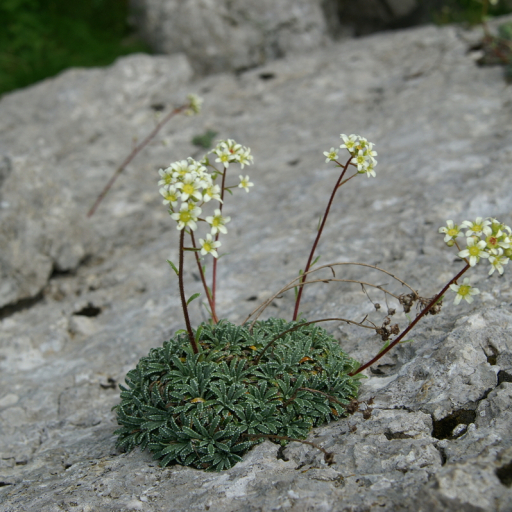
Often called the "Crusted Saxifrage" or "Silver Saxifrage," this alpine gem looks as though a permanent frost has kissed its leaves. Native to the limestone cliffs of the Eastern Alps, it is a master of survival in harsh, vertical terrains where other plants would wither. Its tight, architectural rosettes make it a prized jewel for "crevice gardens" and collectors of miniature mountain flora.
🔍 How to Identify
- ❄️ The Rosettes: It forms dense, low-growing mats of stiff, narrow leaves that radiate from a central point like a geometric star.
- 🥈 Silver Edges: The most striking feature is the white, "crusted" margin along each leaf. This isn't color pigment; it's a physical layer of lime excreted by the plant.
- ☁️ The Blooms: In late spring, it sends up arching, reddish stems that carry airy plumes of small, five-petaled white or cream flowers.
🏡 In Your Garden
- 🧱 The Vertical Life: Because it naturally grows on cliffs, it hates "wet feet." In a garden, it is happiest tucked sideways into a stone wall or a rocky crevice where water can drain away from its crown instantly.
- 🦴 Calcium Lover: Unlike many garden plants that prefer neutral soil, this species craves lime. It thrives in alkaline environments and uses the calcium in the soil to build its signature silvery crust.
⚠️ Safety & Toxicity
- ✅ Status: Non-toxic and safe.
- 🐾 Details: Saxifraga crustata is not known to be poisonous to cats, dogs, or humans. It is a "friendly" addition to rockeries, though its tough, leathery leaves aren't particularly appetizing to curious pets.
✨ Fun Fact
The white crust on the leaves is actually a clever survival hack! The plant "sweats" out excess calcium carbonate through specialized pores called hydathodes. Once the water evaporates, the lime remains, reflecting intense alpine sunlight and helping the plant retain moisture in the thin mountain air.

Detailed Care Instructions
To grow Saxifraga Crustata plant, follow these steps:
- Planting: Choose a well-draining soil mix rich in organic matter. Dig a hole slightly larger than the plant's rootball and gently place the plant in the hole. Fill the hole with soil and firm it gently around the plant.
- Light: Place the plant in a location that receives bright, indirect sunlight. Saxifraga Crustata prefers partial shade or filtered sunlight rather than direct sunlight.
- Watering: Keep the soil consistently moist but not soggy. Water the plant when the top inch of soil feels dry to the touch. Avoid overwatering, as it can lead to root rot. Water from the base rather than overhead to prevent the leaves from becoming wet and susceptible to diseases.
- Fertilizing: Feed the plant with a balanced, all-purpose fertilizer once every 4-6 weeks during the growing season (spring and summer). Follow the manufacturer's instructions for dosage.
- Temperature and Humidity: Saxifraga Crustata prefers cool, moderate temperatures between 60-70°F (15-21°C). It can tolerate slightly higher temperatures but might suffer in extreme heat. Maintain a moderate level of humidity around the plant. Placing a tray of water nearby can help increase humidity.
- Pruning: Trim away dead or damaged leaves to maintain the plant's appearance and overall health. This can be done throughout the year as needed.
- Propagation: Saxifraga Crustata can be propagated through division. Every few years, gently lift the plant from the soil and divide it into smaller sections, making sure each section has roots attached. Replant the divisions in fresh soil.
- Pests and diseases: Monitor the plant regularly for pests such as mealybugs or aphids. If detected, treat the plant with an appropriate insecticide or use natural pest control methods such as spraying with a mixture of water and dish soap. Additionally, ensure good air circulation around the plant to prevent fungal diseases.
Remember to research specific care requirements for Saxifraga Crustata, as individual plant preferences may vary slightly.

Place in a window with dappled sun or a spot in the middle of a room. Or directly in a window facing west or east.

To water Saxifraga Crustata, it is important to consider the plant's specific needs. Here are some detailed instructions on watering this plant:
1. Soil moisture: Saxifraga Crustata prefers a well-draining soil that does not retain excess moisture. Before watering, check the soil moisture by touching the top inch of the soil with your finger. If it feels dry, it's time to water.
2. Watering frequency: Water this plant consistently but avoid overwatering. As a general guideline, water Saxifraga Crustata about once every 7-10 days during the growing season (spring and summer) and reduce watering during the dormant period (fall and winter). Adjust the frequency based on the environmental conditions and the moisture needs of the plant.
3. Watering method: Water the plant directly at the base, aiming to wet the soil around the roots rather than the leaves. This helps prevent issues like fungal diseases and rot. It is best to use a watering can or a gentle hose attachment that provides a slow and even flow of water.
4. Water quantity: Ensure the plant receives enough water to thoroughly moisten the soil to a depth of around 4-6 inches. This allows the roots to access moisture without risking waterlogging, which can lead to root rot.
5. Time of day: Water Saxifraga Crustata in the morning or early afternoon to provide ample time for the foliage to dry out before evening. This avoids prolonged dampness, which can contribute to diseases.
6. Environmental considerations: Factors such as temperature, humidity, and sunlight intensity influence the plant's water requirements. Monitor the plant and adjust the watering accordingly. In hot, dry weather, you may need to water more frequently, while in cooler conditions, less frequent watering might be sufficient.
Remember, these guidelines are general in nature. It is always recommended to observe your specific Saxifraga Crustata plant and adjust the watering routine to meet its individual needs.
- Choose a well-draining pot or plant in a suitable garden area for your Saxifraga Crustata plant.
- Prepare the soil by mixing organic matter, such as compost or well-rotted manure, to enhance nutrient content and improve drainage.
- Water the plant before fertilizing to ensure the soil is adequately moist.
- Use a balanced liquid or granular fertilizer with equal NPK (nitrogen, phosphorus, and potassium) ratios.
- Dilute liquid fertilizer according to the package instructions and apply it to the soil around the plant, avoiding direct contact with the foliage.
- For granular fertilizer, sprinkle it evenly over the soil surface, keeping it at a safe distance from the base of the plant.
- Gently work the fertilizer into the top layer of soil using a hand rake or trowel.
- Water the plant thoroughly after fertilizing to help distribute the nutrients into the root zone.
- Repeat the fertilization process every four to six weeks during the growing season, excluding the dormant winter period.
- Monitor the plant for signs of nutrient deficiencies or excesses, such as yellowing leaves or stunted growth. Adjust the fertilizer application accordingly, if required.
Please note that Saxifraga Crustata plant has several common names like London Pride, Aaron's Beard, and St. Patrick's Cabbage, depending on the region.
Saxifraga crustata is a perennial plant that belongs to the family Saxifragaceae. When selecting soil for the Saxifraga crustata, it is important to choose a well-draining, slightly acidic soil blend. The pH level of the soil should range between 5.5 and 7, which is ideal for this plant's growth.
It is recommended to use a soil mix that provides good drainage to prevent waterlogging, as overly moist conditions can cause root rot. A well-draining soil allows excess water to drain freely, preventing the accumulation of moisture around the roots.
One suitable soil mix for Saxifraga crustata may consist of a combination of peat moss, perlite, and coarse sand or granite grit. Peat moss aids in moisture retention while still allowing for proper drainage. Perlite, which is a lightweight volcanic glass, helps to improve aeration and drainage. Coarse sand or granite grit provides additional drainage and adds structure to the soil, aiding in root development.
To ensure the plant's health, it is important to avoid heavy, clayey soils that retain too much water and can lead to root rot. Additionally, using potting soil mixes that contain a significant amount of organic matter, such as compost, is not recommended as it may contribute to water retention and affect the overall drainage capacity of the soil.
By selecting a well-draining, slightly acidic soil mix, you will provide an optimal growing environment for Saxifraga crustata, promoting healthy root development and overall plant vigor.
To propagate Saxifraga crustata plant, you can follow these steps:
- Select the parent plant: Choose a healthy, mature Saxifraga crustata plant with strong stems and vibrant foliage as the parent plant for propagation.
- Determine the propagation method: Two common methods for propagating Saxifraga crustata are through division and stem cuttings.
- Division method: For this method, carefully dig up the parent plant, taking care not to damage the roots. Gently separate the clumps of the plant by using a sharp, sterile knife or garden shears. Each division should have its own set of roots and foliage.
- Plant the divisions: Prepare small pots or containers with a well-draining potting mix. Place each division into its own pot, ensuring the roots are spread out and covered with soil. Water thoroughly and place the pots in a location with indirect sunlight.
- Stem cutting method: Select healthy stems from the parent plant that have not yet flowered. Cut approximately 4-6 inches (10-15 cm) sections of the stem, making sure each cutting has at least two sets of leaves.
- Prepare the cuttings: Remove the lower leaves from each cutting, leaving a few sets of leaves at the top. Dip the cut end of each stem cutting into a rooting hormone, which helps stimulate root growth.
- Plant the cuttings: Fill small pots with a well-draining potting mix. Make a small hole in the soil with a pencil or your finger and gently insert the stem cutting, ensuring the leaves remain above the soil. Lightly press the soil around the cutting to secure it in place. Water thoroughly.
- Create a humid environment: To promote successful root development, create a humid environment for the cuttings. You can cover each pot with a clear plastic bag or use a propagating tray with a clear plastic lid. This helps to retain moisture and warmth around the cuttings.
- Maintain the cuttings: Keep the pots or propagating tray in a location with indirect sunlight. Mist the cuttings regularly to maintain humidity and prevent them from drying out. Ensure the potting mix remains moist, but not overly saturated, throughout the propagation process.
- Monitor growth: It may take several weeks for the divisions or stem cuttings to develop roots and establish themselves. Monitor the progress by gently tugging on the cuttings or divisions after a few weeks – if you feel resistance, it indicates that roots have formed.
- Transplanting: Once the divisions or cuttings have established a strong root system, they can be transplanted into larger pots or directly into the garden. Ensure the new planting location provides well-draining soil, adequate sunlight, and appropriate space for the future growth of Saxifraga crustata.
Remember to label your propagated plants to keep track of their specific characteristics or growth habits. With proper care, your Saxifraga crustata plants will thrive and provide beautiful foliage and flowers.








