Plant Overview
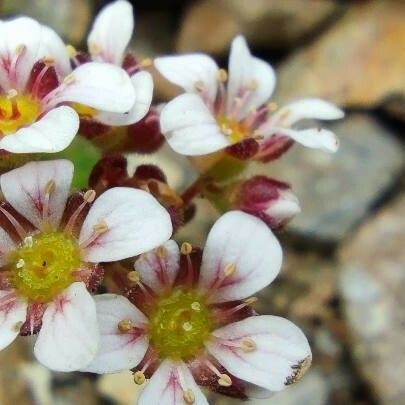
Known as the Sierra Nevada Saxifrage, this resilient little perennial is a true high-altitude mountaineer. Clinging to the rocky crevices of the Sierra Nevada mountains, it spends much of its life tucked under a blanket of snow, waiting for the brief alpine summer to reveal its delicate white blooms. Its name comes from the Latin saxum (rock) and frangere (to break), earning it the poetic nickname "Stone-breaker."
🔍 How to Identify
- 🍃 The Rosette: It features a basal rosette of thick, spoon-shaped leaves that often hug the ground tightly to stay out of the biting mountain wind.
- 🌸 The Flowers: Small, star-shaped white flowers cluster at the top of a fuzzy stalk. If you look closely, each petal often has two tiny yellow or greenish spots near the base.
- 🔴 The Stem: The flowering stalk is often reddish and covered in fine, sticky glandular hairs, which helps deter small crawling insects from stealing nectar.
🏔️ Habitat & Ecology
- 💧 The Meltwater Specialist: In the wild, this plant is usually found near seeps or where snowbanks are melting. It loves "wet feet" during its growing season but requires exceptionally sharp drainage to prevent rot.
- 🪨 Rock Dweller: It thrives in thin, mineral-rich soil found in granite cracks. In a garden setting, it is the ultimate choice for a traditional rockery or a "trough garden" that mimics a mountain peak.
- 🌬️ Climate Needs: It is extremely cold-hardy but sensitive to stagnant heat. It prefers cool roots and plenty of airflow, making it a challenge for those in humid, lowland environments.
⚠️ Safety & Toxicity
- 🟢 Status: Generally considered non-toxic.
- 🐾 Details: There are no records of Saxifraga nevadensis being poisonous to dogs, cats, or horses. However, because it is a specialist wild plant, it is best kept as an ornamental rather than a snack for curious pets or children.
✨ Fun Fact
The name "Stone-breaker" led ancient herbalists to believe that Saxifrage could help dissolve kidney stones. While there is no medical evidence for this, the plant "breaks" rocks in a different way: its roots find tiny fissures, and as they grow and expand, they slowly contribute to the natural erosion and weathering of massive granite boulders.

Detailed Care Instructions








