Plant Overview
Often called "London Pride," this charming hybrid is the ultimate survivor of the gardening world. It earned its famous nickname after the London Blitz of WWII, where it was spotted blooming resiliently among the rubble of bombed-out buildings. It is a "pass-along" plant, frequently gifted between neighbors because it is nearly impossible to kill and spreads with graceful ease.
🔍 How to Identify
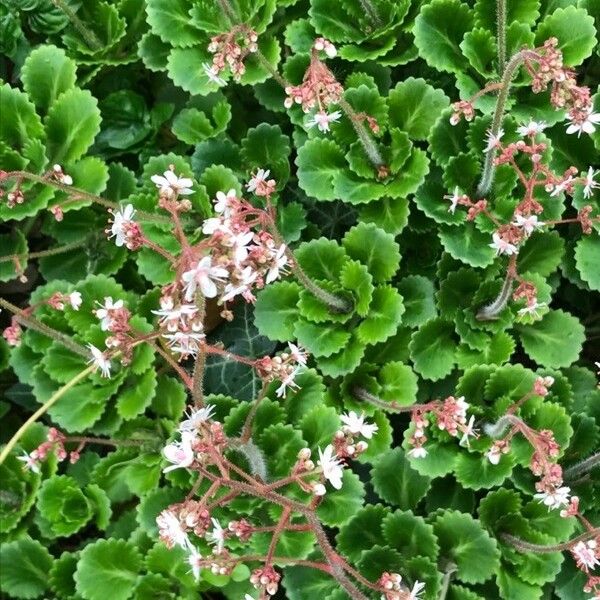
- 🍃 The Rosettes: It forms low, dense mats of spoon-shaped, leathery leaves with distinctively scalloped or "toothed" edges.
- 🌸 The Airy Blooms: In late spring, thin, reddish-wire stems rise high above the foliage, carrying delicate sprays of tiny, star-shaped white flowers flecked with pink or red dots.
- 🌱 The Spreading Habit: It sends out short runners (stolons) to create new rosettes, slowly carpeting the ground in a lush, evergreen tapestry.
🏡 In Your Garden
- ☁️ Shade Specialist: Unlike many flowering plants, London Pride thrives in those tricky, damp, shady corners where grass refuses to grow. It is perfect for softening the edges of north-facing walls.
- 🧱 Crevice Lover: Its name Saxifraga literally means "stone-breaker." It feels right at home tucked into the cracks of a dry stone wall or nestled between paving stones where its roots can stay cool.
- 💧 Moisture Balance: While it is incredibly hardy, it dislikes "wet feet" in the winter. Ensure the soil is well-draining to prevent the rosettes from rotting during the dormant season.
⚠️ Safety & Toxicity
- ✅ Status: Generally non-toxic and safe for a family garden.
- 🐾 Details: It is not known to be poisonous to cats, dogs, or horses. However, as with any ornamental plant, keep an eye on curious toddlers or pets to ensure they don't ingest large amounts, which could cause mild stomach upset.
✨ Fun Fact
The song "London Pride," written by Noël Coward during the war, was inspired by this very plant. He used the flower as a symbol of the city’s endurance and "the ghost of the gardens that used to be."

Detailed Care Instructions
To grow Saxifraga × urbium (commonly known as London pride or none-so-pretty), follow these steps:
- Choose a suitable location: London pride prefers partial shade to full sun. Select a spot in your garden that receives dappled sunlight or morning sun and afternoon shade.
- Prepare the soil: London pride prefers well-draining soil. Amend heavy or clay soil by adding compost, peat moss, or sand to improve drainage. Avoid waterlogged areas.
- Planting: This plant can be propagated by seeds, division of clumps, or stem cuttings. Here's how to proceed with each method:
- Seeds: Sow the seeds in early spring, either directly in the garden or in pots indoors. Press the seeds gently into the soil without covering them, as they need some light to germinate. Keep the soil moist until germination occurs, which may take a few weeks.
- Division: In early spring or fall, lift an established clump of Saxifraga × urbium and carefully divide it into smaller sections. Replant the divided sections immediately, ensuring each has sufficient roots.
- Stem cuttings: Take 2-3 inch stem cuttings from a healthy Saxifraga × urbium plant in spring or summer. Remove the lower leaves and dip the cut end in rooting hormone. Plant the cutting in a pot with well-draining soil and keep it moist until roots develop.
- Watering: Keep the soil consistently moist but avoid overwatering to prevent root rot. Water when the top inch of soil feels dry. Mulching the plant with organic matter can help retain moisture.
- Fertilizing: Apply a slow-release balanced fertilizer once in early spring and once in mid-summer to provide essential nutrients to the plant. Follow the instructions provided on the fertilizer packaging.
- Pruning: After flowering, remove any wilted or dead flowers to encourage further blooming. Prune back leggy or overgrown stems to maintain a neat appearance. It's also essential to cut back the plant in late autumn, removing any spent foliage.
- Pests and diseases: London pride is relatively resistant to pests and diseases. However, watch out for slugs, snails, and aphids, which can occasionally feed on the foliage. Use organic pest control methods if necessary.
By following these steps, you should be able to successfully grow Saxifraga × urbium in your garden. Enjoy its delicate flowers and attractive foliage!
To provide adequate water for the Saxifraga × Urbium plant, it is important to understand the specific requirements of the species. Here are the details on watering this plant without mentioning its common names:
- Saxifraga × Urbium should be watered thoroughly but infrequently. It is essential to allow the topsoil to dry out slightly between waterings to prevent root rot.
- Before watering, check the moisture level of the soil by inserting your finger about an inch deep into the soil. If it feels slightly dry, it's time to water the plant.
- This plant prefers a moist but well-draining soil. It is recommended to plant it in a pot or garden bed with good drainage to prevent waterlogging. Drainage holes in pots or amending the soil with organic matter can help ensure proper drainage.
- When watering, use a gentle and controlled stream of water to moisten the entire root zone of the plant. Avoid applying water directly to the leaves to prevent fungal diseases.
- It is advisable to water the Saxifraga × Urbium plant in the morning. This allows excess moisture on the leaves to evaporate during the day and minimizes the risk of fungal infections.
- Depending on the climate, the plant may require less water during the winter months when its growth slows down. Adjusting the watering schedule accordingly to prevent overwatering is essential.
- To maintain the ideal moisture level, consider using a mulch layer around the plant. Mulch helps retain moisture in the soil, reducing the frequency of watering needed.
- It is crucial not to let the plant sit in standing water as it can lead to root rot and other problems. Ensure that any excess water drains out of the container or away from the plant's roots in the garden bed.
Remember, every plant has its specific water requirements. These instructions are tailored specifically to Saxifraga × Urbium, providing optimal care for its growth and well-being.
To fertilize Saxifraga × urbium, follow these instructions:
- Choose a balanced water-soluble fertilizer with an N-P-K ratio of 10-10-10 or similar.
- Dilute the fertilizer according to the package instructions. Use half the recommended strength to avoid overfertilizing.
- Water the plant thoroughly a few hours before applying the fertilizer. This helps prevent root burn from the concentrated fertilizer solution.
- Apply the diluted fertilizer to the soil around the base of the plant, taking care not to let it come in direct contact with the foliage.
- Use a watering can or a hose with a gentle spray attachment to evenly distribute the fertilizer.
- After fertilizing, continue watering the plant as needed to keep the soil evenly moist, but not waterlogged.
- Repeat the fertilization process every four to six weeks during the growing season, typically from spring to early fall.
Remember to always follow the instructions provided with the specific fertilizer brand you choose.
Saxifraga × urbium, commonly known as London Pride or St. Patrick's Cabbage, prefers a specific type of soil to thrive and grow optimally. This plant benefits from a well-draining soil mixture that is slightly acidic to neutral in pH. It appreciates soil that is rich in organic matter and nutrients, allowing for healthy root development and overall growth.
A suitable soil mixture for Saxifraga × urbium could consist of a combination of two parts peat moss or leaf mold, one part perlite or vermiculite, and one part well-aged compost or well-rotted manure. This mixture provides a loose, well-aerated texture that promotes root health and prevents waterlogging.
Peat moss or leaf mold adds organic matter to the soil, improving its moisture-holding capacity and ensuring good drainage. Perlite or vermiculite aids in drainage by creating air pockets in the soil mix, preventing it from becoming overly compacted. Well-aged compost or well-rotted manure not only enriches the soil with nutrients but also improves its structure and promotes beneficial microbial activity.
It is important to avoid using heavy clay soils or those with poor drainage for Saxifraga × urbium, as these can lead to root rot or other moisture-related issues. Additionally, excessively sandy soils may not provide sufficient moisture retention, potentially leading to drought stress for the plant.
Regular monitoring of the soil's moisture level is essential to ensure appropriate watering practices. Saxifraga × urbium prefers moist but not waterlogged soil. Watering when the top inch of soil feels dry to the touch is a general guideline. However, it is crucial to adjust the watering frequency based on environmental factors such as temperature, humidity, and sunlight intensity.
Remember, maintaining a suitable soil composition and ensuring proper watering practices are key to keeping Saxifraga × urbium healthy and thriving.
Saxifraga × urbium is a perennial flowering plant that belongs to the Saxifraga genus. It can be propagated using various methods, including division and stem cuttings. Here is a detailed description of how to propagate Saxifraga × urbium without mentioning its common names:
- Division:
a. Start by selecting a healthy mature Saxifraga × urbium plant that has been growing for at least two years.
b. Dig around the plant carefully, ensuring that you do not damage the roots or stems.
c. Gently lift the plant out of the ground and shake off excess soil to expose the root system.
d. Identify natural separation points and carefully divide the plant into smaller sections. Each section should have its own set of roots and stems.
e. Trim any damaged or excessively long roots and remove any dead or unhealthy plant material.
f. Prepare pots or containers with well-draining soil mix. Place the divided sections into individual pots, ensuring that the roots are covered but the crown is exposed.
g. Water the newly divided Saxifraga × urbium thoroughly and place the pots in a location that receives partial shade.
h. Keep the soil evenly moist and monitor the plant's growth. After a few weeks, new growth should appear, indicating successful propagation.
- Stem cuttings:
a. Select a healthy Saxifraga × urbium plant and identify a stem that is still green and vigorous.
b. Using clean and sharp pruning shears or a knife, cut a 3-4 inch (7-10 cm) section of the stem just below a leaf node. Ensure that the cutting is made at a 45-degree angle.
c. Remove any lower leaves from the cutting, leaving only a few sets of leaves at the top.
d. Dip the cut end of the stem into a rooting hormone powder to encourage root development (optional).
e. Prepare a tray or small pots with a well-draining rooting medium, such as a mixture of perlite and peat moss.
f. Create a small hole in the rooting medium with a pencil or your finger and carefully insert the cutting, ensuring that at least one set of leaves remains above the surface.
g. Water the cutting lightly to settle the soil around the base and encourage root growth.
h. Cover the tray or pots with a plastic bag or a clear dome to create a humid environment. This will help retain moisture and promote successful rooting.
i. Place the tray or pots in a location that receives bright, indirect light. Avoid direct sunlight, as it may scorch the cutting.
j. Keep the soil consistently moist, but not overly saturated, by misting it with a spray bottle or watering lightly as needed.
k. After a few weeks, gently tug on the cutting to check for resistance, which indicates root growth. Once roots have developed, you can transplant the Saxifraga × urbium cutting into individual pots or a garden bed.
By following these propagation methods, you can successfully propagate Saxifraga × urbium, ensuring the continued growth and presence of this beautiful perennial plant in your garden.








