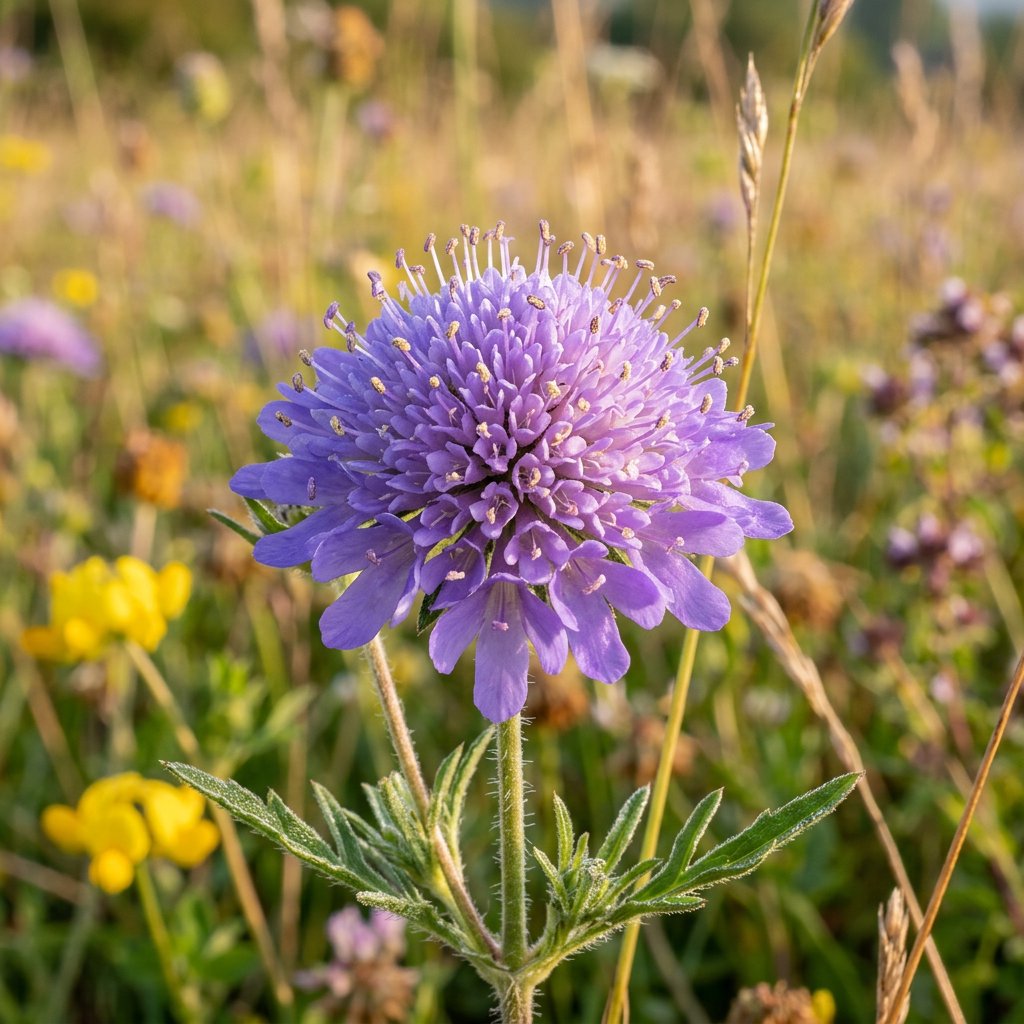
Plant Overview
Known fondly as the "Small Scabious" or the "Pincushion Flower," Scabiosa columbaria is a whimsical perennial that looks like a miniature craft project come to life. Its delicate, nodding blooms have been a staple of sun-drenched meadows and cottage gardens across Europe and Africa for centuries. The name "Pincushion" comes from the flower's unique center, where tiny stamens poke out like pins stuck into a round fabric cushion.
🔍 How to Identify
- 🌸 The Pincushion Bloom: Each flower head consists of a dense, domed center surrounded by a ring of larger, frilly outer petals, typically in shades of lavender, sky blue, or soft pink.
- 🌿 Fern-like Foliage: The base of the plant features a rosette of grey-green leaves that are deeply lobed and almost feathery, providing a soft texture even when the plant isn't blooming.
- 📏 Wand-like Stems: The flowers sit atop thin, wiry, and leafless stems that sway gracefully in the breeze, often reaching heights of 12 to 24 inches.
🏡 In Your Garden
- 🚿 The "Dry Feet" Rule: While this plant is hardy, its biggest enemy is "wet feet" during the winter. It thrives in well-draining, gritty soil and is particularly happy in alkaline or chalky environments.
- 🦋 A Pollinator Party: If you want a garden buzzing with life, this is your top candidate. It is a magnet for bees, hoverflies, and particularly the Marbled White butterfly, providing a long-lasting nectar source from mid-summer through autumn.
⚠️ Safety & Toxicity
- ✅ Pet and Child Safe: Scabiosa columbaria is generally considered non-toxic to dogs, cats, and humans. It is a "worry-free" addition to family-friendly landscapes.
- 🛡️ Gentle Texture: Unlike some meadow plants that have prickly stems or irritating sap, the Small Scabious is soft to the touch and safe to handle without gloves.
✨ Fun Fact
The name Scabiosa comes from the Latin word "scabere" (to scratch). In ancient folk medicine, the plant was believed to be a cure for scabies and other itchy skin conditions because of its slightly rough-textured leaves!

Detailed Care Instructions
| Lighting | Full Sun |
| Hardiness Zones | Max 9B |
Here are some steps to help you grow Scabiosa Columbaria plants:
- Choose a suitable location: Scabiosa Columbaria prefers full sun but can also tolerate partial shade. Ensure the location has well-draining soil.
- Prepare the soil: Amend the soil with organic matter, such as compost, to improve drainage and fertility. Remove any rocks or debris from the planting area.
- Planting: Dig a hole slightly wider and deeper than the plant's root ball. Place the plant in the hole, ensuring the top of the root ball is level with the soil surface. Backfill the hole with soil and gently firm the soil around the plant.
- Watering: Water the newly planted Scabiosa Columbaria thoroughly after planting. Continue watering regularly but avoid overwatering, as excessive moisture can lead to root rot.
- Mulching: Apply a layer of organic mulch around the plant to help conserve moisture, suppress weeds, and regulate soil temperature. Keep the mulch a few inches away from the plant's stem to prevent rot.
- Pruning: Regularly deadhead the faded flowers to encourage continuous blooming. Additionally, you can trim the plant back in early spring to promote healthy new growth and maintain a neat appearance.
- Fertilizing: Apply a balanced, slow-release fertilizer formulated for flowering plants in spring and midsummer to provide essential nutrients.
- Pests and diseases: Scabiosa Columbaria is relatively resistant to pests and diseases, but it may occasionally be susceptible to aphid infestations. Inspect the plants regularly and use insecticidal soap or neem oil to control aphids if necessary.
- Division: Every few years, divide the Scabiosa Columbaria plant in early spring to rejuvenate it. Lift the plant carefully, separate the rooted sections, and replant them at the same depth in new locations or containers.
By following these steps, you can successfully grow Scabiosa Columbaria plants and enjoy their beautiful flowers.

Place in a window with dappled sun or a spot in the middle of a room. Or directly in a window facing west or east.

To water this plant, you should first check the soil moisture by inserting your finger at least one inch into the soil. If the soil feels dry, it is time to water. It is important not to overwater, as the plant prefers well-draining soil and can be susceptible to root rot.
When watering, water deeply to ensure the roots receive enough water. Avoid getting water on the foliage, as this can increase the risk of disease. Water early in the day to allow time for any excess water to evaporate before nightfall.
During the plant's growing season, it is recommended to fertilize once a month with a balanced fertilizer. This will help with healthy growth and blooming.
If you notice any yellowing or wilting leaves, it may be a sign of either over or under watering. Adjust your watering accordingly to help the plant thrive.
To fertilize Scabiosa Columbaria, you will need a balanced fertilizer with equal parts nitrogen, phosphorus, and potassium. Begin by diluting the fertilizer according to the package instructions to avoid over-fertilizing. Apply the diluted fertilizer around the base of the plant, taking care not to let it come in direct contact with the leaves or stems. Gently water the plant after fertilizing to ensure the nutrients are properly absorbed by the roots. Repeat this process every two to four weeks during the active growing season, typically from spring to early fall. However, be cautious to not exceed the recommended frequency or concentration as it may harm the plant. Keep in mind that some cultivars or specific growth conditions may require modified fertilizing instructions, so it is always best to refer to specific care guidelines for your particular Scabiosa Columbaria variety.
Scabiosa Columbaria prefers well-draining soil that is slightly alkaline, with a pH between 7.0 and 8.0. It can tolerate sandy soils but prefers loamy soils. The soil should be rich in organic matter and nutrients, with good moisture retention capabilities. Scabiosa Columbaria is intolerant to heavy clay soils, so it's important that the soil is friable. Additionally, it's recommended to add compost or well-rotted manure to the soil before planting, as this can help improve soil structure and fertility.
Propagation of Scabiosa Columbaria plants can be achieved through a variety of methods, enabling gardeners to expand their collection of these attractive plants. Some common techniques for propagating Scabiosa Columbaria include seed sowing, division, and stem cuttings.
- Seed sowing: Start by collecting mature seeds from the Scabiosa Columbaria plant. This can be done by allowing the flowers to fade and form seedheads. Once the seedheads have dried, remove them and separate the seeds. Sow the seeds in a well-draining potting mix, lightly covering them with a thin layer of soil. Keep the soil consistently moist and place the pot in a warm, partially shaded area. Germination usually takes around 2-4 weeks. Once the seedlings have developed a couple of true leaves, they can be transplanted into individual pots or directly into the garden.
- Division: This method involves digging up an established Scabiosa Columbaria plant and dividing its root system into smaller clumps. Start by carefully removing the plant from the ground, ensuring that the root ball remains intact. Gently separate the roots into smaller sections, making sure that each division has healthy foliage and roots. Replant the divided sections in well-prepared soil, ensuring they are at the same depth as they were previously. Water thoroughly and provide regular care until the divisions become established.
- Stem cuttings: Select a healthy and non-flowering stem from a mature Scabiosa Columbaria plant. Using a clean and sharp knife, make a clean cut just below a leaf node. Remove any lower leaves from the stem, leaving only a few pairs of leaves at the top. Dip the cut end into a rooting hormone to encourage root development. Fill a small pot with a well-draining growing medium, such as perlite or a mix of peat and sand, and make a hole using a pencil or finger. Place the cutting in the hole, gently firming the soil around it. Water thoroughly and place the pot in a warm, bright location with indirect sunlight. Mist the cutting periodically to maintain high humidity levels. After a few weeks, the cutting should develop roots and can be transplanted into a larger container or garden bed.
By utilizing these propagation techniques, gardeners can successfully propagate Scabiosa Columbaria plants, creating an abundant and diverse garden display.
Common pests of the small scabious include Aphids, larvae. Make a habit of checking your small scabious frequently for pests so that any infestations can be caught and managed early.








