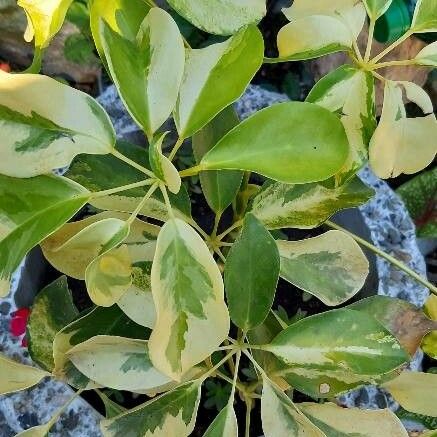
Plant Overview
Often called the Ivy Tree or the Duck’s Foot, Schefflera heptaphylla is a staple of East Asian landscapes, known for its rugged elegance and "umbrella" canopy. Unlike some of its more delicate indoor cousins, this species is a sturdy survivor, frequently found clinging to rocky slopes or standing tall in subtropical forests. In many cultures, it is respected as a symbol of resilience, often used in traditional medicine to represent balance and healing.
🔍 How to Identify
- 🖐️ Leaf Structure: Features distinctive "palmate" leaves that fan out from a central point like the fingers of a hand; while the name implies seven leaflets, you might find anywhere from 6 to 11.
- 🐚 Texture and Color: The leaflets are leathery, oblong, and a deep emerald green with a polished sheen that helps the plant shed heavy tropical rains.
- 🍇 Seasonal Fruit: In late winter, it produces dramatic, branching clusters of tiny white flowers that eventually turn into small, dark purple or black berries.
🏡 In Your Garden
- ☁️ The "Wet Feet" Rule: This plant has a sensitive root system that despises sitting in stagnant water. It thrives in loose, airy soil that mimics the forest floor; if the soil stays soggy, the leaves will quickly yellow and drop in protest.
- 🌳 Growth Habit: While it can reach the heights of a true tree in the wild, it is remarkably adaptable to containers. It responds exceptionally well to pruning, making it a favorite for bonsai practitioners or homeowners looking to create a "topiary" look on a patio.
⚠️ Safety & Toxicity
- 🚫 Status: Mildly toxic to humans and highly irritating to pets.
- 🐾 Details: Like most members of the Aralia family, it contains calcium oxalate crystals. If chewed, these microscopic "needles" cause immediate mouth pain, drooling, and swelling. Keep it on a high shelf if you have curious cats or dogs.
✨ Fun Fact
In Southern China, the Ivy Tree is famous for "Winter Honey." Because it blooms in the late autumn and winter when most other plants are dormant, it provides a rare nectar source for bees, resulting in a prized, slightly bitter honey used in traditional wellness tonics.

Detailed Care Instructions
To grow Schefflera Heptaphylla (also known as the umbrella tree), follow these steps:
- Choose a suitable location: Schefflera Heptaphylla prefers bright, indirect sunlight. Avoid placing it in direct sunlight as it can cause leaf burn. The plant can also tolerate partial shade.
- Soil: Use well-draining soil with a pH level between 6.0 and 7.5. A mixture of potting soil, perlite, and peat moss works well. Ensure the pot has drainage holes to prevent waterlogging.
- Watering: Schefflera Heptaphylla requires regular watering to keep the soil consistently moist. Water the plant when the top inch of soil feels dry to the touch. Avoid overwatering, as it can lead to root rot.
- Humidity: The umbrella tree enjoys moderate to high humidity levels. You can increase humidity by placing the plant on a tray filled with water and pebbles, or by using a humidifier.
- Fertilization: Feed the plant with a balanced liquid fertilizer every two weeks during the growing season (spring and summer). Reduce fertilization during the fall and winter months.
- Pruning: Schefflera Heptaphylla can grow quite tall and bushy. Regular pruning helps maintain its shape and encourages new growth. Use sharp pruning shears to trim any dead, damaged, or leggy branches.
- Propagation: Propagate the umbrella tree through stem cuttings. Take a 4-6 inch cutting from a healthy plant, remove any lower leaves, dip the cut end in rooting hormone, and place the cutting in a pot with well-draining soil. Keep the soil moist, and the cutting should develop roots in a few weeks.
- Pests and diseases: Monitor the plant for common pests like spider mites, aphids, and mealybugs. If infested, treat with insecticidal soap or neem oil. Watch out for leaf spot diseases, which can be controlled by ensuring good air circulation and avoiding overwatering.
By following these steps, you should be able to grow and care for your Schefflera Heptaphylla plant successfully.

Place in a window with dappled sun or a spot in the middle of a room. Or directly in a window facing west or east.

Watering this plant involves ensuring that the soil is consistently moist but not waterlogged. To achieve this, you should water the plant every week or so, depending on the humidity and temperature of the environment.
Before watering, it is helpful to check the top inch of soil to see if it is dry or damp. If it feels dry, it is time to water the plant. Use room temperature water and pour it slowly into the soil, making sure to thoroughly saturate it. Avoid getting water on the leaves or stem, as this can lead to fungal growth and damage.
After watering, allow any excess water to drain out of the pot. This is important because standing water can lead to root rot and other issues. If the plant is in a saucer, make sure to remove any excess water after 10-15 minutes.
In general, it is better to underwater than overwater this plant, as it is sensitive to waterlogged soil. If you notice the leaves drooping or becoming yellow, it may be a sign of overwatering. Similarly, if the soil is constantly damp, it may be a sign of overwatering.
Finally, it is important to note that this plant prefers a humid environment. You can help increase humidity by misting the leaves regularly or placing a humidifier nearby.
To fertilize this plant, use a balanced fertilizer with equal amounts of nitrogen, phosphorus and potassium. Dilute the fertilizer to half strength and apply it once a month during the growing season. Avoid over-fertilizing, as this can cause the plant to become leggy and weak. Always water the plant well before and after fertilizing to prevent root burn.
When planting Schefflera Heptaphylla, it is important to choose soil that is loamy and well-drained. This will allow the roots to grow and spread easily, and prevent water from sitting and causing root rot. The soil should be rich in organic matter and have a slightly acidic pH level, between 5.5 and 6.5. It is also beneficial to mix perlite or sand into the soil to increase drainage. Avoid using heavy clay soils or soils that are too sandy, as they may not provide optimal growing conditions for the plant. When repotting, choose a pot that is slightly larger than the previous one, but not too large as it may cause waterlogging and affect the plant's growth.
Propagation of this plant can be done using stem cuttings. First, select a healthy stem that is 4 to 6 inches long with at least two leaves attached. Remove the bottom leaves, leaving only the top two. Dip the cut end in rooting hormone powder and plant it in a pot with well-draining soil. Water the soil until it is moist and place the pot in a bright but indirect light. Cover the pot with a plastic bag to create a humid environment and encourage root growth. Keep the soil moist but not waterlogged and remove the plastic bag once new growth appears. After a few weeks, the cutting should have developed roots and can be transplanted into a larger pot or garden.
Common pests of the ivy tree include Scale insect, mealybugs, thrips. Make a habit of checking your ivy tree frequently for pests so that any infestations can be caught and managed early.








