Plant Overview
Often called the "Mountain Trumpet" or "Yagrumo Macho," Schefflera morototoni is a sky-reaching giant of the American tropics. This fast-growing tree is a "pioneer species," meaning it is often the first to reclaim open clearings in the rainforest. With its majestic, umbrella-like canopy and shimmering leaves, it looks like something straight out of a prehistoric landscape.
🔍 How to Identify
- 🌿 The "Umbrella" Foliage: Massive, hand-shaped (palmate) leaves are arranged in a circular fashion at the ends of branches, creating a lush, parasol effect that can cast deep shade.
- ✨ Golden Undersides: A key identifying feature is the striking contrast of the leaves; while the tops are a deep, glossy green, the undersides are covered in a fine, rust-colored or golden velvety fuzz.
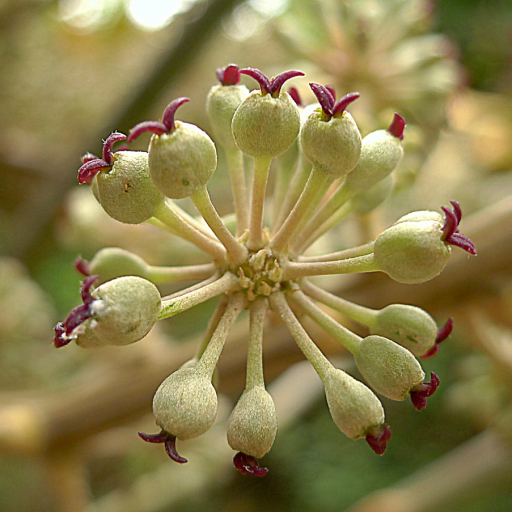
- 🍒 Berry Clusters: It produces large, branched stalks of tiny flowers that eventually turn into dark, flattened purple berries, which act as a magnet for tropical birds.
🏡 In Your Garden
- 🌳 Space Requirements: Unlike its smaller cousins often kept in pots, this species is a massive tree that can reach over 100 feet in the wild. It is best suited for large botanical landscapes or tropical restoration projects rather than indoor containers.
- ☀️ Sun Seeker: As a "gap-filler" in nature, it thrives in full sun. It is incredibly resilient and can grow with startling speed, provided the soil is well-draining and the climate remains humid and warm.
⚠️ Safety & Toxicity
- 🐾 Toxic to Pets: Like most members of the Schefflera genus, this plant contains calcium oxalate crystals. If chewed or ingested, it can cause intense mouth irritation, drooling, and digestive upset in cats and dogs.
- 🧤 Sap Sensitivity: The sap can be a skin irritant for some individuals. It is wise to wear gloves if you are handling broken branches or pruning the tree to avoid "itchy" rashes.
✨ Fun Fact
This tree is widely known as "Matchwood" because its wood is remarkably light and straight-grained. For decades, it has been a primary source for manufacturing matchsticks and toothpicks across Central and South America!

Detailed Care Instructions
To grow Schefflera Morototoni plant, also known as umbrella tree, you can follow these steps:
- Choose a suitable location: Select a spot with bright, indirect sunlight. Avoid placing it in direct sunlight, as it can scorch the leaves.
- Soil requirement: Use well-draining soil that is rich in organic matter. The pH level should be slightly acidic or neutral.
- Planting: Grow Schefflera Morototoni in a pot or directly in the ground. Make sure the container has drainage holes.
- Watering: Water the plant thoroughly and then allow the topsoil to dry out slightly before watering again. Overwatering can lead to root rot, so ensure the soil is well-drained.
- Humidity: Schefflera Morototoni prefers high humidity levels. You can increase humidity by misting the leaves with water or placing a tray of water near the plant to allow for evaporation.
- Fertilization: Provide regular feedings with a balanced, water-soluble fertilizer during the growing season (spring and summer). Follow the instructions on the fertilizer package for dosage and frequency.
- Pruning: Prune the plant to maintain its shape and control its size. Remove any dead or yellowing leaves to promote new growth. You can also prune for shape and to encourage bushiness.
- Propagation: Propagate the plant through stem cuttings. Take a 4-6 inch (10-15 cm) cutting from a healthy stem, remove the lower leaves, and place it in a pot with well-draining soil. Keep the soil moist until new roots develop.
- Pests and diseases: Keep an eye out for common pests like aphids and spider mites. Treat any infestations promptly using an appropriate insecticidal soap.
Remember, different plants have different growth rates, so be patient with Schefflera Morototoni. With proper care and attention, it should grow into a healthy and lush plant.

Place in a window with dappled sun or a spot in the middle of a room. Or directly in a window facing west or east.

To properly water this plant, you should first ensure that the soil is slightly dry to the touch before watering. It is recommended to water deeply, allowing the water to fully saturate the soil. However, be cautious not to let the plant sit in standing water, as this can lead to root rot. To prevent this, drainage holes in the pot are essential, and excess water should be drained immediately after watering. This plant can tolerate periods of dryness, so it is better to underwater than to overwater. It is generally recommended to water once every 1-2 weeks, depending on the humidity and temperature of its environment.
To fertilize this plant, use a balanced fertilizer with equal amounts of nitrogen, phosphorus, and potassium. Apply the fertilizer during the growing season, which is typically spring and summer. Dilute the fertilizer to half strength and apply once a month, ensuring the soil is moist beforehand. Avoid fertilizing during the winter months when the plant is dormant.
The ideal type of soil to use for the Schefflera Morototoni plant is one that is rich in nutrients and moisture, while also being well-draining. A mixture of peat moss, perlite, and vermiculite is generally recommended to promote good drainage while also allowing for adequate water retention. Additionally, adding some compost or other organic matter to the soil can help to further enrich it with nutrients and promote healthy growth. It is important to avoid using soil that is heavy and compacted, as this can lead to poor drainage and root rot. Overall, the soil used should be able to provide a stable environment for the plant to thrive in, allowing it to grow strong and healthy over time.
To propagate this plant, you will need a healthy parent plant and a sharp, sterile cutting tool. Begin by selecting a stem that is free of any disease or damage, and make a clean cut at a 45-degree angle just below a leaf node. Remove any leaves from the lower half of the stem, and dip the cut end into a rooting hormone powder. Plant the cutting in a well-draining potting soil, ensuring that the soil is moist but not waterlogged. Keep the cutting in a warm, humid location with bright, indirect light, and mist it daily to prevent it from drying out. Over time, the plant will begin to develop roots and new growth.








