Plant Overview
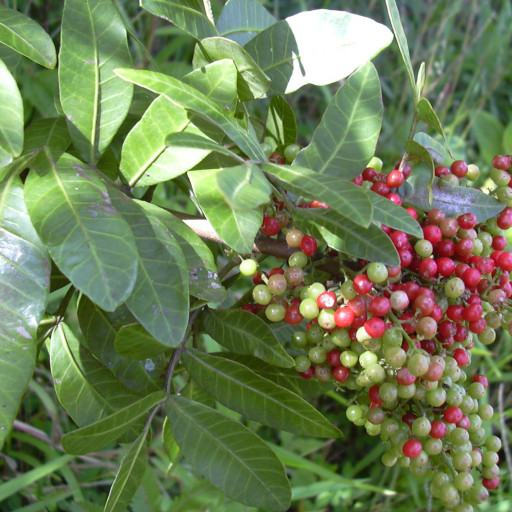
Known as the Brazilian Peppertree or "Christmasberry," this vibrant evergreen is famous for its festive clusters of bright red berries and glossy foliage. While it looks like a holiday decoration come to life, it is a master of survival, often outcompeting native species with its rapid growth and dense, shade-casting canopy. Originally from South America, it has traveled the world as an ornamental beauty, though it often wears out its welcome in warmer climates.
🔍 How to Identify
- 🌿 Compound Leaves: The leaves are "pinnate," meaning they are divided into 7 to 13 glossy, oval leaflets. If you look closely, the central stem of the leaf often has a reddish tint.
- 🔴 The Berries: In late autumn and winter, the tree produces heavy, drooping clusters of small, waxy red fruits. These berries are the plant's most striking feature.
- 👃 Peppery Scent: When the leaves or berries are crushed, they release a sharp, resinous aroma that smells like a mix of turpentine and black pepper.
🏡 In Your Garden
- 🌱 Aggressive Nature: This plant is a "pioneer species," meaning it is one of the first to take over disturbed soil. In many regions, particularly Florida and Hawaii, it is classified as a noxious weed because it grows so fast it smothers local ecosystems.
- 🌳 Growth Habit: It rarely grows as a straight tree; instead, it forms a tangled thicket of multiple trunks and arching branches. It is incredibly drought-tolerant and salt-resistant, making it nearly impossible to kill once established.
⚠️ Safety & Toxicity
- 🚫 The "Poison Ivy" Connection: Schinus terebinthifolius belongs to the Anacardiaceae family, making it a close cousin to Poison Ivy and Sumac.
- 🧤 Skin Irritation: The sap contains sapotoxins that can cause "contact dermatitis" (an itchy, blistering rash) in sensitive individuals. Never burn the wood, as the smoke can cause severe respiratory irritation.
- 🐾 Pet Safety: The berries are toxic to horses and can cause violent digestive upset in dogs, cats, and humans if ingested in large quantities.
✨ Fun Fact
- 🌶️ Gourmet Imposter: The dried berries of this tree are the "pink peppercorns" often found in high-end grocery stores. While they add a beautiful pop of color to salads, people with nut allergies should be careful—because it's related to the cashew, some people have a cross-allergic reaction to the spice!

Detailed Care Instructions
To grow a Schinus Terebinthifolius plant, also known as Brazilian peppertree or Florida holly, you can follow these steps:
- Choose the right location: Brazilian peppertree prefers full sun but can also tolerate partial shade. It grows well in well-drained soil, so ensure the area has good drainage. The plant is native to subtropical and tropical regions, so it is important to consider climate and temperature requirements.
- Obtain a suitable cutting or seedling: You can either purchase a seedling or take cuttings from an existing Brazilian peppertree. Collecting seeds directly from the plant is not recommended as they have a hard seed coat that may need scarification to enhance germination.
- Prepare the planting site: Clear any weeds, rocks, or debris from the area where you plan to grow the plant. Loosen the soil and add organic matter to improve fertility and drainage if necessary.
- Plant the cutting or seedling: If you are using a cutting, dip the bottom end of the cutting in rooting hormone before planting it in the soil. If you are using a seedling, make a hole wide and deep enough to accommodate the root system without bending or crowding the roots.
- Water regularly: Until the plant establishes deep roots, provide regular watering to keep the soil moist but not waterlogged. Once established, the plant becomes more drought-tolerant.
- Prune and shape the plant: Pruning can help maintain a desired shape and enhance growth. You can trim the plant lightly after flowering or shape it during the dormant season.
- Mulch the area around the plant: Apply a layer of mulch around the base of the tree to retain moisture, reduce weed growth, and protect the roots from extreme temperatures.
- Monitor for pests and diseases: Keep an eye out for common pests such as scale insects or mealybugs. If you notice any disease symptoms or pest infestations, take appropriate action using organic or chemical treatments as necessary.
- Maintain care: Regularly inspect the plant for any signs of nutrient deficiencies, water stress, or issues and address them promptly. Fertilize the plant with a balanced slow-release fertilizer as per package instructions.
By following these steps, you should be able to successfully grow a Schinus Terebinthifolius plant.
To water this plant, ensure that the soil is moist but not overly saturated. Water deeply once a week during the growing season and reduce watering during the winter. Avoid getting water on the leaves or flowers of the plant as this can promote the growth of fungi and diseases. Use a watering can or hose with a gentle flow to avoid damaging the soil or the roots of the plant. Allow the soil to dry slightly between waterings to prevent root rot. If the leaves begin to curl or drop, it may be a sign of over or under-watering. Adjust watering accordingly.
To fertilize this plant, first ensure that the soil is well-draining and aerated. Use a balanced fertilizer with equal parts of nitrogen, phosphorus, and potassium. Apply the fertilizer during the growing season every two to four weeks, depending on the plant's growth rate. Do not fertilize the plant during the winter months. Water the plant thoroughly after applying the fertilizer to ensure that the nutrients are absorbed properly.
It is recommended to use a well-draining soil mix that is rich in organic matter for this plant. The soil should not be overly compacted or clay-heavy, as it can lead to drainage issues and root rot. A mixture of peat moss, perlite, and sand is a suitable option for soil. Additionally, regular fertilization with balanced plant food can help support the growth and health of this plant.
- Select a healthy branch of the plant, ideally one that is at least 6-8 inches long and has several leaves.
- Trim the bottom of the branch so that it is about 1-2 inches long. Make sure to cut at a 45-degree angle to ensure maximum surface area for rooting.
- Remove the lower leaves of the branch, leaving only a few at the top.
- Dip the cut end of the branch into rooting hormone powder. This will help the plant develop roots more quickly.
- Plant the branch in a container filled with a well-draining potting mix, making sure to bury the cut end at least an inch deep in the soil.
- Water the soil thoroughly, but be careful not to overwater.
- Place the container in a warm, bright location (but not direct sunlight), and keep the soil moist. It may take several weeks for the plant to develop roots.
- Once the plant has developed roots and is growing well, it can be transplanted into a larger pot or planted directly in soil outdoors.







