Plant Overview
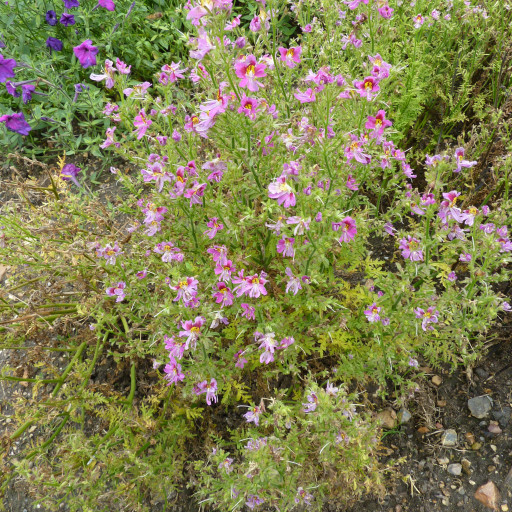
Often called the "Poor Man’s Orchid" or the "Butterfly Flower," the Schizanthus x wisetonensis is a show-stopping annual that brings the exotic look of a tropical orchid to the humble garden bed. Originating from the cool, coastal mountains of Chile, these hybrids were a Victorian-era favorite for conservatories. Their petals are so intricately patterned and brightly colored that they appear to have been hand-painted by a meticulous artist.
🔍 How to Identify
- 🦋 The Flowers: The blooms are "zygomorphic" (irregularly shaped), featuring fringed petals in shades of pink, purple, red, gold, and white. They usually have a distinct yellow "throat" speckled with dark dots.
- 🌿 The Foliage: Unlike the broad leaves of many garden flowers, Schizanthus has delicate, feathery, fern-like green leaves that provide a soft, lacey backdrop to the vivid blooms.
- 📏 The Silhouette: They typically grow in a mounded or upright bushy habit, reaching 12 to 24 inches in height, though they can become "leggy" if they don't receive enough light.
🏡 In Your Garden
- 🌡️ The Cool Factor: These plants are true lovers of "Goldilocks" weather. They thrive in the cool breezes of spring and autumn but will often stop blooming or "melt" in the sweltering humidity of a mid-summer heatwave.
- ✂️ Shape & Structure: To prevent your Schizanthus from becoming top-heavy and flopping over, "pinch" the growing tips when the plant is young. This encourages a bushier shape with significantly more flower spikes.
- 🍽️ High Energy Needs: Because they produce such a massive volume of flowers at once, they are "heavy feeders." They require regular liquid fertilizer to sustain their high-intensity blooming cycle.
⚠️ Safety & Toxicity
- 🟢 General Status: Safe for most gardeners.
- 🐾 Pet Caution: While not listed as highly toxic like some of its Solanaceae (Nightshade) cousins, it is still best to keep this plant away from curious nibblers. Ingesting any ornamental plant can cause mild stomach upset in cats or dogs.
- 👐 Skin Sensitivity: There are no common reports of skin irritation, but those with sensitive skin should wear gloves when pruning, as the sap can occasionally be tacky.
✨ Fun Fact
Despite its name "Poor Man’s Orchid," the Schizanthus is actually a distant relative of the tomato and the potato! While it looks like an exotic orchid, its DNA places it firmly in the Nightshade family.

Detailed Care Instructions
To grow Schizanthus X Wisetonensis, also known as Poor Man's Orchid or Butterfly Flower, follow these steps:
- Location: Choose a location with partial shade or filtered sunlight. The plant does best in a cool, moist climate, so choose a spot that offers protection from intense heat.
- Soil: The plant prefers well-draining soil that is fertile and rich in organic matter. You can improve the soil by adding compost or well-rotted manure before planting.
- Planting: Plant the Schizanthus X Wisetonensis seeds directly in the soil after the last frost date in spring. Sow the seeds shallowly, just barely covering them with a thin layer of soil. Space the seeds about 6-8 inches apart.
- Watering: Keep the soil consistently moist, but avoid overwatering as it may cause root rot. Water thoroughly whenever the top inch of soil feels dry to the touch.
- Fertilization: Feed the plants monthly with a balanced, water-soluble fertilizer to promote healthy growth and abundant blooms. Follow the instructions on the fertilizer packaging for the proper dilution ratio.
- Pinching: Pinch off the top few leaves when the plants reach about 6 inches tall. This will encourage bushier growth and more flower production.
- Pruning: To maintain the plant's shape and prevent legginess, prune back any straggly or damaged stems throughout the growing season.
- Mulching: Apply a layer of organic mulch around the base of the plants to help retain moisture, suppress weed growth, and regulate soil temperature.
- Pests and diseases: Keep an eye out for common pests like aphids, spider mites, and slugs. Treat any infestations promptly with organic insecticides or manually remove them. Schizanthus X Wisetonensis is generally resistant to diseases but may be susceptible to powdery mildew in humid conditions. Ensure good air circulation around the plants and avoid overhead watering to minimize the risk.
- Winter care: Schizanthus X Wisetonensis is an annual plant, so it does not tolerate frost. As the cold season approaches, harvest any remaining seeds and discard the plant debris. Alternatively, you can grow it as a winter houseplant if you can provide sufficient light and humidity.
By following these steps, you should be able to successfully grow Schizanthus X Wisetonensis plants and enjoy their colorful and unique blooms.

Place in a window with dappled sun or a spot in the middle of a room. Or directly in a window facing west or east.

To water this plant, you should first check the soil moisture level by sticking your finger into the soil about an inch deep. If it feels dry to the touch, it's time to water. When watering, it's important not to overwater as this plant prefers moist but well-draining soil. You can water the plant at the base of the stem with a watering can or by using a drip irrigation system. It's important to avoid getting water on the foliage as this can cause fungal diseases. Allow the soil to partially dry out between watering, and be sure to water in the morning or early afternoon to allow the plant to dry off before evening.
To effectively fertilize Schizanthus X Wisetonensis, use a balanced water-soluble fertilizer with an N-P-K ratio of 10-10-10 or similar. Start fertilizing once the seedlings have developed their second set of true leaves, and continue monthly throughout the growing season.
Dilute the fertilizer according to the manufacturer's instructions, generally at a rate of 1 teaspoon per gallon of water. Water the plant thoroughly with this diluted fertilizer solution, ensuring the soil is saturated but not waterlogged.
It is important to avoid over-fertilizing, as this can lead to excessive leaf growth at the expense of flower production. Therefore, it is recommended to err on the side of caution and use a slightly lower concentration than the recommended dose if in doubt.
Additionally, always fertilize when the soil is moist to prevent root burn. If the soil is dry, water the plant a day or two prior to fertilizing.
By following these fertilizing instructions, you can provide the necessary nutrients for the healthy growth and flowering of Schizanthus X Wisetonensis.
Schizanthus X Wisetonensis is a type of flowering plant that requires a specific type of soil for optimal growth. It is recommended to use a soil that is loose, fertile, and has good drainage. The pH level of the soil should be between 6.0 and 7.5. Adding organic matter, such as compost, to the soil can improve its quality and provide nutrients for the plant. It is important to avoid heavy clay soils, as they can lead to poor drainage and root rot. Additionally, the plant prefers soil that is consistently moist, but not waterlogged. Overwatering can lead to root damage and disease. Regular fertilization with a balanced fertilizer can also promote healthy growth.
To propagate Schizanthus x wisetonensis, follow these steps:
- Select a healthy parent plant: Choose a mature, healthy Schizanthus x wisetonensis plant from which you want to take cuttings. Ensure that the plant is disease-free and vigorous.
- Timing: Propagation is typically done during the spring or early summer when the plant is actively growing.
- Prepare the tools: Gather a sharp, sterile pair of pruning shears or scissors, a clean propagation tray or pot, a well-draining propagation medium (such as a mixture of perlite and peat moss or a seed-starting mix), and a rooting hormone powder or gel (optional).
- Take cuttings: Identify a suitable stem for cutting. Look for non-flowering lateral shoots, preferably with a length of about 3 to 4 inches (8 to 10 cm). With sterilized pruning shears, make a clean cut just below a set of leaves or node.
- Remove lower leaves: Remove the leaves from the lower third of the cutting, leaving only a few leaves at the top intact. This helps reduce water loss and promote successful rooting.
- Optional: Apply rooting hormone (if desired) by dipping the cut end of the stem into the rooting powder or gel according to the product's instructions. This can enhance the chances of rooting.
- Planting: Fill the propagation tray or pot with the chosen propagation medium. Create holes in the medium using a pencil or dibber tool, spacing them apart to avoid overcrowding. Insert the prepared cuttings into the holes, ensuring each cutting is planted at least an inch deep into the medium.
- Watering: Gently water the propagated cuttings using a fine mist or a spray bottle, ensuring that the medium is adequately moist.
- Provide the right environment: Place the propagation tray or pot in a warm and well-lit location, preferably with indirect sunlight. Maintain a consistent temperature between 65°F to 75°F (18°C to 24°C) and humidity levels around 70%.
- Mist regularly: Mist the cuttings daily to maintain humidity and prevent excessive drying out. Be careful not to oversaturate the medium, as this can cause rotting.
- Monitor and wait: Over the next several weeks, observe the cuttings closely for signs of rooting. Initially, roots may take several weeks to develop. Once the cuttings have rooted and established new growth, it indicates that successful propagation has taken place.
- Transplanting: Once the rooted cuttings have developed sufficient root systems and are growing actively, they can be carefully transplanted into individual pots filled with well-draining potting soil. Gradually acclimate the new plants to their final growing environment.
By following these propagation steps, you can easily propagate Schizanthus x wisetonensis plants and enjoy the beauty of this stunning species.
Common pests of the schizanthus x wisetonensis include Spider mites. Make a habit of checking your schizanthus x wisetonensis frequently for pests so that any infestations can be caught and managed early.







