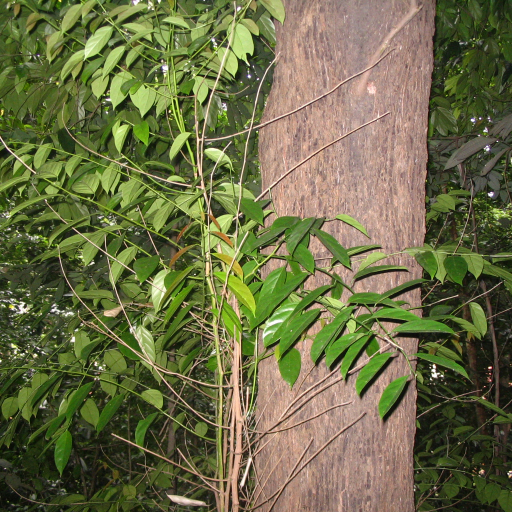
Plant Overview
Known as the "Garlic Nut Tree" or Kulim, this Southeast Asian giant is one of the most olfactory-distinct trees in the world. If you find yourself hiking through the rainforests of Borneo or Malaysia and suddenly smell a kitchen full of sautéing garlic, you’ve likely stumbled upon this species. It is a slow-growing hardwood that plays a vital role in its ecosystem and local culinary traditions.
🔍 How to Identify
- 🧄 The Scent: The most defining feature is the intense smell of garlic emitted by the bark, crushed leaves, and especially the fallen fruit.
- 🍃 Leaf Shape: The leaves are large, elliptical, and leathery (coriaceous) with a smooth surface, typically arranged alternately along the branches.
- 🥥 The Fruit: It produces a round, green-to-brown nut about the size of a golf ball. The outer shell is thin and fibrous, hiding a hard inner nut.
- 🪵 The Bark: The trunk is usually straight and dark grey-brown, often appearing slightly flaky or cracked in older specimens.
🏡 In Your Garden & Ecology
- 🌳 Growth Habit: This is an "emergent" tree, meaning it wants to grow tall—very tall. It is not suitable for small backyards and is best left to botanical gardens or large forest estates where it can reach its 40-meter potential.
- 💧 Soil Preference: In the wild, it thrives in well-draining primary forests. It is quite sensitive to transplanting because it develops a deep, stubborn taproot early in its life.
- 🦋 Wildlife Role: The pungent fruit is a food source for various forest floor dwellers, including wild boars and certain rodents, who help disperse the seeds.
⚠️ Safety & Toxicity
- ✅ Status: Generally non-toxic and historically used as a food source.
- 🥘 Human Use: The nuts are edible and are used by indigenous communities as a substitute for garlic. However, the flavor is incredibly concentrated; a little goes a long way!
- 🐾 Pet Safety: While not traditionally toxic, the high concentration of sulfur compounds (the source of the garlic smell) could cause stomach upset in curious dogs or cats if ingested.
✨ Fun Fact
Indigenous groups in Malaysia, such as the Orang Asli, have used the Kulim nut for generations to flavor jungle stews. It is often referred to as "Nature’s Seasoning" because the nut provides both the flavor of garlic and the richness of a forest truffle.

Detailed Care Instructions
To grow Scorodocarpus Borneensis, also known as the Borneo Garlic, you can follow these steps:
- Obtain seeds or young plants: Check with local plant nurseries, specialty botanical gardens, or seed suppliers to find Scorodocarpus Borneensis seeds or young plants for purchase.
- Choose a suitable location: Select a well-draining location that receives partial shade to full sun, as Scorodocarpus Borneensis requires indirect sunlight for optimal growth. The soil should be rich in organic matter and slightly acidic.
- Prepare the soil: Clear the area of weeds and debris. Loosen the soil and mix in compost or well-rotted manure to enhance its fertility and drainage ability.
- Plant the seeds or young plants: If using seeds, sow them directly into the prepared soil at a depth of about 1/4 inch (0.6 cm). If using young plants, dig a hole wide and deep enough to accommodate the root ball and gently place the plant in the hole. Backfill with soil, ensuring the plant is at the same depth it was in its container. Space multiple plants at least 6-8 feet (1.8-2.4 meters) apart.
- Water regularly: Keep the soil evenly moist but not waterlogged. Water the plants regularly, especially during dry periods, to help establish their roots. However, ensure the soil doesn't become waterlogged, as excessive moisture can lead to root rot.
- Mulch: Add a layer of mulch around the base of the plant to help conserve moisture, suppress weeds, and regulate soil temperature.
- Pruning and maintenance: Prune any dead, damaged, or crossing branches to maintain the plant's overall health and shape. Additionally, remove any fallen leaves or debris from around the plant to prevent the accumulation of pests or diseases.
- Fertilize: Apply a balanced, slow-release fertilizer, following the instructions on the package, during the growing season to provide essential nutrients to the plant.
- Protect from extreme temperatures: Scorodocarpus Borneensis is sensitive to frost and extreme heat. If you live in a region with harsh winters or exceptionally hot summers, consider protecting the plant with a frost cloth or providing some shade during the hottest part of the day.
- Stay vigilant: Regularly monitor the plant for any signs of pests or diseases. If detected, take appropriate action using organic or chemical controls as necessary.
With proper care and maintenance, your Scorodocarpus Borneensis plant should grow well and thrive in its chosen location.
Scorodocarpus Borneensis is a plant native to the Borneo region and is grown primarily for its unique fruit. When it comes to watering this plant, it is important to keep a few guidelines in mind:
- Soil moisture: Scorodocarpus Borneensis prefers a moderately moist soil. As a general rule, it is recommended to keep the soil consistently moist but not excessively wet or waterlogged. Avoid letting the soil dry out completely between waterings.
- Watering frequency: The frequency of watering depends on various factors such as the climate, pot size, and season. Generally, during the growing season, watering every 1-2 weeks is sufficient. However, always check the moisture levels in the soil before watering to ensure it is not too dry or too wet.
- Watering method: It is advisable to water this plant thoroughly rather than using a light sprinkling technique. Water the plant until you see the excess water draining out from the bottom of the container, ensuring the root ball is adequately moistened. This helps in preventing the accumulation of salts in the soil and promotes better drainage.
- Environmental factors: Consider the environmental conditions when determining the watering schedule. Factors such as temperature, humidity, and sunlight exposure can influence the plant's water requirements. For instance, during hot and dry conditions, Scorodocarpus Borneensis may require more frequent watering to prevent dehydration.
- Adjusting watering in different seasons: As seasons change, the watering needs of Scorodocarpus Borneensis may vary. During the dormant winter period, watering frequency should be reduced to avoid overwatering. It is advisable to monitor the soil moisture levels regularly to ensure optimal watering.
Remember, the specific watering needs may also depend on the individual plant, its size, and the growing conditions. Observing the plant closely and evaluating its response to watering will help you fine-tune the watering routine accordingly.
To fertilize Scorodocarpus Borneensis plant, follow these instructions:
- Choose a balanced, slow-release fertilizer specifically formulated for tropical plants. Ideally, opt for one with equal amounts of nitrogen (N), phosphorus (P), and potassium (K), or with a slightly higher proportion of potassium.
- Dilute the fertilizer according to the package instructions. It is crucial not to exceed the recommended concentration, as it may harm the plant.
- Apply the diluted fertilizer around the base of the plant, avoiding direct contact with the leaves. Start by creating a shallow trench or ring about 6-8 inches away from the stem.
- Pour the fertilizer solution into the trench or ring. Ensure that the fertilizer is distributed evenly and covers the designated area.
- Gently incorporate the fertilizer into the soil by lightly raking or hoeing it. Be careful not to damage the plant's roots.
- Water the plant thoroughly after fertilizing. This helps to prevent the fertilizer from burning the roots and aids in the absorption of the nutrients.
- Repeat the fertilization process every 3-4 months during the growing season, which typically aligns with spring and summer months in tropical regions. Adjust the frequency based on the specific recommendations for the fertilizer you are using.
Remember, it is essential to always follow the fertilizer manufacturer's instructions and consult specialized resources or local gardening experts for more precise fertilization guidance for Scorodocarpus Borneensis plants.
Scorodocarpus Borneensis is a plant that thrives in well-draining soil with a specific pH range. The ideal soil type for this plant is a loamy or sandy soil that is rich in organic matter. The soil should be slightly acidic to neutral, with a pH range of 5.5 to 7.5. It is important to ensure that the soil has good drainage to prevent waterlogging, as excessive moisture can be detrimental to the plant's health.
To improve the soil structure and drainage, it is recommended to incorporate organic matter such as compost or well-rotted manure into the soil before planting. This will not only provide necessary nutrients but also enhance the soil's ability to hold moisture without becoming waterlogged.
Regularly amending the soil with organic matter is beneficial for the long-term health of Scorodocarpus Borneensis. Adding a layer of organic mulch around the base of the plant can help in retaining moisture, suppressing weeds, and gradually adding nutrients to the soil over time.
Keeping the soil consistently moist but not overly saturated is key for the plant's overall growth and development. It is important to water the plant deeply but infrequently, ensuring that the top inch of soil dries out slightly between watering sessions. This will encourage the plant to develop a strong root system and prevent the chances of root rot.
In summary, Scorodocarpus Borneensis thrives in well-draining soil with a slightly acidic to neutral pH range. Adding organic matter and maintaining soil moisture levels appropriately are vital for the plant's successful growth.
Scorodocarpus Borneensis is a plant species that can be propagated through a variety of methods. Here's a detailed guide on how to propagate this plant:
- Seeds: Obtain mature and fresh seeds of Scorodocarpus Borneensis from a reliable source.
- Harvest the seeds from ripe fruits by collecting the fruits and removing the outer fleshy pulp.
- Clean the seeds thoroughly with water to remove any residual pulp.
- Soak the seeds in water for about 24 hours to soften the hard seed coat.
- Prepare a well-draining potting mix by using a combination of peat, perlite, or vermiculite.
- Sow the seeds on the prepared potting mix, ensuring they are covered lightly with a thin layer of soil.
- Place the pot in a warm and humid environment, preferably with a temperature around 77°F (25°C).
- Keep the soil consistently moist but not waterlogged by watering lightly whenever the top inch of soil feels dry.
- Germination can take anywhere from a few weeks to several months, so be patient and provide the necessary care.
- Once the seedlings emerge and grow several sets of leaves, they can be transplanted into individual pots or containers.
- Harvest the seeds from ripe fruits by collecting the fruits and removing the outer fleshy pulp.
- Stem cuttings: Propagation of Scorodocarpus Borneensis through stem cuttings can also be successful.
- Select a healthy and disease-free plant from which to take cuttings.
- Using a sharp and sterilized pruning tool, cut a 4-6 inch (10-15 cm) section of a healthy stem just above a leaf node.
- Remove the leaves from the lower half of the stem, leaving a few leaves at the tip.
- Optional: Dip the lower end of the cutting in a rooting hormone powder or gel to enhance root development.
- Prepare a well-draining potting mix using a combination of peat and perlite or vermiculite.
- Insert the lower end of the stem cutting into the prepared potting mix, making sure it is inserted at least an inch deep.
- Place the pot in a warm and humid environment, ideally with a temperature of around 77°F (25°C).
- Mist the cutting regularly to maintain a high level of humidity around the leaves.
- Keep the potting mix consistently moist but not waterlogged by watering lightly whenever it feels dry.
- Within a few weeks to a couple of months, roots should start to develop, and new growth will emerge from the tip of the cutting.
- Once the cutting has established a strong root system and has several sets of leaves, it can be transplanted into a larger pot or the garden.
By following these propagation techniques, you can successfully propagate Scorodocarpus Borneensis and expand your collection of this unique plant species.
- Select a healthy and disease-free plant from which to take cuttings.








