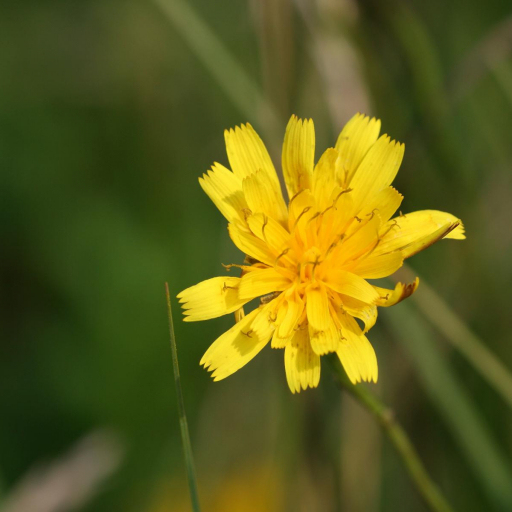
Plant Overview
Often mistaken for its famous cousin the dandelion, the Autumn Hawkbit is the resilient "last hurrah" of the meadow. While other yellow wildflowers begin to fade by mid-summer, this plant waits until the days grow shorter to paint lawns and hillsides in shades of gold. Its ability to thrive in poor soil and withstand heavy foot traffic makes it a common, yet charming, companion in both wild and urban landscapes.
🔍 How to Identify
- 🌼 The Flowers: Look for bright yellow, many-petaled heads that resemble dandelions. However, if you look at the underside of the flower, you will see tiny, overlapping green scales (bracts) that are often covered in fine, dark hairs.
- 🌿 The Stem: Unlike the hollow, milky stem of a dandelion, the Hawkbit’s stem is solid, wiry, and often slightly swollen just below the flower head. It also frequently branches out, allowing one plant to hold multiple flowers.
- 🍃 The Leaves: The leaves form a flat, star-shaped rosette right at the soil surface. They are long, narrow, and "toothed" or lobed, designed to hug the earth so closely that lawnmower blades often pass right over them.
🏡 In Your Garden
- 🚜 Mower-Tolerant Wildflower: This plant is an expert at surviving in short-grass lawns. Because its foliage stays so low, it can bloom even in frequently manicured gardens, providing a splash of color where other plants fail to grow.
- 🐝 Pollinator Lifeline: It is a vital late-season food source. When most summer blooms have died off, the Autumn Hawkbit provides high-quality nectar for honeybees, hoverflies, and butterflies who are preparing for the colder months ahead.
⚠️ Safety & Toxicity
- ✅ Generally Safe: The Autumn Hawkbit is not known to be toxic to humans. In some cultures, the young leaves have historically been used in salads, though they become quite bitter as they age.
- 🐾 Pet Friendly: There are no reported toxicity issues for cats, dogs, or horses. However, it is always wise to prevent pets from grazing excessively on wild plants to avoid minor digestive upset.
✨ Fun Fact
The Autumn Hawkbit is a bit of a "clock-watcher." Its flowers are highly sensitive to light and time; they typically snap open around 7:00 or 8:00 AM and close tightly by mid-afternoon, tucked away long before the sun actually sets!

Detailed Care Instructions
To grow Scorzoneroides Autumnalis (also known as Autumn Hawkbit), follow these steps:
- Climate and soil: Autumn Hawkbit is adaptable to various soil types but prefers well-drained, sandy or loamy soil. It thrives in full sun or partial shade. The plant is hardy and can tolerate temperatures down to -30°F (-34°C), making it suitable for various climates.
- Planting: You can sow the seeds directly in the garden bed or start them indoors and transplant later. Sow the seeds in early spring or late summer/early fall for optimal growth.
- Soil preparation: Prepare the soil by removing any weeds, rocks, and debris. Loosen the soil with a garden fork or tiller to a depth of 6-8 inches. Add organic matter like compost or well-rotted manure to improve soil fertility and drainage.
- Sowing seeds: Scatter the seeds evenly on the prepared soil surface. Gently press them into the soil without burying them too deep, as they require light for germination. Keep the seeds spaced about 12-18 inches apart to give them room to grow.
- Watering: Keep the soil consistently moist but not waterlogged during the germination period, which usually takes 10-14 days. Once the plants are established, water them deeply once a week, especially during dry spells.
- Thinning and transplanting: Once the seedlings are about 2-3 inches tall, thin them to a spacing of 12-18 inches to give ample space for each plant to grow. Alternatively, if you started the seeds indoors, transplant the seedlings outdoors when they are 2-3 inches tall, ensuring they have sufficient space and avoiding disturbing the roots.
- Mulching: Apply a layer of organic mulch like straw or wood chips around the plants to help conserve moisture, suppress weeds, and regulate soil temperature.
- Maintenance: Remove any weeds that compete with the plants for nutrients and water. Regularly check for pests like slugs or aphids and take appropriate measures to control them.
- Fertilizing: Scorzoneroides Autumnalis generally doesn't require heavy fertilization. However, you can apply a balanced fertilizer once or twice a season, following the manufacturer's instructions.
- Harvesting: Autumn Hawkbit produces yellow dandelion-like flowers in late spring to early summer. Enjoy the beautiful blooms or allow them to turn into fluffy seedheads for self-sowing.
By following these steps, you can successfully grow and enjoy Scorzoneroides Autumnalis in your garden.

Place in a bright room that is sun drenched almost all day. Or directly in a south-facing window.

To water this plant, you should first check the moisture level of the soil. Stick your finger about an inch deep and see if the soil feels dry. If it does, water the plant thoroughly until the soil is moist but not waterlogged. Avoid getting water on the leaves, as this can cause fungal diseases. Water the plant regularly, but allow the soil to slightly dry out between waterings. It is important to not overwater, as this can lead to root rot. Check the plant regularly for signs of wilting or overwatering, such as yellowing leaves or mushy roots.
To fertilize this plant, it is important to use a balanced fertilizer with equal parts nitrogen, phosphorus, and potassium. Apply the fertilizer in early spring when new growth is emerging, and again in mid-summer to promote healthy growth and flowering. Be sure to follow the manufacturer's instructions for application rates. Additionally, organic fertilizers such as compost or manure can be applied in the fall to improve soil health and provide slow-release nutrients over the winter months.
The ideal soil for the Scorzoneroides Autumnalis plant should be well-draining and fertile. It should have a pH level that ranges from neutral to slightly alkaline. The soil should also be rich in organic matter, such as compost, to provide the necessary nutrients that the plant needs. It is important to ensure that the soil is not overly compact as this can limit the plant's growth and development. Additionally, the soil must be kept moist but not waterlogged, as this can lead to root rot. Regular fertilization and watering can help to maintain healthy soil conditions, which in turn will help the Scorzoneroides Autumnalis plant to thrive.
To propagate this plant, first, gather the necessary equipment, including a sharp knife, rooting hormone, and potting soil. Select a healthy, mature stem on the plant and make a clean cut just below the node. Remove the lower leaves from the stem and dip the cut end into the rooting hormone. Place the stem in a pot filled with moist potting soil and cover it with a plastic bag or a clear plastic container to provide humidity. Place the pot in a warm, well-lit area but avoid direct sunlight. Check the soil frequently and add water if needed, but do not allow it to become waterlogged. In a few weeks, new roots will form, and new growth will appear. Once the new plant has established a strong root system and is growing well, it can be transplanted into a larger pot or into the ground outdoors.








