Plant Overview
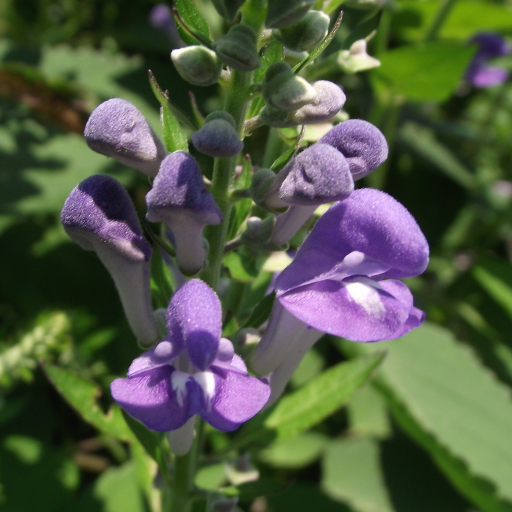
Often called the Hoary Skullcap, this North American native is like a silver-lined treasure for the woodland garden. Its name comes from the fine, downy hairs that give the plant a frosted or "hoary" appearance, while the flowers resemble tiny medieval helmets. It is a favorite for those looking to add vertical interest and a touch of "wildflower magic" to partially shaded spots.
🔍 How to Identify
- 🌸 The "Helmet" Bloom: Look for clusters of tubular, two-lipped flowers in a striking shade of sky blue to deep lavender. The upper lip forms a distinct protective hood over the lower lip.
- 🌫️ Frosted Texture: The stems and undersides of the leaves are covered in minute, velvety white hairs. This gives the entire plant a soft, greyish-green sheen that stands out against darker foliage.
- 🌿 Minty Architecture: As a member of the Mint family (Lamiaceae), it features the classic square stems and opposite, egg-shaped leaves with neatly scalloped or serrated edges.
🏡 In Your Garden
- 🦋 The Pollinator’s Pub: This plant is a high-value nectar source for long-tongued bees and butterflies. Because the flowers are shaped like narrow tubes, they provide a private feast for specialized pollinators who can reach the nectar hidden inside.
- 💪 Drought-Tolerant Native: Unlike many of its moisture-loving relatives, the Hoary Skullcap is surprisingly "tough as nails." Once its root system is established, it can handle dry shade and occasional droughts far better than typical garden perennials.
- 🎋 Self-Sufficient Structure: It grows in tidy, upright clumps that don't usually require staking. It spreads gently via seeds but isn't considered invasive like some of its mint cousins, making it a "well-behaved" guest in a flower bed.
⚠️ Safety & Toxicity
- ✅ Safe Status: Scutellaria incana is generally considered non-toxic to humans, cats, and dogs. It is not known to cause skin irritation upon contact.
- 🍵 Herbology Note: While its cousin, Scutellaria lateriflora, is famous in herbal medicine for its calming properties, the Hoary Skullcap is primarily grown for its beauty. To stay safe, avoid brewing teas from this specific variety, as concentrations of active compounds can vary wildly.
✨ Fun Fact
The genus name Scutellaria comes from the Latin word scutella, meaning "a small dish" or "shield." This refers to the unique shape of the seed pod (the calyx), which looks like a tiny, lidded dish once the flower has withered away!

Detailed Care Instructions
To grow Scutellaria incana, also known as downy skullcap, you can follow these steps:
- Choose a suitable location: Select a spot that receives partial shade to full sun. The plant prefers well-draining soil that is slightly acidic to neutral.
- Prepare the soil: Before planting, prepare the soil by removing any weeds or grass. Loosen the soil with a garden fork or tiller and add organic matter like compost or well-rotted manure to improve drainage and fertility.
- Sow or transplant: There are two methods to start growing Scutellaria incana. You can sow seeds directly in the ground in spring or start seeds indoors a few weeks before the last frost, then transplant them outside once the weather warms up. Alternatively, you can purchase young plants from a nursery and transplant them directly in the garden.
- Planting: If sowing seeds directly, sprinkle the seeds over the prepared soil, cover lightly with soil, and water gently. If you are transplanting, dig a hole that is slightly larger than the root ball of the plant. Place the plant in the hole, fill it with soil, and firm it gently around the base of the plant.
- Watering: Keep the soil consistently moist but not waterlogged. Ensure the plant receives around 1 inch of water per week, either from rainfall or supplemental watering. Avoid overwatering, as it can lead to root rot.
- Mulching: Apply a layer of organic mulch, such as straw or wood chips, around the base of the plant to help retain moisture, control weeds, and regulate soil temperature.
- Fertilizing: Scutellaria incana generally does not require heavy fertilization. However, you can feed the plants once or twice during the growing season with a balanced, slow-release fertilizer according to the instructions on the package.
- Pruning: To encourage bushier growth and prevent legginess, pinch back the growing tips of young plants. After flowering, you can also trim the plant lightly to remove spent blooms and promote further flowering.
- Pests and diseases: Scutellaria incana is relatively resistant to most pests and diseases. However, keep an eye out for common garden pests such as aphids or spider mites and treat them accordingly.
- Harvesting: The leaves and flowers of Scutellaria incana can be harvested once the plant is established. Simply snip off the desired portions, leaving enough foliage for the plant to continue growing.
By following these steps, you can successfully grow Scutellaria incana and enjoy its beautiful flowers and foliage in your garden.

Place in a bright room that is sun drenched almost all day. Or directly in a south-facing window.

Scutellaria Incana is a perennial plant that requires regular watering to thrive. It is important to provide sufficient water to the plant without overwatering it, as this can lead to root rot.
To water Scutellaria Incana, begin by checking the soil moisture level. Stick your finger about an inch into the soil and see if it feels dry or slightly moist. If the soil feels dry, it is time to water the plant.
Use a watering can or hose to water the base of the plant. Avoid getting water on the leaves as this can lead to fungal diseases. Water the plant until the soil is moist but not waterlogged.
Check the soil moisture level regularly and adjust your watering schedule as needed. During periods of heavy rain or high humidity, you may need to water less often. In dry or hot weather, you may need to water more frequently.
Overall, it is important to provide consistent and adequate water to Scutellaria Incana in order to keep the plant healthy and thriving.
To fertilize Scutellaria Incana plant, you can follow these instructions:
- Choose a water-soluble fertilizer with a balanced NPK ratio (nitrogen, phosphorus, and potassium), such as a 10-10-10 or 20-20-20 formula.
- Dilute the fertilizer according to the instructions provided. Typically, use about half the recommended strength to avoid over-fertilizing.
- Water the plant thoroughly before applying fertilizer to prevent any root burn caused by concentrated nutrients.
- Apply the diluted fertilizer evenly around the base of the plant, avoiding direct contact with the leaves.
- Use a watering can or a similar container with a narrow spout to target the fertilizer application.
- Repeat the fertilization process once every four to six weeks during the growing season, which is typically spring and summer.
- Monitor the plant's response to the fertilizer. If you notice any signs of over-fertilization, such as leaf burn or wilting, discontinue fertilizing for a while and increase watering to flush out excess nutrients.
- Follow a regular watering routine, ensuring the soil is moist but not waterlogged or constantly dry.
- Consider adding organic matter, such as compost, to the soil periodically to provide additional nutrients and improve soil health.
- Observe the plant's growth and overall health. Adjust the fertilization frequency or strength if necessary, based on its specific needs.
The recommended soil for growing Scutellaria Incana plants is a well-draining, sandy loam soil. The pH of the soil should be between 6.0-7.5, which is slightly acidic to neutral. The soil should be rich in organic matter, such as compost or aged manure, to provide the necessary nutrients for the plant to grow. It is also advised to mix perlite or vermiculite into the soil to improve drainage. Avoid using heavy, clay soils as they can cause waterlogging and root rot.
Scutellaria incana is a perennial plant that can be propagated through various methods. Here's a detailed guide on how to propagate this plant:
- Propagation by Seeds:
- Collect mature seeds from the plant during the late summer or early autumn.
- Fill a seed tray or pot with well-draining potting mix or seed-starting mix.
- Sow the seeds on the surface of the soil and gently press them down with your finger, but don't cover them completely as they require light for germination.
- Mist the soil with water to moisten it without oversaturating.
- Place the seed tray or pot in a warm location with indirect sunlight.
- Keep the soil consistently moist by misting regularly or using a plastic cover over the seed tray to maintain humidity.
- Germination usually takes around 2-4 weeks.
- Once the seedlings develop true leaves, transplant them into individual pots or a garden bed.
- Collect mature seeds from the plant during the late summer or early autumn.
- Propagation by Softwood Cuttings:
- Take softwood cuttings during late spring or early summer when the plant is actively growing.
- Prepare a pot or tray with a well-draining rooting medium, such as a mix of perlite and peat moss.
- Select healthy shoots around 4-5 inches long from the parent plant.
- Remove the lower leaves, leaving only a few at the top.
- Dip the cut end of the stem in a rooting hormone powder or gel to increase the chances of successful rooting.
- Insert the cuttings about an inch deep into the prepared rooting medium.
- Mist the cuttings with water and cover them with a clear plastic bag or use a propagator to maintain humidity.
- Place the pot or tray in a warm location with indirect light, avoiding direct sunlight.
- Mist the cuttings regularly to keep them moist but not waterlogged.
- After 4-6 weeks, check for root development by giving the cuttings a gentle tug. Once roots develop, transplant the cuttings into individual pots or a garden bed.
- Take softwood cuttings during late spring or early summer when the plant is actively growing.
- Propagation by Division:
- Divide the established plant during the early spring when new growth emerges.
- Dig out the entire plant, carefully removing excess soil from the root mass.
- Gently separate the plant into smaller sections, ensuring each section has enough roots and shoots.
- Plant the divided sections in pots or directly in a prepared garden bed.
- Water the newly planted divisions and provide appropriate care until they become established.
Remember to provide suitable growing conditions such as well-draining soil, partial shade to full sun exposure, and regular watering to ensure successful propagation and growth of Scutellaria incana plants.
- Divide the established plant during the early spring when new growth emerges.








