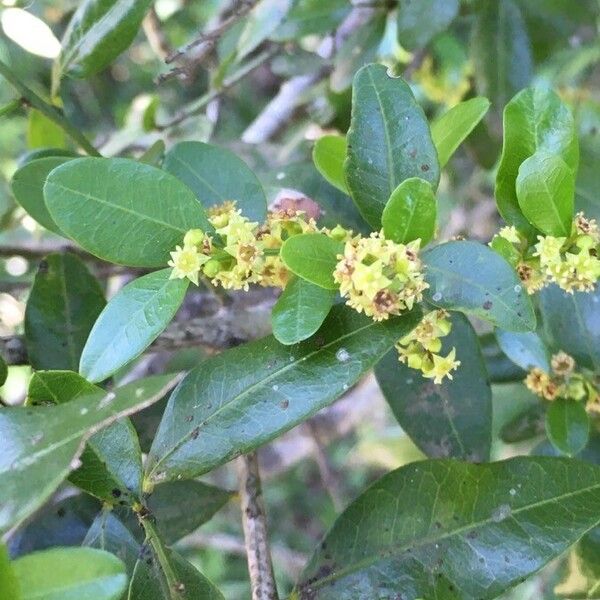
Plant Overview
Known popularly as the Coronilla or Box-leaf Scutia, this rugged South American native is a master of resilience. Its Latin name, buxifolia, literally means "leaves like a boxwood," referring to its dense, evergreen appearance. Often found clinging to rocky hillsides in Uruguay, Brazil, and Argentina, it is a slow-growing survivor that provides vital shelter for local wildlife.
🔍 How to Identify
- 🍃 The Foliage: Small, oval, and glossy green leaves that grow in opposite pairs. They look remarkably like the common Boxwood hedge.
- ⚔️ The Spines: Look closely at the leaf axils; you will find small, sharp thorns that act as a natural defense against grazing animals.
- 🍇 The Fruit: It produces tiny, inconspicuous yellowish flowers that eventually transform into small, round drupes that turn a dark purple or black when ripe.
🏡 In Your Garden
- 🌱 Tough as Nails: This plant is incredibly drought-tolerant and thrives in "difficult" spots. It prefers well-drained, rocky, or sandy soil, mimicking its native habitat on the stony hills of the Pampas.
- 🪓 Dense Wood: Be careful when pruning! The wood of the Coronilla is notoriously hard and heavy. In some regions, it is grouped with other "Quebracho" (ax-breaker) trees because of its density.
- 🦋 Wildlife Magnet: If you are looking to support biodiversity, this is a top choice. It is a primary host plant for several butterfly species, providing both food and protection within its thorny branches.
⚠️ Safety & Toxicity
- 🌵 Physical Hazard: The primary safety concern is the sharp thorns. Wear thick gloves when pruning or handling the plant to avoid painful punctures.
- 🐾 General Safety: While the berries are often eaten by birds, they are not considered a culinary fruit for humans. There is no widespread evidence of high toxicity to pets, but the thorns pose a physical risk to curious noses and paws.
✨ Fun Fact
In Uruguay, the Coronilla is considered an "indicator species" of a healthy native forest. Because it grows so slowly, seeing a large, mature Scutia Buxifolia means the land has been undisturbed and preserved for many decades!

Detailed Care Instructions
To grow Scutia buxifolia, also known as the boxthorn scutia or satinwood, follow the steps below:
- Choose the right location: Plant Scutia buxifolia in a sunny or partially shaded spot in your garden. It prefers well-draining soil and tolerates various soil types including sandy, loamy, or clay soils.
- Prepare the soil: Before planting, prepare the soil by removing any weeds or large rocks. Loosen the soil to allow for better root establishment.
- Planting: Dig a hole slightly larger than the container or root ball of the Scutia buxifolia plant. Place the plant in the hole and fill it with soil. Gently firm the soil around the plant to remove any air gaps.
- Watering: Water the plant thoroughly after planting. Keep the soil moist but not waterlogged during the growing season. Once established, Scutia buxifolia is drought-tolerant and requires less frequent watering.
- Mulching: Apply a layer of organic mulch around the base of the plant to help retain moisture, suppress weeds, and regulate soil temperature.
- Pruning: Prune the plant regularly to maintain its shape and remove any dead or diseased branches. Pruning can be done in late winter or early spring before new growth begins.
- Fertilizing: While Scutia buxifolia does not have specific fertilizer requirements, you can apply a balanced slow-release fertilizer in spring to promote healthy growth.
- Pest and disease control: Scutia buxifolia generally has few pest or disease problems. However, monitor the plant for any signs of insect infestation or diseases such as leaf spot or powdery mildew. Treat any issues promptly with appropriate organic or chemical insecticides or fungicides.
- Propagation: Scutia buxifolia can be propagated from seeds or semi-hardwood cuttings. Collect seeds from ripe fruits and sow them in well-prepared soil. For semi-hardwood cuttings, take 4-6 inch long cuttings from the current year's growth, dip them in rooting hormone, and plant them in a well-drained growing medium.
- Winter protection (optional): In colder climates, consider protecting young Scutia buxifolia plants from frost or extreme cold by covering them with burlap or other protective material.
Remember to always check your local gardening guidelines or consult with a local horticulturist for specific recommendations based on your region's climate and conditions.
The watering needs of this plant may vary depending on its location, soil type and temperature. However, as a general rule, it is important to keep the soil moist but not waterlogged, as excessive moisture can lead to root rot.
One way to water this plant is to use a watering can or hose, slowly pouring water around the base of the plant until the soil is evenly saturated. Another option is to use a watering spike or drip irrigation system, which delivers water directly to the root zone over a longer period of time.
It is also important to note that this plant may require more frequent watering during periods of high heat or dryness, while less frequent watering may be necessary during cooler or more humid periods. To determine when to water, check the top few inches of soil regularly and water when it feels dry to the touch.
Overall, ensuring proper watering practices can help maintain the health and vitality of this plant and promote healthy growth.
To fertilize this plant, use a balanced fertilizer with equal amounts of nitrogen, phosphorus, and potassium. Apply the fertilizer once every three months during the growing season, starting in early spring. Water the plant thoroughly before and after applying fertilizer. Be careful not to over-fertilize, as this can burn the roots and cause damage to the plant.
Scutia buxifolia typically prefers well-draining soil that is low in fertility and is relatively acidic. The soil should ideally be slightly sandy to promote good drainage, but should also have some organic matter to aid in water retention. The pH of the soil should be between 5.5 and 6.5 for optimal growth and health. Additionally, the plant prefers soil that is rich in minerals, so adding small amounts of micronutrient-rich fertilizers or compost can be beneficial for growth and development. However, it is important to avoid over-fertilizing or using heavy doses of fertilizers, as this can damage the roots and stunt growth. Overall, a mix of sandy soil, organic matter, and micronutrient-rich fertilizers can provide an ideal growing environment for Scutia buxifolia.
One way to propagate this plant is by taking semi-ripe cuttings in the summer, when the stems are firm but still flexible. Cut a 4-6 inch stem section with a clean, sharp knife, making sure to include at least one node. Remove any leaves from the bottom of the cutting, leaving a few at the top. Dip the cut end of the stem in rooting hormone powder and plant it in a pot filled with a well-draining, moist potting mix. Place the pot in a bright, indirect light location and mist the cutting regularly to keep the soil moist. After a few weeks, you should start to see new growth and roots forming. Once the cutting has established a strong root system, it can be transplanted into a larger pot or directly into the ground.








