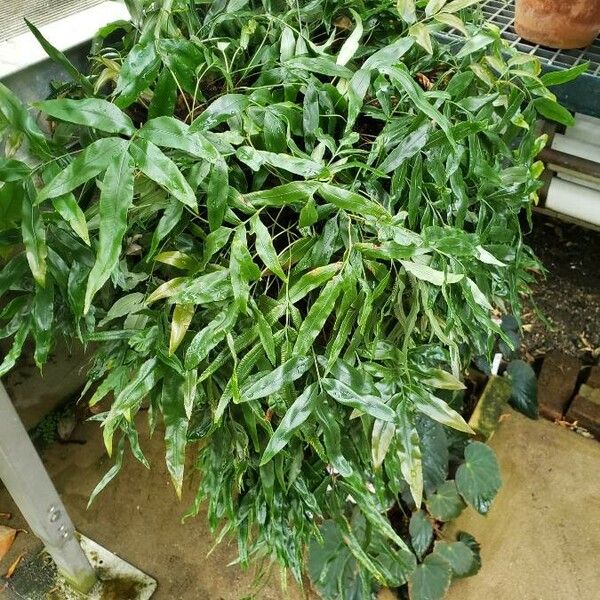
Plant Overview
Often called the Black Rabbit’s Foot Fern, this enchanting epiphyte seems to crawl straight out of a woodland fairy tale. With its signature "furry" feet draped over the sides of its pot, it adds a touch of wild, prehistoric texture to any indoor plant collection. Native to the lush islands of the South Pacific, it is a resilient survivor that brings a dark, glossy elegance to humid corners.
🔍 How to Identify
- 🐾 The Rhizomes: The most striking feature—thick, creeping stems covered in soft, charcoal-black or dark-brown scales that look remarkably like the paws of a rabbit.
- 🌿 The Fronds: Deep green, glossy, and leathery leaves. Unlike the wispy foliage of many ferns, these are triangular and divided into five distinct sections (the meaning behind the name pentaphylla).
- 📐 Growth Habit: This is a sprawling plant. Instead of growing strictly upright, it sends its fuzzy "feet" out over the edges of its container, creating a beautiful 360-degree display.
🏡 In Your Garden
- ☁️ Humidity is King: Because it is an epiphyte (a plant that naturally grows on trees or rocks), it breathes through its rhizomes. It thrives in steamy bathrooms or near a humidifier where it can drink from the air.
- 🧺 Room to Roam: Never bury the "fuzzy feet" in soil! These rhizomes need to stay on the surface to prevent rot. They love shallow pots or hanging baskets where they can explore the rim freely.
- 💧 Watering Nuance: It prefers the "wrung-out sponge" approach. It wants consistent moisture, but its roots are sensitive to stagnant water. Using a well-draining orchid bark or peat-based mix is essential.
⚠️ Safety & Toxicity
- 🟢 Pet & Child Friendly: This fern is widely considered non-toxic to cats, dogs, and humans. It is a fantastic choice for pet owners who want a "jungle look" without the risk.
- 🧤 Handling: While not poisonous, the fine hairs on the rhizomes can occasionally trap dust or allergens. If you have very sensitive skin, you might feel a slight tickle or itch after handling them for a long time.
✨ Fun Fact
The "fur" on the rabbit's foot isn't just for show—in the wild, those fuzzy rhizomes act like sponges! They allow the plant to cling to mossy tree branches and soak up rainwater and nutrients directly from the humid tropical air.

Detailed Care Instructions
To grow Scyphularia pentaphylla (Swan plant), follow these steps:
- Seeds: Obtain seeds from nurseries, flower shops, or online seed suppliers. Make sure they are fresh and viable.
- Germination: Start the germination process indoors about 6-8 weeks before the last frost date in your area. Fill small pots or seed trays with seed-starting mix or a well-draining soilless mix.
- Sowing: Sow the seeds on the soil surface and gently press them into the soil, ensuring good seed-to-soil contact. Do not bury them too deep, as they require light to germinate.
- Watering: Moisten the soil with a fine mist spray or by bottom watering. Avoid overwatering, as excessive moisture can lead to fungal diseases.
- Germination temperature: Maintain a temperature of 65-75°F (18-24°C) to facilitate germination. Cover the pots or trays with a clear plastic lid or place them in a clear plastic bag to create a mini greenhouse effect.
- Light: Scyphularia pentaphylla requires bright, indirect light for optimal growth. Place the pots or trays in a location where they receive ample sunlight or use grow lights if natural light is insufficient.
- Transplanting: Once the seedlings have developed 2-3 true leaves, they can be transplanted into larger individual pots or directly into the garden. Harden off the plants gradually by exposing them to outdoor conditions for a few hours a day, increasing the duration each day.
- Soil: Scyphularia pentaphylla prefers well-draining soil rich in organic matter. Prepare the planting area by incorporating compost or well-rotted manure to improve fertility and drainage.
- Spacing: Space the plants about 12-18 inches (30-45 cm) apart, as they can grow up to 3 feet (90 cm) in height and spread.
- Watering: Water the plants regularly to keep the soil evenly moist. Avoid waterlogging, as excessive moisture can cause root rot.
- Fertilizer: Feed the plants with a balanced, water-soluble fertilizer once a month during the growing season to promote healthy growth. Follow the manufacturer's instructions for application rates.
- Mulching: Apply a layer of organic mulch around the base of the plants to suppress weed growth, retain moisture, and regulate soil temperature.
- Pruning: Scyphularia pentaphylla doesn't require extensive pruning. However, you can pinch off the tips of young plants to encourage bushier growth.
- Pests and diseases: Monitor the plants regularly for common pests like aphids, caterpillars, and spider mites. Treat any infestations promptly using appropriate organic or chemical control methods. Watch out for diseases like powdery mildew and rust; if detected, apply appropriate treatments to prevent their spread.
- Propagation: Scyphularia pentaphylla can be propagated by seed or by taking stem cuttings. If desired, take stem cuttings in late spring or early summer when the plant is actively growing.
By following these steps, you can successfully grow and care for Scyphularia pentaphylla plants.
Scyphularia Pentaphylla is a type of plant that can be watered in various ways, depending on the plant's current state and needs. It is important to pay attention to the plant's soil and the surrounding environment to determine the appropriate watering regimen for Scyphularia Pentaphylla.
When watering Scyphularia Pentaphylla, it is crucial not to overwater the plant, as this can lead to root rot and can be detrimental to the plant's overall health. Instead, it is recommended to water the plant slowly and thoroughly, ensuring that the water seeps through the soil and reaches the roots.
One way to water Scyphularia Pentaphylla is to use a watering can or a hose with a low-flow attachment. This allows for a gentle stream of water that can be directed to the soil around the base of the plant. Be sure to water the plant at the base and avoid getting water on the leaves, as this can damage the plant and promote fungal growth.
Another way to water Scyphularia Pentaphylla is to use a drip irrigation system. This is a low-tech system that slowly drips water onto the plant, ensuring that the roots are consistently hydrated. This is an excellent option for those who forget to water their plants regularly, as it requires little attention once set up.
It is also crucial to pay attention to the moisture level of the soil. This can be done by sticking a finger into the soil, and if it feels dry to the touch, it is time to water the plant. If the soil feels moist, it is best to wait a few more days before watering again.
Overall, watering Scyphularia Pentaphylla requires attention and care, but with the right approach, it can thrive and flourish. By providing the plant with the appropriate amount of water, Scyphularia Pentaphylla can be a beautiful addition to any garden or indoor space.
To fertilize this plant, you can use a balanced fertilizer with equal ratios of nitrogen, phosphorus, and potassium. Mix the fertilizer with water according to the package instructions and apply it to the soil around the base of the plant. Avoid getting the fertilizer on the leaves or stem of the plant. Fertilize once a month during the growing season, which is typically spring and summer. Water the plant before and after fertilizing to ensure the nutrients reach the roots.
Scyphularia Pentaphylla plant prefers well-draining and fertile soil. The soil pH level should be between 6-7.5, which is slightly acidic to neutral. The soil should have good moisture retention capacity, but at the same time, it must not be waterlogged as it can cause root rot.
A sandy loam soil mixed with organic matter such as compost or well-rotted manure is ideal for Scyphularia Pentaphylla plant. Adding perlite or vermiculite to the soil mix can also improve drainage. It is recommended to fertilize the soil with a balanced fertilizer every three to four months.
It is important to ensure that the soil is free from any pests or diseases that can harm the plant. A regular inspection of the soil and the plant is highly recommended to maintain a healthy growth of Scyphularia Pentaphylla.
To propagate this plant, take a stem cutting that is about 4-6 inches long and remove any leaves that are near the bottom. Then, dip the cut end of the stem into rooting hormone and plant it in a pot filled with well-draining soil. Water the soil well and cover the pot with a clear plastic bag to create a mini greenhouse. Keep the soil moist but not waterlogged and place the pot in a warm, bright location out of direct sunlight. In about 2-3 weeks, the cutting should start to develop roots. Once the roots are established, transplant the new plant into a larger pot or into the ground.








