Plant Overview
Known affectionately as the Willow-rhus or Smalblaar, Searsia angustifolia is a graceful, river-loving evergreen native to the Western Cape of South Africa. Despite its name, it isn't a true willow, though its slender, swaying foliage mimics that look perfectly along mountain streams and damp fynbos slopes. It is a resilient survivor that acts as a natural stabilizer for riverbanks, holding the earth firm against rushing water.
🔍 How to Identify
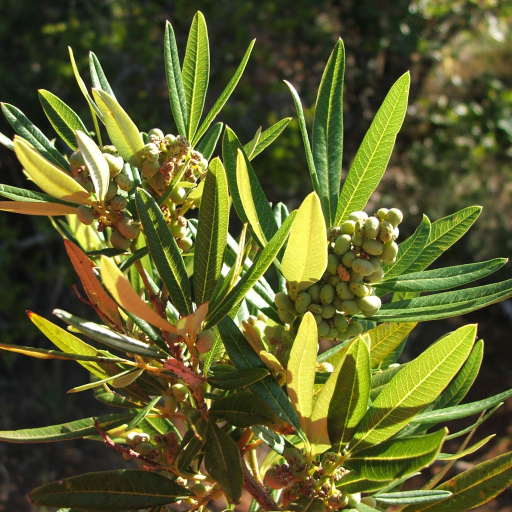
- 🍃 Willow-like Leaves: The leaves are trifoliate (arranged in groups of three), but each leaflet is exceptionally narrow, elongated, and dark green with a slightly paler underside.
- 🌼 Creamy Clusters: In late spring to summer, the plant produces tiny, inconspicuous yellowish-green flowers held in loose sprays at the ends of the branches.
- 🍒 Bunched Berries: Female plants produce small, flattened, reddish-brown fruits (drupes) that hang in heavy clusters, providing a feast for local birdlife.
🏡 In Your Garden
- 🌊 Water Enthusiast: Unlike many of its drought-tolerant sumac cousins, the Willow-rhus thrives in damp spots. It is the go-to choice for gardens with drainage issues, pond edges, or areas near swimming pools.
- 🛡️ Natural Screen: Due to its fast growth and dense, upright habit, it serves as an excellent "soft" windbreak or privacy screen. It can be pruned into a neat hedge or allowed to grow into a multi-stemmed small tree.
- 🕊️ Wildlife Magnet: If you are a bird watcher, this plant is a must-have; the berries are a high-energy snack for bulbuls, white-eyes, and various fruit-eating birds.
⚠️ Safety & Toxicity
- 🟢 Generally Safe: Searsia angustifolia is not considered highly toxic and is generally safe to plant around residential areas.
- 🖐️ Sap Sensitivity: Like many members of the Anacardiaceae family (which includes Mango and Poison Ivy), the resinous sap can occasionally cause mild skin irritation or dermatitis in people with very sensitive skin. It is best to wear gloves when doing heavy pruning.
✨ Fun Fact
In its native South Africa, this plant is often used in "Restoration Ecology." Because it has such a vigorous, binding root system, conservationists plant it specifically to repair riverbanks that have been damaged by erosion or invasive species.

Detailed Care Instructions

When the top few inches of soil dry out, water your plants. If the top few inches of soil are still moist, do not water your plant. Wait a few days, then poke your finger into the soil to see if anything has changed. Overwatering poses a disease risk, such as the development of fungal diseases in the roots. These plants have adaptations in there leaves that allow them to survive in low water supply.








