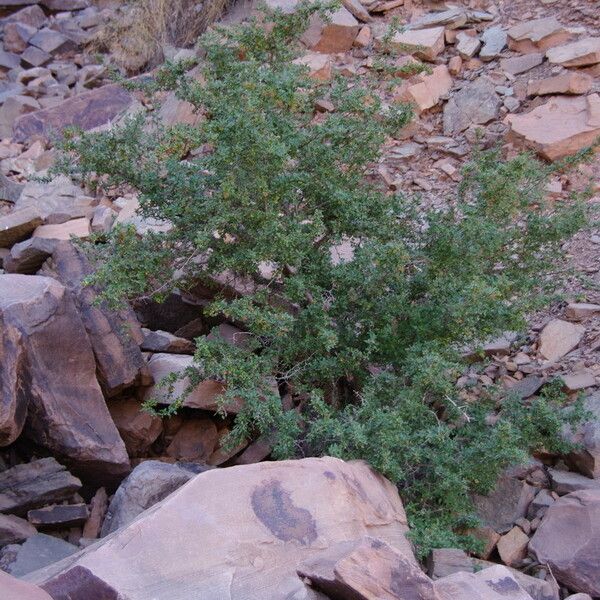
Plant Overview
Known as the Three-leaved Sumac or Mtouka, this resilient shrub is a master of survival in the arid landscapes of North Africa and the Mediterranean. Often forming dense, tangled thickets, it has been a staple in traditional desert life for centuries, serving as everything from a source of medicine to a vital tool for leather tanning. Its ability to thrive in harsh, rocky terrain makes it a symbol of endurance and quiet strength.
🔍 How to Identify
- 🍃 The Leaves: As the name tripartita suggests, each leaf is divided into three distinct, small, wedge-shaped leaflets that have a leathery, slightly glossy texture to prevent water loss.
- 🍒 The Fruit: It produces clusters of tiny, flattened berries (drupes) that turn a reddish-brown color when ripe, often used locally for their sour, acidic flavor.
- 🌳 Growth Habit: This is a "zig-zag" shrub. Its branches are stiff, intricate, and often end in blunt, thorn-like tips, giving the plant a protective, fortress-like appearance.
🏡 In Your Garden
- 🏜️ Xeriscaping Star: This plant is the ultimate candidate for water-wise gardening. It hates "wet feet" and prefers well-draining, even poor or rocky soil. Once its roots are established, it can survive long periods of intense heat and drought without flinching.
- 🛡️ Erosion Control: Because it develops a deep and hardy root system, it is frequently used to stabilize slopes or sandy banks. In a garden setting, it works beautifully as a low-maintenance windbreak or a natural "security hedge" due to its dense, scratchy branches.
⚠️ Safety & Toxicity
- ✅ Generally Safe: Unlike its infamous relative, Poison Ivy, Searsia tripartita is not known to cause severe skin reactions. However, people with extreme sensitivities to the Anacardiaceae family (like mangoes or cashews) should handle it with a bit of caution.
- 🐾 Pet & Child Friendly: The plant is considered non-toxic to pets and humans. While the berries are technically edible and very tart, they are small and seedy, usually more appealing to birds than people.
✨ Fun Fact
In North African history, the bark of the Searsia tripartita root was highly prized by leatherworkers. Because it is incredibly rich in tannins, it was used to cure hides, producing a high-quality leather that was naturally resistant to decay.

Detailed Care Instructions
To grow Searsia Tripartita (Rhus tripartita), also known as the African sumac or Sandpaper Karee, follow these steps:
- Collect seeds or purchase saplings: You can collect seeds from mature plants or purchase saplings from a local nursery or online garden center.
- Determine the planting location: Searsia Tripartita thrives in full sun or partial shade and prefers well-draining soil. Ensure the location has enough space for the plant to grow to its full size.
- Prepare the planting area: Clear any weeds or debris from the planting area. Loosen the soil to a depth of at least 12 inches (30 cm) to provide good aeration and drainage.
- Plant the sapling or sow seeds: If planting a sapling, dig a hole slightly larger than the root ball and place the sapling in the hole. Backfill the hole with soil and gently pat it down to remove air pockets. If sowing seeds, follow the instructions on the seed packet for proper depth and spacing.
- Water regularly: Keep the soil moist but not waterlogged during the plant's establishment period. Water regularly, especially during dry spells or hot weather, to promote healthy growth.
- Provide occasional pruning: Searsia Tripartita can be pruned in late winter or early spring to maintain a desirable shape and remove any dead or damaged branches. Avoid heavy pruning, as this plant mainly grows naturally and develops a beautiful, irregular shape.
- Mulch around the plant: Apply a layer of organic mulch around the base of the plant to retain moisture, suppress weed growth, and protect the roots during extreme temperatures.
- Fertilize if needed: Searsia Tripartita generally doesn't require much fertilization, as it is adapted to poor soils. However, if the plant appears pale or slow-growing, you can apply a slow-release, balanced fertilizer according to the package instructions.
- Monitor for pests and diseases: Watch out for common pests like aphids, scale insects, or powdery mildew. If necessary, treat with appropriate organic or chemical controls following the manufacturer's instructions.
- Enjoy your Searsia Tripartita: Once established, the plant is relatively low-maintenance and will reward you with its attractive foliage and architectural shape.
Note: Keep in mind that Searsia Tripartita can be invasive in some regions, so it's important to check whether it is suitable and allowed in your area before planting.
Searsia Tripartita is a shrub that requires a specific watering routine to ensure optimal growth and health. Here are some details on how to water this plant without mentioning its common names:
- Assess the soil moisture: Before watering, check the soil to determine if it requires watering. Insert your finger about an inch into the soil near the plant's base and feel for moisture. If the soil feels dry to the touch, it's an indication that watering is needed.
- Watering frequency: Searsia Tripartita typically prefers a moderate watering schedule. As a general guideline, water the plant every 7 to 10 days during the growing season. However, adjust the frequency depending on weather conditions and the plant's individual needs.
- Watering technique: Water the plant at its base, rather than overhead watering. Direct the water towards the root zone to ensure it reaches the plant's roots effectively. This helps prevent fungal diseases and encourages deeper root growth.
- Amount of water: Provide a sufficient amount of water to saturate the root ball. Aim for a slow, deep watering session to allow the water to penetrate the soil deeply and encourage the roots to grow deeper. Water until you observe water seeping out from the drainage holes at the bottom of the container or until the soil feels evenly moist to a depth of about 6 inches.
- Avoid overwatering: Searsia Tripartita is vulnerable to root rot if overwatered. Excess water can suffocate the roots and lead to the plant's decline. Always make sure the soil starts to dry out before watering again. Monitor the plant and soil conditions to avoid waterlogging.
- Consider environmental factors: Adjust the watering routine based on the prevailing weather conditions. During hot summer months, the plant may require more frequent watering, while in cooler or rainy seasons, the watering frequency should be reduced. Keep an eye on the moisture levels to determine the plant's watering needs.
- Mulching: Consider adding a layer of organic mulch around the base of Searsia Tripartita. Mulching helps conserve soil moisture, reduces evaporation, and maintains a more consistent soil temperature. Apply a 2-3 inch layer of mulch, ensuring it does not touch the main stem or trunk of the plant.
By following these guidelines for watering Searsia Tripartita, you can provide it with the appropriate moisture levels for healthy growth and development.
To fertilize the Searsia Tripartita plant, follow these instructions:
- Use a balanced, slow-release fertilizer with equal proportions of nitrogen (N), phosphorous (P), and potassium (K).
- Dilute the fertilizer according to the manufacturer's instructions.
- Apply the diluted fertilizer evenly around the base of the plant, avoiding direct contact with the stems or foliage.
- Gently work the fertilizer into the top few inches of the soil using a garden fork or trowel.
- Water the plant thoroughly after fertilizing to ensure the nutrients reach the root zone.
- Repeat the fertilization process every 4-6 weeks during the growing season, which typically spans spring and summer.
- Monitor the plant for any signs of over- or under-fertilization, such as leaf burn or stunted growth. Adjust the fertilizer amount or frequency accordingly.
- During the dormant season, reduce or suspend fertilization, as the plant's nutrient requirements decrease.
The most suitable type of soil for the Searsia tripartita plant is a well-draining soil mixture that provides adequate moisture retention while also allowing excess water to drain away. This plant prefers a slightly acidic to neutral soil pH level, ideally ranging from 6.0 to 7.0. It thrives in soil that is rich in organic matter, which helps to improve nutrient availability and moisture retention.
A recommended soil mixture for the Searsia tripartita plant could be a combination of organic potting soil, such as peat moss or compost, mixed with perlite or coarse sand to ensure proper drainage. This will prevent waterlogging and root rot, which can be detrimental to the health of the plant.
It is crucial to avoid using heavy clay soils as they tend to retain too much water, leading to waterlogged conditions that can potentially harm the plant. Additionally, sandy soils that drain too quickly may not retain enough moisture for the Searsia tripartita plant's needs.
Regular monitoring of the soil moisture level is essential to maintain the optimal growing conditions for this plant. Maintaining a slightly damp but not overly wet soil is recommended, as excess moisture can lead to root rot. Adjusting the watering frequency accordingly based on environmental conditions and the plant's water requirements will help provide an ideal growth environment for the Searsia tripartita plant.
Searsia tripartita is a plant that belongs to the Anacardiaceae family. If you are interested in propagating this plant, here is some detailed information on how to do so:
- Propagation Method: Searsia tripartita can be propagated through both seeds and cuttings. The seed propagation method is generally easier and more successful.
- Seed Collection: The seeds of Searsia tripartita can be collected from mature fruits. Wait until the fruits have ripened and turned a reddish color before collecting them. You can easily remove the seeds by gently crushing the fruit and separating them.
- Seed Preparation: After collecting the seeds, you need to prepare them for propagation. Start by soaking the seeds in warm water for around 24 hours to help soften the hard seed coat and improve germination rates.
- Seed Sowing: Fill a seed tray or pot with well-draining soil mix. Moisten the soil without making it waterlogged. Scatter the soaked seeds evenly on the soil surface and press them gently into the soil, ensuring they are covered with a thin layer of soil.
- Germination: Place the seed tray or pot in a warm and sunny location, preferably with temperatures around 70-80°F (21-27°C). The seeds will usually germinate within a few weeks. Keep the soil consistently moist but not overly wet. After germination, ensure to provide adequate light for the seedlings.
- Transplanting Seedlings: Once the seedlings have grown a few sets of true leaves and are large enough to handle, they can be transplanted into individual pots or containers. Use a well-draining soil mix and ensure to provide proper care and watering until they establish.
- Cutting Propagation: If you prefer using cuttings for propagation, take semi-hardwood cuttings during the spring or early summer season. Choose healthy and disease-free branches that are around 4-6 inches (10-15 cm) long. Remove any leaves from the bottom half of the cutting to reduce moisture loss.
- Rooting Cuttings: Dip the cut end of the stem in a rooting hormone powder or gel to promote root development. Insert the cuttings into a well-draining potting mix, ensuring at least half of their length is buried. Place the pot in a warm location with indirect light and keep the soil moist but not waterlogged.
- Care for Cuttings: Monitor the cuttings regularly for signs of new growth, which indicates successful rooting. Maintain a consistent level of moisture in the soil and provide appropriate light for the cuttings. Once they have rooted and established, they can be transplanted into individual pots or into the ground.
- General Care: Whether you choose to propagate through seeds or cuttings, Searsia tripartita needs well-draining soil, bright sunlight, and regular watering. Once the plants have matured, they are typically drought-tolerant and can thrive in various soil conditions. Pruning can be done to shape the plant and remove any dead or damaged branches.
Remember, it's important to follow proper plant propagation techniques and provide the necessary care to ensure successful propagation and happy, healthy Searsia tripartita plants.








