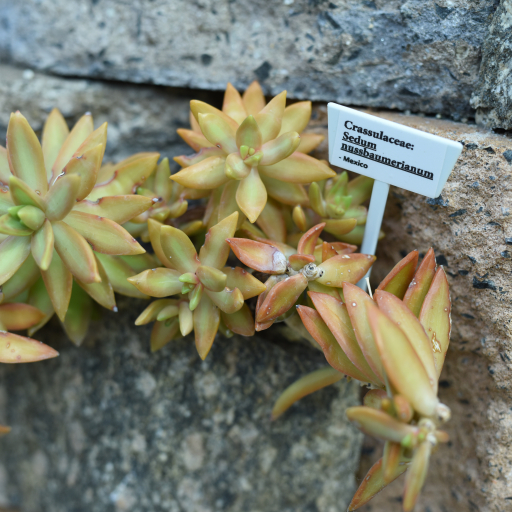
Plant Overview
Meet the "Golden Sedum," a sun-kissed beauty from the rocky slopes of Mexico that acts like a botanical chameleon. Often called the "Coppertone Stonecrop," this succulent is a favorite for hobbyists who want a splash of warmth in their collection without the fuss of high-maintenance flowers. It is a hardy traveler that brings a glowing, desert-sunset vibe to any windowsill or rock garden.
🔍 How to Identify
- 🍃 Leaf Shape: Plump, fleshy, lance-shaped leaves that grow in a swirling, star-like rosette pattern, typically reaching about 1.5 inches in length.
- 🎨 Color Palette: While it starts as a cool lime green, direct sunlight triggers its "golden" phase, turning the leaf tips a brilliant yellow or vibrant orange-copper.
- 🌸 Blooms: In late winter to early spring, it produces small, star-shaped white flowers that emerge in clusters, offering a delicate, snowy contrast to the chunky foliage.
🏡 In Your Garden
- ☀️ Sun Chaser: To achieve those iconic fiery hues, this plant needs as much bright light as possible; in low-light environments, it will revert to a plain green and "stretch" (etiolate), losing its compact, tidy shape.
- 💧 Drought Logic: Like most stonecrops, it stores a massive reservoir of water in its leaves. It thrives on neglect and prefers the "soak and dry" method—overwatering is its only real enemy, as its roots are prone to rot if kept in soggy soil.
- 🌱 Easy Propagation: It is incredibly forgiving for beginners. A single leaf knocked off the stem can be placed on top of dry soil, where it will eventually sprout its own tiny "pup" and a new root system.
⚠️ Safety & Toxicity
- 🐾 Pet Friendly: Great news for furry friends! Sedum adolphii is generally considered non-toxic to cats, dogs, and horses, making it a safe choice for low-shelf displays.
- 👶 Human Safety: While not poisonous, the leaves are not meant for consumption. Ingesting large amounts may cause mild stomach upset or nausea in small children.
✨ Fun Fact
🌟 Beautiful Stress: In the succulent world, "stress" isn't a bad thing! The most vibrant orange and red colors appear when the plant is slightly stressed by intense sunlight or cooler temperatures. This is caused by pigments called anthocyanins, which act like a "sunscreen" to protect the plant’s cells.

Detailed Care Instructions
| Lighting | Full Sun |
To grow Sedum Adolphi plants, follow these steps:
- Select a suitable location: Choose a spot that receives full sun to partial shade. Sedum Adolphi prefers direct sunlight for at least 6 hours a day.
- Prepare the soil: Ensure the soil is well-draining as Sedum Adolphi is prone to root rot if kept in soggy conditions. Amend the soil with organic matter or perlite to improve drainage.
- Planting: Dig a hole that is slightly larger than the root ball of the Sedum Adolphi plant. Place the plant in the hole, ensuring it sits at the same height it was grown in the nursery pot.
- Watering: Water deeply after planting to settle the soil and encourage root establishment. Afterward, water sparingly as Sedum Adolphi is drought-tolerant. Allow the soil to dry out between waterings.
- Fertilization: Sedum Adolphi doesn't require much fertilization. Applying a slow-release fertilizer in spring can be beneficial, but is not necessary.
- Pruning: Remove any dead or damaged leaves to maintain the plant's appearance. If the Sedum Adolphi becomes leggy or overgrown, you can also prune it back to encourage new growth.
- Propagation: Sedum Adolphi can be propagated through stem cuttings. Take a cutting from a healthy stem and place it in well-draining soil. Keep the soil lightly moist until roots develop.
- Protection: Sedum Adolphi is generally resistant to pests and diseases. However, watch out for aphids or mealybugs, which can occasionally attack the plant. Use organic pest control methods if necessary.
Overall, Sedum Adolphi is a low-maintenance plant that can thrive in various growing conditions. With proper care and suitable growing conditions, it should grow well and provide a beautiful addition to your garden or indoor space.

Place in a bright room that is sun drenched almost all day. Or directly in a south-facing window.

To properly water this plant, you should ensure that the soil is completely dry before watering it. This plant prefers well-draining soil, so it is important not to let the soil become waterlogged. When it is time to water, slowly pour water around the base of the plant, being careful not to pour it directly onto the leaves. The plant should be allowed to fully absorb the water before watering again, which typically occurs every 1-2 weeks depending on environmental factors such as temperature and humidity. It is also important to avoid over-watering as this can lead to root rot and other issues.
To promote healthy growth and blooming of this succulent plant, it is recommended to fertilize it regularly during its active growing season. Use a well-balanced fertilizer, diluted at half strength, and apply it every two to three weeks. Avoid applying fertilizer when the soil is dry or the plant is in dormancy. Always follow the manufacturer's instructions for best results.
Sedum adolphi is a type of succulent plant which require a specific type of soil in order to thrive. The ideal soil for this plant is well-draining and porous, allowing water to flow through easily and avoiding waterlogging which can lead to root rot. A combination of sand and perlite is often recommended to achieve the desired texture. Alternatively, a mix of sandy loam soil and peat moss can also be used, although it may be more prone to compaction and nutrient depletion over time. In general, Sedum adolphi prefers a slightly acidic to neutral soil pH, with a range of 6.0-7.5. It is also important to avoid soil that is overly fertile, as Sedum adolphi can be sensitive to excess nitrogen and may become leggy or lose its bright coloration if grown in soil that is too rich. Overall, a well-draining, sandy soil that is slightly acidic is the best choice for Sedum adolphi.
One way to propagate this plant is through stem cuttings. Cut a stem with several leaves and let the cut end dry out for a few days to prevent rotting. Then, place the cutting in well-draining soil and keep it moist but not overly wet. Within a few weeks, roots should develop, and the plant will begin to grow.
Common pests of the coppertone stonecrop (sedum nussbaumerianum) include Mealybugs, aphids. Make a habit of checking your coppertone stonecrop (sedum nussbaumerianum) frequently for pests so that any infestations can be caught and managed early.








