Plant Overview
Often called the Alamos Stonecrop, this petite wanderer hails from the rugged, rocky slopes of Sonora, Mexico. It is a favorite among succulent collectors for its ability to transform a gritty patch of soil into a shimmering, silvery-blue tapestry. While it looks like a delicate miniature forest, it is a master of survival, built to endure the harsh sun of the Mexican highlands.
🔍 How to Identify
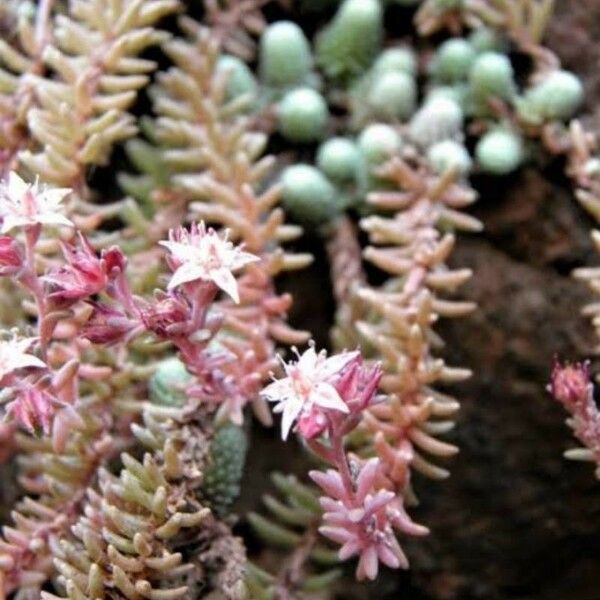
- ❄️ Foliage Color: The leaves possess a distinct "glaucous" coating—a powdery, silvery-blue wax that helps the plant reflect intense sunlight and retain moisture.
- 🌲 Leaf Shape: Tiny, fleshy, and somewhat cylindrical leaves are packed tightly together, resembling miniature, soft pinecones or architectural rosettes.
- 🌸 Starry Blooms: In late spring and summer, it produces small, star-shaped flowers that are typically white or pale pink, held slightly above the foliage on short stems.
🏡 In Your Garden
- 🪨 The Crevice Specialist: Because it naturally grows on cliffsides, this Sedum is the perfect candidate for "crevice gardening" or rock walls. It thrives in tight spaces where other plants would struggle to find a foothold.
- ☀️ Sun-Kissed Stress: To get the best colors out of your plant, give it plenty of light. Under "environmental stress" (lots of sun and little water), the leaf tips can take on beautiful rosy or purple tints.
- 💧 Drainage is Non-Negotiable: This plant has a very low tolerance for "wet feet." It requires a very gritty, porous soil mix; if the soil stays damp for more than a day or two, the delicate root system may begin to fail.
⚠️ Safety & Toxicity
- ✅ Generally Safe: Sedum alamosanum is considered non-toxic to humans, cats, and dogs. It is a "worry-free" addition to households with curious pets.
- 🧤 Mild Irritation: While not poisonous, the sap of some stonecrops can cause very mild skin irritation or an upset stomach if ingested in large quantities. It’s always best to admire with your eyes and keep it out of reach of heavy chewers.
✨ Fun Fact
The specific epithet alamosanum honors the Álamos region in Mexico, a "Pueblo Mágico" (Magic Town) located in a unique ecological crossroads where the dry desert meets the lush tropical forest.

Detailed Care Instructions
To grow Sedum Alamosanum plant, follow these steps:
- Location: Choose a location that receives full sun to partial shade, as these plants thrive in bright light conditions.
- Soil: Sedum Alamosanum prefers well-draining, sandy or loamy soil. Make sure the soil is not too compact or heavy, as excess moisture can cause root rot.
- Planting: Dig a small hole in the soil, large enough to accommodate the root ball of the plant. Place the Sedum Alamosanum in the hole and fill it with soil, gently firming it around the roots.
- Watering: Water the plant thoroughly immediately after planting to help establish the roots. After that, water sparingly as Sedums are drought-tolerant plants. Allow the soil to dry out between watering to prevent overwatering.
- Fertilizing: Sedum Alamosanum doesn't require much fertilization, but you can apply a balanced, slow-release fertilizer in the spring to promote healthy growth.
- Pruning: Sedum Alamosanum doesn't require extensive pruning, but you can trim back any dead or damaged foliage to maintain its appearance and encourage new growth.
- Propagation: You can propagate Sedum Alamosanum through stem or leaf cuttings. Take cuttings during the active growing season, allow them to callus for a few days, then plant them in well-draining soil.
- Overwintering: Sedum Alamosanum is hardy in USDA zones 5-9. In colder regions, you may need to provide some winter protection, such as covering the plant with mulch or moving it indoors in a cool, bright location.
By providing appropriate light, well-draining soil, and minimal watering, you should be able to successfully grow Sedum Alamosanum plant.
To properly water this plant, you should first check the soil to ensure it has started to dry out. Then, carefully pour water directly onto the soil, taking care not to get water on the leaves or stem. You should aim to water the plant deeply, ensuring that the water reaches the roots. Allow the soil to dry out slightly before watering again, as this plant prefers to be on the drier side. It is important not to overwater, as this can lead to root rot.
To fertilize this plant, you should use a balanced fertilizer with equal amounts of nitrogen, phosphorus, and potassium. It is recommended to use a slow-release fertilizer in the spring, just as new growth starts to emerge. Apply the fertilizer according to the manufacturer's instructions, usually once every 6-8 weeks throughout the growing season. Be careful not to over-fertilize this plant, as it prefers lean soils and excessive fertilization can lead to weak growth and susceptibility to disease.
When selecting soil for this particular plant species, it is important to consider its natural habitat and growth habits. This plant is native to certain regions of North America and typically grows in rocky, gravelly soils. Therefore, it is best to choose a well-draining soil mix that is rich in sand, gravel, and small rocks.
The soil should also be slightly alkaline with a pH level ranging from 7.0 to 8.0. It is recommended to mix in some coarse sand or perlite to improve drainage and prevent waterlogging. This combination of soil additives will ensure that the roots receive sufficient air circulation and prevent the plant from rotting or developing root diseases.
Additionally, Sedum Alamosanum requires a low nutrient soil environment, meaning that adding too much fertilizer will cause the plants to grow too fast and become leggy. Therefore, it is best to provide a soil mix that is nutrient poor or only add small amounts of slow-release fertilizer occasionally throughout the growing season.
Sedum Alamosanum is a succulent plant that can easily be propagated through stem or leaf cuttings. Here's how you can propagate Sedum Alamosanum:
- Identify a healthy plant: Before you begin propagation, choose a healthy Sedum Alamosanum plant from which you would like to take cuttings.
- Choose the cutting type: You can take stem or leaf cuttings for propagating Sedum Alamosanum. However, stem cuttings are the preferred method.
- Take stem cuttings: Use a sharp and sterile pair of scissors or pruners to take a stem cutting of around 2-3 inches in length. Make sure to choose a stem without any disease or damage.
- Leave the cutting to dry: Leave the cuttings to dry for a few days in a shaded area. This will allow the cuttings to form a callous or scab over the wound created by the cut.
- Plant the cutting: After the cuttings have dried, dip the cut end in rooting hormone powder and plant it in a well-draining potting mix. Water the potting mix thoroughly but be sure not to overwater.
- Wait for the roots to develop: Keep the newly planted cutting in a warm and bright area. Over time, it will develop roots and establish itself in the potting mix.
- Transplant the new plant: Once the newly propagated plant has grown a good root system, it can be transplanted into a new pot or garden bed.
Propagation is a great way to expand your Sedum Alamosanum collection and create new plants that will thrive in your garden.








