Plant Overview
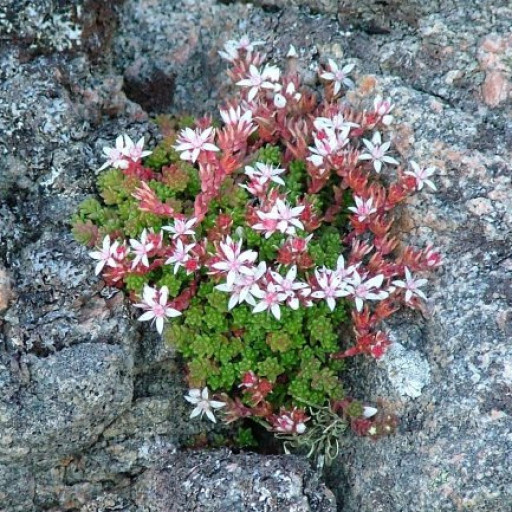
Often called the "English Stonecrop," Sedum anglicum is a resilient little pioneer that thrives where most plants would give up. Native to the rocky shores and cliffs of Western Europe, it paints the coastline with clusters of tiny, star-shaped flowers and plump, fleshy leaves. It is the quintessential "living carpet," capable of turning grey stone walls and gravel paths into a vibrant tapestry of greens, whites, and reds.
🔍 How to Identify
- 🍃 Fleshy Foliage: The leaves are small, fat, and cylindrical, acting as tiny water reservoirs. While usually a soft green, they turn a vibrant reddish-pink during dry spells or under intense sunlight.
- 🌸 Starry Blooms: In mid-summer, the plant is covered in clusters of five-petaled flowers. They are typically white but often feature a delicate rose-pink tint and tiny, dark-red centers (anthers).
- 🧱 Creeping Habit: It grows as a dense, moss-like mat that rarely exceeds 2 inches (5 cm) in height. It spreads horizontally, hugging the contours of rocks or filling in cracks in pavement.
🏡 In Your Garden
- 🏜️ Drainage is Key: This plant is a "lithophyte," meaning it loves growing on stone. In a garden setting, it requires very gritty, well-draining soil. It actually prefers "poor" soil; if the earth is too rich, the plant can become leggy and lose its compact, jewel-like charm.
- ☀️ Sun Seeker: To see this Sedum at its best, place it in full sun. The intense light triggers its "blushing" mechanism, turning the green leaves into a deep crimson, which provides a stunning contrast against the white summer flowers.
⚠️ Safety & Toxicity
- 🐾 Mildly Toxic: While not usually life-threatening, Sedum anglicum contains alkaloids that can cause stomach upset, vomiting, or diarrhea if eaten in large quantities.
- ✋ Skin Irritation: The sap inside the succulent leaves can be an irritant for people with sensitive skin. It is best to wear gloves if you are thinning out a large patch, and keep it out of reach of curious pets and toddlers.
✨ Fun Fact
The red pigment that appears on the leaves during summer isn't just for decoration—it's a compound called anthocyanin. It acts as a natural "sunscreen," protecting the plant’s delicate internal cells from intense UV rays and helping it retain moisture during droughts!

Detailed Care Instructions
To grow Sedum Anglicum, also known as English Stonecrop, you can follow these steps:
- Choose a suitable location: Sedum Anglicum thrives in full sun to partial shade. Select an area with well-draining soil, as these plants are drought-tolerant and do not like to sit in waterlogged soil.
- Prepare the soil: Before planting, loosen the soil and remove any weeds or debris. Amend the soil with organic matter like compost to improve its fertility and drainage.
- Planting method: You can propagate Sedum Anglicum either by seeds or division. If starting from seeds, sow them in the prepared soil surface and lightly cover them with a thin layer of soil. If using division, gently separate the plantlets from an established Sedum Anglicum and replant them.
- Watering: Water the newly planted sedum thoroughly and keep the soil evenly moist until they are established. Afterward, reduce watering, as these plants are drought-tolerant, and overwatering can lead to root rot.
- Maintenance: Sedum Anglicum is a low-maintenance plant. Occasional watering during extended dry periods and removing any dead or damaged foliage will suffice. If the plants become leggy, you can trim them back to encourage fuller growth.
- Fertilization: Sedum Anglicum will do well without much fertilization. However, if you wish to enhance growth or promote blooming, you can apply a balanced, slow-release fertilizer once or twice a year according to the package instructions.
- Propagation: Sedum Anglicum can be easily propagated by division or stem cuttings. Dividing the plant clumps every few years will help maintain their vigor and prevent overcrowding.
- Winter care: Sedum Anglicum is a hardy plant and can withstand cold temperatures. However, if you experience frost in your region, provide a layer of mulch around the plants to protect the roots during winter. Mulch will also help retain moisture in the soil.
By following these steps, you can successfully grow Sedum Anglicum and enjoy its beautiful foliage and flowers.

Place in a bright room that is sun drenched almost all day. Or directly in a south-facing window.

To water this plant, you need to first check the moisture level of the soil by inserting your finger about 1 inch into the soil. If the soil feels dry, then it's time to water your plant. Fill a watering can with water and gently pour it on the soil, making sure not to get the foliage wet as this can cause damage to the leaves. Allow the water to fully absorb into the soil before adding more. It's important not to overwater this plant as it can cause root rot. Watering once a week is usually sufficient, but it may need more during hot, dry weather.
To fertilize this plant, use an all-purpose fertilizer in the spring before new growth appears. Mix the fertilizer with water according to package instructions and apply to the soil around the base of the plant, being careful not to get any on the foliage. Water the plant deeply after fertilizing. Avoid over-fertilizing as this can cause excessive growth and weak stems.
The recommended soil type for the Sedum Anglicum plant is well-draining soil, preferably a mixture of sand, gravel, and loam. The soil pH should be slightly acidic to neutral, ranging from 6.0 to 7.5. The plant prefers soil that is rich in organic matter, which can be achieved by incorporating compost or leaf mold into the soil. The soil should be kept moist but not waterlogged, as excessive moisture can lead to root rot. It is also important to ensure that the soil is not too compacted, as this can limit root growth and overall plant health.
Sedum Anglicum is a low-maintenance perennial plant that can be propagated easily through stem cuttings. The best time to take cuttings is during the spring or summer when the plant is actively growing.
To propagate Sedum Anglicum, begin by selecting a healthy stem measuring about 4-6 inches long. Using a clean, sharp knife or scissors, cut the stem just below a leaf node. Remove any leaves from the lower half of the stem.
Dip the cut end of the stem into rooting hormone powder to encourage root growth. Place the stem cutting in a well-draining potting medium, such as a mix of sand and peat moss or perlite. Make a small hole in the medium with a pencil or finger and insert the stem cutting, pressing the medium around the base to hold it in place.
Water the cutting thoroughly and place it in a bright, indirect light location. Keep the soil moist but not soggy. Within a few weeks, the cutting will begin to root and show new growth. Once the new plant has established itself, it can be transplanted into a larger container or moved to the garden.
Common pests of the english stonecrop include Mealybugs, aphids. Make a habit of checking your english stonecrop frequently for pests so that any infestations can be caught and managed early.








