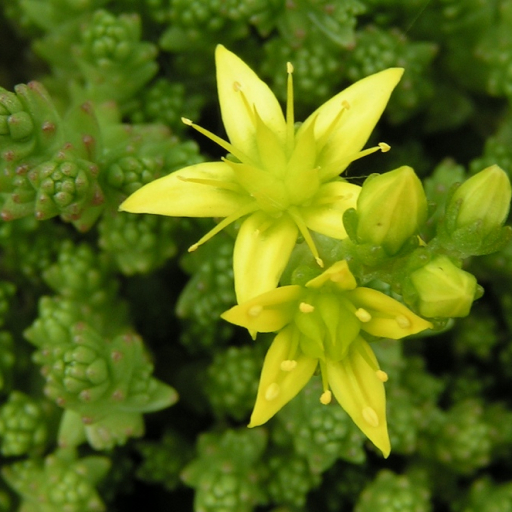
Plant Overview
Often called the Lydian Stonecrop, this tiny, moss-like succulent creates a lush, living carpet that hides a colorful secret. Originating from the rocky terrains of ancient Lydia (modern-day Turkey), it is a master of survival that transforms from a cool emerald green to a fiery red when exposed to the summer sun or winter chill. It’s a favorite for "miniature gardeners" who want the look of moss without the high-water demands.
🔍 How to Identify
- 🍃 The Foliage: Tiny, fleshy, cylindrical leaves that are crowded together on short stems, giving it a soft, mossy appearance.
- 🎨 The "Blush": While naturally bright green, the leaf tips turn a deep bronze or scarlet red when the plant is "stressed" by direct sunlight or cold temperatures.
- 🌸 The Bloom: In early summer, it produces delicate, star-shaped flowers that are white with a hint of pink, held just above the foliage.
🏡 In Your Garden
- ☀️ Sun-Induced Color: To get the most vibrant red hues, plant it in a spot with full sun; in deep shade, it will remain green and may become slightly leggy.
- 🪨 The Perfect Filler: Because it has a shallow root system, it is the ideal candidate for tucking into the "starvation" cracks of stone walls, between garden pavers, or in fairy gardens where other plants might struggle.
- 💧 Drainage is Key: Like most stonecrops, its biggest enemy is "wet feet." It thrives in gritty, poor soil and prefers to dry out completely between drinks.
⚠️ Safety & Toxicity
- ✅ Status: Generally considered non-toxic to humans and common household pets.
- 🐾 Pet Watch: While not poisonous, the fleshy leaves can cause mild stomach upset if a curious cat or dog decides to graze on the "carpet." It’s always best to discourage chewing.
✨ Fun Fact
The Sedum lydium is a "stress-beauty"—the more it is exposed to harsh conditions like poor soil and intense sun, the more intense its red coloration becomes. It literally glows brighter the tougher its life gets!

Detailed Care Instructions
Sedum lydium, also known as Corsican Stonecrop, is a drought-tolerant succulent plant that is easy to grow and care for. Here are some tips on how to grow Sedum lydium:
- Choose a planting location: Sedum lydium prefers full sun to partial shade and well-draining soil. Choose a location in your garden that receives at least 6 hours of sunlight per day.
- Planting: Plant Sedum lydium in the spring or fall. Dig a hole slightly larger than the root ball and place the plant in the hole. Backfill the hole with soil and tamp it down gently to remove air pockets.
- Watering: Water Sedum lydium regularly after planting until it becomes established. Once established, water sparingly, as Sedum lydium is drought-tolerant and prefers dry conditions.
- Fertilizing: Sedum lydium does not require much fertilization. You can apply a balanced fertilizer in the spring to promote healthy growth.
- Pruning: Trim back any overgrown or leggy stems to maintain a compact shape. You can also remove any dead or damaged leaves to encourage new growth.
- Propagation: Sedum lydium can be propagated by division or stem cuttings. Simply cut a stem of the plant and let it dry for a few days before planting it in well-draining soil.
- Winter care: Sedum lydium is hardy and can withstand cold temperatures. However, if you live in an area with harsh winters, you can protect the plant by covering it with mulch or a frost cloth.
By following these tips, you can successfully grow and care for Sedum lydium in your garden.

Place in a bright room that is sun drenched almost all day. Or directly in a south-facing window.

It is recommended to water Sedum Lydium plant sparingly, only when the soil is completely dry. When watering, it is important to thoroughly saturate the soil, allowing excess water to drain out of the bottom of the pot. It is best to water at the base of the plant, avoiding getting the foliage wet. During periods of active growth, such as spring and summer, the plant may require more frequent watering. In contrast, during the plant's dormant period in winter, watering should be reduced to prevent overwatering and root rot. Additionally, it is important to provide good drainage for the plant, as sitting in waterlogged soil can lead to root rot. Overall, it is important to strike a balance in watering, ensuring the plant receives adequate moisture without becoming waterlogged.
To fertilize Sedum Lydium, mix a balanced, all-purpose fertilizer with water according to the package instructions. Apply the fertilizer to the soil around the base of the plant, taking care not to get any on the foliage. Fertilize the plant once in early spring and again in late summer to promote healthy growth and flowering. Water the plant after fertilizing to help the nutrients penetrate the soil and reach the plant's roots.
Sedum Lydium plants thrive in well-draining soil that is slightly acidic to neutral in pH. A sandy loam or sandy soil with good organic content is ideal for these plants. It is important to ensure that the soil is not too compacted, as this can lead to poor drainage and root rot. Adding perlite or coarse sand to the soil can help improve drainage and prevent waterlogged conditions. Additionally, incorporating organic matter such as compost or leaf mulch can help provide essential nutrients for the plant to grow and thrive. A soil mix specific for succulents and cacti can also be a suitable option for growing Sedum Lydium plants.
To propagate Sedum Lydium, you can use both stem cuttings and division methods.
For stem cuttings, choose a healthy and mature stem from the plant and cut it just below a leaf node. Allow the cut end to dry out for a few days to prevent it from rotting. Once the cut end has calloused over, plant it in a well-draining soil mix and water lightly. Place the cutting in a warm and bright location, but out of direct sunlight.
For division, carefully remove the plant from its pot or garden bed and separate the clumps into smaller sections, making sure each section has roots attached. Replant the divided sections in fresh soil and water thoroughly. Keep the newly divided plants in a warm and bright location until they establish themselves in their new environment.
Both methods can be successful in propagating Sedum Lydium, allowing you to grow new plants from existing ones with proper care and attention.
Common pests of the least stonecrop include Mealybugs, aphids. Make a habit of checking your least stonecrop frequently for pests so that any infestations can be caught and managed early.








