Plant Overview
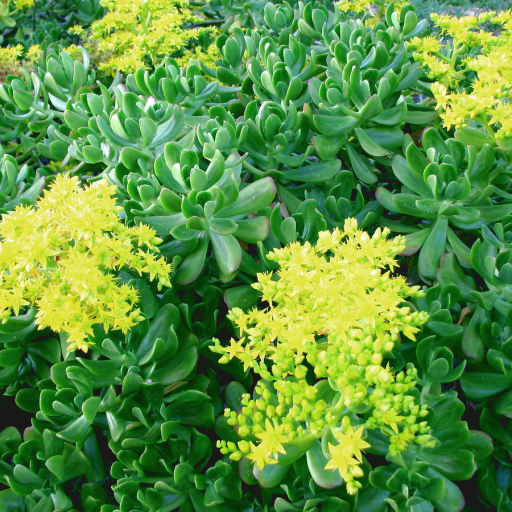
Known as the Shrubby Stonecrop, Sedum praealtum is a resilient Mexican native that defies the typical "creeping" habit of its cousins. Instead of hugging the ground, it grows into a lush, woody-stemmed miniature shrub, earning it the nickname "Mexican Bush Sedum." It is a favorite for those who want the architectural look of a jade plant but need something much hardier and faster-growing.
🔍 How to Identify
- 🍃 The Foliage: Spatula-shaped, fleshy leaves that are a vibrant, glossy lime green. Unlike many succulents with a powdery coating, these leaves look polished and waxy.
- 🎋 Growth Habit: It forms a branching, woody structure that can reach up to 3 feet tall. Over time, the lower stems become bare and "trunk-like," giving it a bonsai-esque appearance.
- ⭐ The Bloom: In late winter or early spring, the plant erupts in massive, pyramidal clusters of tiny, star-shaped yellow flowers that completely cover the foliage.
🏡 In Your Garden
- ☀️ Sun-Kissed Colors: While it thrives in bright light, pay attention to the leaf tips. When exposed to high UV rays or a slight chill, the edges of the green leaves will "blush" with a beautiful bronze or reddish tint.
- ✂️ Structural Maintenance: Because it grows rapidly, it can become "top-heavy" or leggy. Don't be afraid to prune it aggressively; this encourages a bushier shape and provides you with endless cuttings that root almost instantly in soil.
- 💧 Drainage Nuance: It is exceptionally drought-tolerant but hates "wet feet." If planted in a pot, ensure it has a drainage hole, or the thick, water-storing stems will quickly turn to mush from the bottom up.
⚠️ Safety & Toxicity
- 🟢 Status: Generally considered non-toxic to humans and common pets.
- 🐱 Details: While not poisonous like a Lily or Sago Palm, the sap can occasionally cause mild skin irritation in sensitive individuals. If a pet grazes on it, the high fiber and water content might cause minor stomach upset, but it is not a life-threatening plant.
✨ Fun Fact
In its native Mexico, Sedum praealtum has been used for centuries in traditional medicine. The juice from its succulent leaves is often applied topically to soothe burns or even used as a traditional folk remedy for eye inflammation.

Detailed Care Instructions
To grow Sedum praeltum (also known as the gold moss stonecrop), here are some steps to follow:
- Select a location: Sedum praeltum prefers a sunny location with well-draining soil. It can also tolerate partial shade.
- Prepare the soil: Make sure the soil is loose and well-draining. If the soil is heavy or clayey, improve it by adding in some organic matter such as compost or sand to improve drainage.
- Planting: Dig a small hole in the prepared soil and place the Sedum praeltum plant in it. Firmly press the soil around the plant to ensure good contact between the roots and the soil.
- Watering: Water the plant thoroughly after planting to settle the soil. After that, water the plant whenever the top inch of soil feels dry. Sedum praeltum is drought-tolerant but prefers regular watering during hot and dry periods.
- Fertilizing: Sedum praeltum typically does not require much fertilization. However, you can apply a balanced, slow-release fertilizer once or twice a year during the growing season to promote healthy growth.
- Propagation: Sedum praeltum can be easily propagated by stem or leaf cuttings. Simply take a cutting from a healthy plant, allow it to dry for a day or two, and then plant it in well-draining soil. Water the new cutting sparingly until it establishes roots.
- Pruning: Pruning is generally not necessary for Sedum praeltum, but you can trim any leggy or excessively long stems to maintain a more compact and bushy appearance.
- Pests and diseases: Sedum praeltum is relatively pest and disease-resistant. However, watch out for aphids or mealybugs, which can be removed by spraying a mild solution of insecticidal soap.
Remember to check for specific care requirements for your specific Sedum praeltum variety, as different cultivars may have slightly different preferences.

Place in a bright room that is sun drenched almost all day. Or directly in a south-facing window.

To water this plant, first, observe the soil moisture level by sticking a finger about an inch deep into the soil. If the soil feels dry, it's time to water. Use a watering can or a hose with a gentle, steady flow to water the plant. Ensure that you water the plant thoroughly, allowing the water to soak into the soil. However, take care to avoid overwatering, as this plant is susceptible to root rot. It is recommended to water this plant once a week during the growing season and less frequently during winter dormancy. Additionally, avoid getting water on the foliage, as this can lead to fungal diseases.
For optimal growth, fertilize this plant every two weeks during the growing season with a balanced fertilizer. Use a diluted solution and avoid getting any fertilizer on the leaves. In the winter, reduce fertilization to once a month or stop altogether if the plant goes dormant.
To provide optimal growing conditions for Sedum Praealtum plant, it is recommended to use a well-draining soil mix that is rich in organic matter. This should include a combination of materials such as peat moss, perlite, sand, and loam. The soil pH should be slightly acidic to neutral, ideally between 6.0 and 7.0. It is important to avoid using heavy, compacted soils or those that retain excessive moisture, as these can lead to root rot and other issues. Thoroughly mixing in a slow-release fertilizer can also help to support healthy growth and development. Additionally, it is important to ensure that the pot or container being used has adequate drainage holes to prevent water from accumulating at the bottom.
To propagate this plant, you can take stem or leaf cuttings. Make sure to take a healthy stem or leaf from the parent plant. Cut the stem or leaf at a 45-degree angle using a sharp, sterile blade. Remember to leave a few leaves on the stem cutting.
Next, prepare the soil by mixing equal parts potting soil and sand. Moisten the soil before placing the stem or leaf cutting into it. Firmly press the soil around the cutting to ensure it stays upright.
Place the pot with the cutting in a bright area, but away from direct sun. Keep the soil moist, but not too wet, by using a spray bottle to mist it or watering from the bottom. After several weeks, the cutting should develop roots and new growth.
When the new plant has grown to about 2 inches (5 cm) in height, you can transplant it to a larger container or into the ground outdoors. Make sure to water it regularly and provide adequate sunlight for it to thrive.








