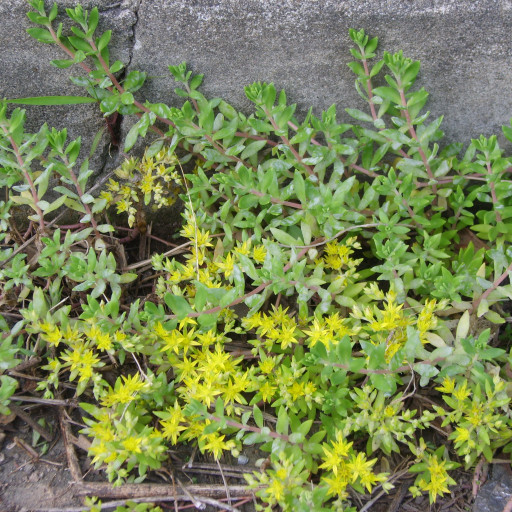
Plant Overview
Often called the "Gold Moss Stonecrop" or "Stringy Stonecrop," this resilient little succulent is a master of the ground-cover game. Originating from East Asia, it has a reputation for being nearly indestructible, often earning the nickname "Graveyard Moss" because of its ability to thrive in neglected spaces and stony soil. It’s a favorite for gardeners who want a "spill" effect over rock walls or hanging baskets.
🔍 How to Identify
- 🍃 Leaf Arrangement: The fleshy, lance-shaped, lime-green leaves grow in distinct sets of three (whorls) along the stems, creating a very geometric, organized appearance.
- ⭐ Starry Blooms: In late spring and early summer, the plant erupts with clusters of tiny, brilliant yellow flowers shaped like five-pointed stars.
- 🌱 Trailing Stems: It features long, slender, succulent stems that "creep" across the ground, sending out new roots wherever they touch the soil.
🏡 In Your Garden
- 🧗 The Perfect Filler: This plant is a "scrambler." Because it has a shallow root system, it doesn’t need deep soil to thrive, making it perfect for tucking into the cracks of stone steps or rock gardens.
- 💧 Drought Resilience: As a succulent, it stores water in its leaves. It prefers a bit of "tough love"—too much water or heavy, clay-filled soil will cause the roots to suffocate and the stems to turn mushy.
- 🌞 Light & Color: While it is incredibly hardy, its color changes based on light. In full sun, it stays a vibrant, golden-green; in deep shade, it may stretch out (etiolate) and turn a darker, more muted forest green.
⚠️ Safety & Toxicity
- ✅ Generally Safe: Sedum sarmentosum is considered non-toxic to humans and is not listed as a primary concern for cats or dogs by the ASPCA.
- 👅 Mild Irritation: While not "poisonous," the sap contains slight alkaloids that can cause very mild stomach upset if a curious pet or child eats a large quantity. It’s always best to admire it visually rather than taste-testing!
✨ Fun Fact
In Korea, this plant is known as Dolnamul and is actually a popular spring vegetable! It is harvested young and eaten fresh in salads or bibimbap, prized for its crunchy texture and refreshing, slightly tart flavor.

Detailed Care Instructions
| Humidity | Normal |
| Lighting | Part Sun |
| Difficulty | Easy |
| Hibernation | Cold Period |
| Temperature | 14°C - 30°C |
| Hardiness Zones | 9 - 4 |
To grow Sedum Sarmentosum, also known as stringy stonecrop or gold moss stonecrop, follow these steps:
- Choose a suitable location: Sedum Sarmentosum is a hardy plant that can withstand a wide range of conditions. It prefers full sun to partial shade and well-draining soil.
- Prepare the soil: Check the soil's drainage by digging a small hole and filling it with water. If the water does not drain within a few hours, consider adding organic matter or sand to improve drainage.
- Planting: Dig holes large enough to accommodate the root ball of the Sedum Sarmentosum plants. Space them about 12 inches apart if you are planting multiple plants.
- Watering: Initially, water the plants thoroughly after planting to help establish their roots. Afterward, Sedum Sarmentosum is a drought-tolerant plant, so only water when the soil feels dry. Avoid overwatering to prevent root rot.
- Mulching: Apply a layer of organic mulch around the plants to help retain moisture and suppress weed growth. However, keep the mulch a few inches away from the base of the plants to prevent rotting.
- Fertilizing: Sedum Sarmentosum does not require much fertilization. If desired, you can apply a balanced slow-release fertilizer once a year in early spring.
- Maintenance: This plant is low-maintenance and does not require much care. Remove any dead or decaying leaves to prevent disease and keep the plant tidy. Trim back the plants in early spring to encourage new growth.
- Propagation: Sedum Sarmentosum can be easily propagated through stem cuttings. Cut off a healthy stem, remove the lower leaves, and plant it in well-draining soil. Keep the soil slightly moist until new roots form.
- Pests and diseases: Sedum Sarmentosum is relatively resistant to pests and diseases. However, keep an eye out for aphids or snails, which can occasionally feed on the plants. Treat any pest problems promptly.
With proper care, Sedum Sarmentosum should grow and spread quickly, forming a lush ground cover. Enjoy its bright green foliage and yellow flowers in the summer months.

Place in a bright room that is sun drenched almost all day. Or directly in a south-facing window.

To water this plant, first check the soil to see if it is dry to the touch. If the soil is dry, prepare a watering can or pitcher with room temperature water. Slowly pour the water onto the soil around the base of the plant, being careful not to pour water onto the leaves or stems. Allow the soil to absorb the water before watering the plant again. It is important not to overwater this plant, as it can lead to root rot. Watering this plant once a week during the growing season should be sufficient, and less frequently during the winter months when the plant is dormant.
To properly fertilize this plant, use a balanced fertilizer with equal amounts of nitrogen, phosphorus, and potassium. Apply the fertilizer once a month during growing season, starting in early spring and stopping at the end of summer. Avoid fertilizing during winter when the plant is dormant. Be careful not to over-fertilize as this can lead to burnt leaves and weaker growth. Water the plant well before applying the fertilizer and avoid getting any on the leaves.
The ideal soil for the Sedum Sarmentosum plant is a well-draining soil mix that is rich in nutrients. This type of plant prefers soil that is slightly acidic to neutral in pH and is able to hold moisture but not become waterlogged. Consider using a combination of organic matter such as peat moss, compost, and perlite to create a soil mix that is light, fluffy, and has good drainage. Additionally, try to avoid using heavy clay soils or soils that are too sandy as these can cause drainage problems and disrupt the growth of the plant. Overall, the best soil for the Sedum Sarmentosum plant should be well-balanced, free-draining, and provide adequate nutrients for healthy growth and development.
- First, select a healthy and mature Sedum Sarmentosum plant with several healthy stems.
- Using a sharp and sterilized pruning tool, cut off a stem that is about 4-6 inches long from the parent plant.
- Remove the lower leaves from the stem, leaving only two to three pairs of leaves at the top.
- Dip the cut end of the stem into a rooting hormone powder to encourage root growth.
- Fill a pot with well-draining soil and create a small hole in the center.
- Insert the stem into the hole and gently press the soil around it to keep it upright.
- Water the newly planted stem thoroughly and place it in a warm and bright location with indirect sunlight.
- Keep the soil consistently moist but not waterlogged.
- After a few weeks, check for roots by gently tugging on the stem. If you feel resistance, this means roots have started to form.
- Once the plant has established roots, it can be transplanted into a permanent location or pot.
Common pests of the stringy stonecrop include Mealybugs, aphids. Make a habit of checking your stringy stonecrop frequently for pests so that any infestations can be caught and managed early.








