Plant Overview
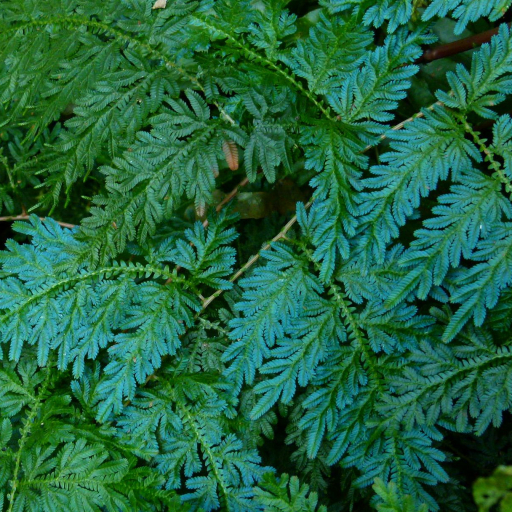
Commonly known as the Peacock Fern or Willdenow's Spikemoss, this mesmerizing plant is a true jewel of the rainforest floor. Native to Southeast Asia, it is famous for its shimmering, metallic-blue foliage that looks almost artificial or bioluminescent. Despite its name and appearance, it isn't a true fern but a "lycophyte," an ancient lineage of plants that has existed for millions of years.
🔍 How to Identify
- 🦚 Iridescent Sheen: The most striking feature is the electric blue or turquoise shimmer on the leaves, which changes intensity depending on the angle of the light.
- 🌿 Fan-Like Fronds: The foliage is composed of flat, scale-like leaves arranged in delicate, lacy branches that mimic the look of a fern.
- 🧗 Scrambling Habit: Unlike many low-growing spikemosses, this species is a vigorous climber and scrambler, using its wiry stems to "walk" over other plants or up supports.
🏡 In Your Garden
- ☁️ Humidity is King: This plant is a "humidity hog." It thrives in the damp, heavy air of a terrarium or a dedicated greenhouse. If the air gets too dry, the edges of the beautiful blue fronds will turn crispy and brown almost overnight.
- 🌑 The Shade Secret: The blue color is actually an adaptation to deep shade. If you place it in bright light, the plant will lose its iridescence and turn a dull, muddy green to protect itself from "sunburn."
- 💧 Thirsty Roots: It lacks a deep taproot, meaning it relies on consistent surface moisture. It hates being moved once established, as its fine root system is incredibly sensitive to disturbance.
⚠️ Safety & Toxicity
- ✅ Safe Status: Selaginella willdenowii is generally considered non-toxic to humans and common household pets like cats and dogs.
- 🧤 Physical Fragility: While not chemically dangerous, the plant is physically delicate. Excessive handling can damage the microscopic structures on the leaves that create the blue shimmer, leading to dull patches.
✨ Fun Fact
The "Peacock" blue isn't caused by a pigment like a flower's color; it’s structural coloration. The plant has specialized thin films in its leaf cells that filter light, reflecting only the blue wavelengths. This helps the plant capture more light energy in the dim, dark corners of the jungle floor!

Detailed Care Instructions
| Color | Green To Bluish-Green Foliage |
| Soil Ph | 5.0-7.3 |
| Humidity | Normal |
| Lighting | Part Sun |
| Toxicity | Non-Toxic |
| Soil Type | Moist, Well-Draining, Sandy, Loamy, Humus-Rich |
| Difficulty | Medium |
| Plant Type | Perennial |
| Mature Size | Up To 1.6 Feet Wide And 1 Foot Tall |
| Native Area | Singapore |
| Temperature | 18°C - 35°C |
| Sun Exposure | Full Sun To Partial Shade |
| Hardiness Zones | 10-11 |
To grow Selaginella Willdenowii (also known as peacock fern or rainbow moss), you can follow these guidelines:
- Start with the right conditions: Selaginella Willdenowii prefers bright, indirect light, so place it near a window with filtered sunlight or under fluorescent lights. Avoid direct sunlight, as it can scorch the leaves. It also thrives in a humid environment, so misting the plant regularly or placing it on a tray filled with water and pebbles will help increase humidity.
- Choose the right pot and soil: Use a terrarium or glass container with good drainage, as this plant prefers consistently moist but not waterlogged soil. A well-draining potting mix consisting of peat moss, compost, and perlite or sand will work well for Selaginella Willdenowii.
- Propagation: You can propagate Selaginella Willdenowii through spores or stem cuttings. To propagate through spores, allow the plant to develop spores on the undersides of its leaves. Collect the spores and sprinkle them on a layer of moist, well-drained soil in a separate pot. Cover the pot with a clear plastic bag to create a mini greenhouse. Once the spores have germinated and grown into small plants, you can move them into their individual containers.
- Watering: Water the plant regularly, keeping the soil consistently moist but not soggy. Avoid letting the plant dry out completely between waterings, as this can cause it to decline. Monitor the moisture level by checking the top inch of soil and watering accordingly.
- Fertilization: Selaginella Willdenowii does not typically require much fertilization. However, a diluted, balanced liquid fertilizer can be applied once every month during the growing season (spring to early autumn).
- Temperature and humidity: Selaginella Willdenowii prefers temperatures between 65-75°F (18-24°C). Make sure to keep it in a location with consistent temperature and humidity levels. Avoid placing it near drafts or temperature fluctuations.
- Pruning: Periodically trim back any dead or brown foliage to maintain the plant's health and appearance.
Remember that Selaginella Willdenowii is a sensitive plant, and it may take some trial and error to find the right balance of light, humidity, and watering for optimal growth. With patience and care, you should be able to successfully grow and enjoy this unique and beautiful plant.

Place in a window with dappled sun or a spot in the middle of a room. Or directly in a window facing west or east.

Selaginella Willdenowii is a type of plant that requires frequent watering to thrive. When watering this plant, it is important to avoid overwatering as this can lead to root rot. It is recommended to water Selaginella Willdenowii once the soil becomes dry to the touch, typically every 2-3 days. When adding water, it is important to do so slowly and evenly, ensuring that the water reaches the roots of the plant. It is important to use lukewarm or room temperature water, as cold water can shock the plant. Additionally, it is important to avoid getting water on the leaves of the plant, as this can cause damage or promote the growth of mold.
To fertilize this plant, use a balanced fertilizer with equal parts nitrogen, phosphorus, and potassium. Dilute the fertilizer to half strength and apply it to the soil around the base of the plant every 2-3 months during the growing season. Avoid over-fertilization as it can cause the plant to become leggy and weak. It is also recommended to water the plant before and after fertilization to prevent root burn.
The best soil for growing this plant needs to be well-draining and rich in organic matter. It should have a slightly acidic pH range of 5.5 to 6.5. The soil should also be moist but not waterlogged to avoid root rot. Some good options for soil mix include a blend of peat moss, perlite, and sand or coco coir. Adding some slow-release fertilizer or organic compost to the soil mix can also provide the necessary nutrients for the plant to thrive. It is essential to avoid using heavy clay or sandy soils, as they cannot retain moisture properly and are not rich in organic matter.
- Choose a healthy Selaginella Willdenowii plant:
Select a plant that is free from any disease or pest infestation. Make sure the plant has healthy roots and foliage.
- Take cuttings:
Carefully remove a few stems from the parent plant. Make sure the stems have at least one node each. The node is the point where the stem produces leaves or roots.
- Prepare the cuttings:
Trim the foliage from the bottom half of the stems, leaving only a few leaves on the upper half. Dip the lower end of the stem in a rooting hormone.
- Plant the cuttings:
Plant the cuttings in a well-draining soil mix. Make sure the stem is buried deep enough to cover the node. Water the soil thoroughly.
- Cover the cuttings:
Cover the cuttings loosely with a plastic bag or a clear plastic container. This helps to maintain the moisture level around the plant. Place the cuttings in a warm, bright spot, but avoid direct sunlight.
- Wait for the roots to grow:
Check the plant frequently to see if roots have developed. This can take anywhere from 4-8 weeks. Once you see roots, remove the plastic covering and gradually expose the plant to more light.
- Care for your new plants:
Once your cuttings have rooted and started growing, pot them into separate containers using well-draining soil mix. Keep the young plants moist, but not too wet. Gradually increase the amount of sunlight exposure your new plants receive.







