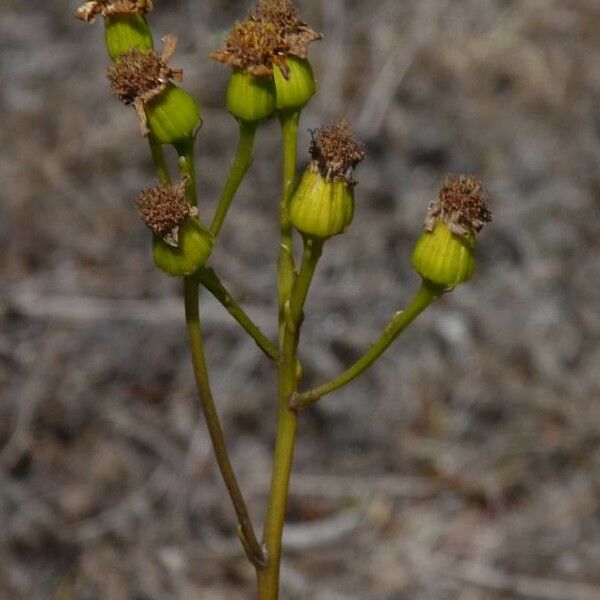
Plant Overview
Often called Decary’s Groundsel, this Madagascan native is like a piece of living modern art. With its ghostly silver-green leaves and structured growth, it looks more like a desert sculpture than a typical garden plant. In its homeland, it thrives in dry, rocky terrain, making it a master of survival and a perfect companion for the minimalist gardener who prefers "architectural" beauty.
🔍 How to Identify
- 🍃 Succulent Foliage: The leaves are thick, fleshy, and spatula-shaped. They often have a subtle, waxy coating that gives them a metallic, silver-blue sheen.
- 🌼 Daisy-like Blooms: During the cooler months, it produces clusters of bright, cheerful yellow flowers that stand in high contrast against the muted foliage.
- 🪵 Woody Stature: As the plant matures, the lower stems become thick and gray-barked, creating a striking "bonsai" or shrub-like appearance without any specialized pruning.
🏡 In Your Garden
- 🏜️ The Dry Life: This plant is a "set it and forget it" favorite. Because it stores water in its fleshy leaves, it thrives on neglect and actually prefers its soil to dry out completely. Overwatering is its only true enemy, as it can cause the roots to rot quickly.
- ☀️ Sun Seeker: To maintain its brilliant silver color and compact shape, it needs plenty of bright light. If kept in the dark, the stems will stretch out and lose their artistic, dense form.
⚠️ Safety & Toxicity
- 🚫 Toxic Status: High. Like most members of the Senecio family, this plant contains pyrrolizidine alkaloids.
- 🐾 Pets & Kids: It is toxic to cats, dogs, and humans if ingested. Keep it on a high shelf or in a protected area, as consuming the leaves can lead to serious liver issues over time. Some people also experience mild skin irritation from the sap, so wearing gloves during pruning is a smart move.
✨ Fun Fact
The genus name Senecio is derived from the Latin word senex, which means "old man." This isn't because the plant grows slowly, but because of the fluffy, white, hair-like seed heads that appear after it flowers, looking just like a wise old man's beard!

Detailed Care Instructions
To successfully grow a Senecio Decaryi plant, also known as the Blue Finger succulent, you can follow these steps:
- Choose the right location: Senecio Decaryi prefers a sunny location, so make sure to place it in a spot where it can receive at least 6 hours of direct sunlight per day. However, it can tolerate partial shade as well.
- Provide well-draining soil: Use a well-draining soil mix that consists of equal parts of potting soil, perlite, and coarse sand. This will prevent waterlogging and help the roots stay healthy.
- Watering: Blue Finger succulents don't like to be overwatered, so make sure the soil dries out between waterings. During the active growing season (usually spring and summer), water the plant thoroughly and then allow the top inch of soil to dry out before watering again. Reduce watering in the dormant season (usually fall and winter).
- Fertilization: Use a balanced, water-soluble fertilizer formulated for succulents and cacti. Apply the fertilizer half-strength every 2-4 weeks during the growing season.
- Container: Senecio Decaryi can be grown in a pot or a well-draining container. Make sure the container has drainage holes to prevent waterlogging.
- Temperature: The Blue Finger succulent prefers warm temperatures ranging from 65-80°F (18-27°C). It is not frost-tolerant and should be protected from freezing temperatures.
- Propagation: You can propagate Senecio Decaryi by stem cuttings or leaf cuttings. Allow the cut ends to dry for a few days before planting them in well-draining soil.
- Pruning: Prune any dead or damaged leaves regularly to maintain the health and appearance of the plant.
- Pest control: Keep an eye out for common succulent pests like mealybugs or aphids. Treat infestations early with organic insecticides or by wiping them off with a cotton swab dipped in rubbing alcohol.
By following these steps, you should be able to successfully grow a Senecio Decaryi plant. Remember to adjust the care based on the specific needs of your plant and monitor it regularly for signs of any issues.
To properly water this plant, you should first ensure that the soil is completely dry before watering again. When you do water, do not allow water to remain in the saucer as this can cause root rot. Water sparingly and take care not to overwater as this can also lead to root rot. It is best to use room temperature water and avoid getting water on the leaves as it can cause damage. This plant prefers well-draining soil and partial to full sunlight.
To fertilize this plant, use a balanced slow-release fertilizer with a N-P-K ratio of 20-20-20. Apply the fertilizer once a month during the growing season, which typically lasts from spring to early fall. Avoid over-fertilization, which can lead to leaf burning and plant stress. Water the plant thoroughly before and after fertilizing to prevent fertilizer burn.
Senecio Decaryi plant requires a well-draining soil that is rich in nutrients. The soil should be slightly acidic with a pH level between 6.0 to 6.5. It is recommended to use a mix of potting soil, sand and perlite in the ratio of 2:1:1 respectively. The potting soil should be high quality and free from pests, diseases and weed seeds. The sand will help to improve drainage and prevent soil compaction while perlite will lighten the soil and improve aeration. Additionally, it is important to ensure that the plant is not overwatered as it can lead to root rot. Therefore, the soil should be allowed to dry out between watering sessions.
To propagate this plant, you will need to take stem cuttings from a healthy and mature plant. Locate a stem that has several leaves and cut it just below a node (where the leaves attach to the stem). Remove the bottom leaves from the stem, leaving a few at the top. Dip the cut end in rooting hormone and then plant it in moist, well-draining soil. Keep the soil moist and place the cutting in a bright, but indirect light. Within a few weeks, the cutting should start to form roots and new growth. Once the new plant has established itself, transplant it into its own container or into the ground if outdoor conditions are suitable.








