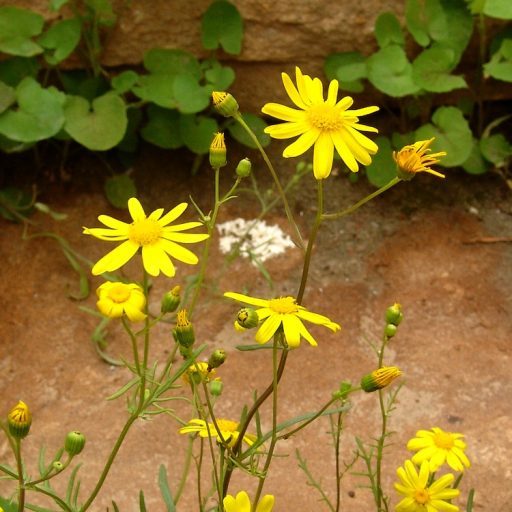
Plant Overview
Known as the "Jaffa Groundsel" or "Buck’s Horn Groundsel," this resilient little wildflower is a master of the Mediterranean coast. It creates a cheerful carpet of yellow in places where other plants struggle to survive, braving salty sea breezes and shifting desert sands. Its ability to thrive in harsh, arid environments makes it a fascinating example of botanical endurance.
🔍 How to Identify
- 🍃 Fleshy Foliage: The leaves are thick and slightly succulent, often deeply lobed or divided, which gives them a shape reminiscent of a deer's antlers.
- 💎 Glaucous Glow: The plant gets its Latin name glaucus from the powdery, bluish-gray wax coating on its stems and leaves, which helps it reflect intense sunlight.
- 🌼 Sunny Blooms: It features small, bright yellow daisy-like flowers. Unlike some of its cousins, the petals (ray florets) are often quite short, giving the center a prominent, button-like appearance.
🏡 In Your Garden
- 🏖️ Sand & Salt: This plant is a "halophyte" cousin, meaning it is highly tolerant of salt. It is perfect for coastal rock gardens where "normal" flowers might wilt from the sea spray.
- ☀️ Sun Protection: It hates "wet feet" and shade. In a garden setting, it needs the sunniest spot available and soil that drains almost instantly. It has evolved to survive on neglect rather than pampering.
⚠️ Safety & Toxicity
- 🚫 Toxic if Ingested: Like many members of the Senecio genus, this plant contains pyrrolizidine alkaloids. These compounds are a natural defense mechanism against herbivores but are dangerous to the liver.
- 🐾 Pet & Livestock Warning: It is considered toxic to dogs, cats, and horses. While it doesn't usually cause a rash upon touching, you should wash your hands after handling it to ensure no sap is accidentally ingested.
✨ Fun Fact
The "glaucous" coating that gives the plant its silvery-blue tint is actually a layer of epicuticular wax. This wax doesn't just save water; it acts like a high-SPF "plant sunscreen," protecting the delicate tissues from UV damage in the open desert!

Detailed Care Instructions
To grow Senecio glaucus plants, you can follow these steps:
- Obtaining the plant: You can obtain a Senecio glaucus plant from a nursery or plant store, or you can grow it from seeds.
- Soil: Senecio glaucus plants prefer well-draining soil. Use a mix of regular potting soil and perlite to ensure good drainage.
- Potting: Choose a pot that has drainage holes and is slightly larger than the plant's current size. Fill it with the soil mixture, leaving enough space for the roots.
- Light: Senecio glaucus plants thrive in bright, indirect light. Place them near a sunny window, but avoid direct sunlight, as it can scorch the leaves.
- Temperature: The ideal temperature range for Senecio glaucus is between 60-80°F (15-26°C). Avoid placing the plant in areas with extreme temperature fluctuations.
- Watering: Water the plant evenly and thoroughly. Let the soil dry out between watering, as overwatering can lead to root rot. Stick your finger into the soil to check for moisture before watering again.
- Fertilizer: Feed your Senecio glaucus plant once a month during the growing season with a balanced liquid fertilizer. Follow the instructions on the fertilizer packaging for the correct dosage.
- Pruning: If the plant becomes leggy or unruly, you can prune it to maintain its shape. Pinch back the tips to encourage bushier growth.
- Propagation: Senecio glaucus can be propagated through stem cuttings. Take a cutting, remove some of the lower leaves, and dip the end in rooting hormone. Place the cutting in moist soil and keep it warm and humid until roots develop.
- Pests and diseases: Senecio glaucus plants are generally pest and disease-resistant. However, if you notice any pests, such as aphids or mealybugs, use an appropriate insecticide or wipe them off with a damp cloth.
Remember to research and experiment with the specific requirements of your Senecio glaucus plant, as they may vary slightly depending on your location and climate.
To water this plant, check the moisture level of the soil before watering. Insert a finger into the soil up to the first knuckle and if it feels dry, it is time to water it. Use a watering can with a narrow spout to water the soil around the base of the plant, avoiding the leaves. Water until the excess water drains out of the bottom of the pot. Avoid overwatering as this can lead to root rot. The frequency of watering depends on the environmental factors such as humidity, temperature, and sunlight. It is better to underwater than overwater the plant.
To fertilize this plant, you should use a well-balanced fertilizer with equal amounts of nitrogen, phosphorus, and potassium. You can use either a liquid or granular fertilizer, but make sure to dilute the liquid fertilizer according to the instructions on the packaging.
Apply the fertilizer during the growing season, which is typically from spring to early fall. Use a water-soluble fertilizer every two weeks or a slow-release fertilizer once at the beginning of the growing season, following the package instructions.
When fertilizing, avoid getting fertilizer on the leaves or stems, as this can burn them. Water the plant well after fertilizing to help distribute the nutrients evenly throughout the soil.
Senecio Glaucus thrives in well-draining soil that is not water-logged. It prefers a slightly acidic to neutral soil pH level of around 6.0 to 7.0. The soil used should be rich in organic matter, with a good amount of nutrients available to the plant. A soil mix that is commonly used for succulents and cacti, consisting of a combination of sand, perlite, and peat moss, can be suitable for Senecio Glaucus. However, the exact mix used depends on the local climate, growing conditions, and individual plant needs. It is recommended to test the soil regularly and amend it as necessary to ensure it provides optimal growing conditions for the plant.
Senecio Glaucus plant can be propagated through stem cuttings. Select a healthy stem with new growth and cut a 4-6 inch piece using sharp, clean scissors. Remove the leaves from the bottom half of the stem and dip it in a rooting hormone powder. Place the stem in a pot filled with well-draining soil and lightly water it. Cover the pot with a plastic bag to create a humid environment. Place the pot in a warm, bright location, but avoid direct sunlight. Check the soil regularly and water only when it is dry. After a few weeks, roots should start to form, and you can remove the plastic bag and care for the plant as usual.








