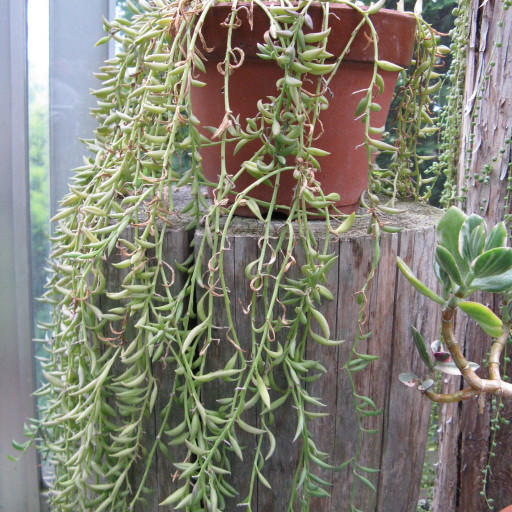
Plant Overview
Commonly known as the String of Bananas or Fishhook Senecio, this quirky South African succulent is the rugged, faster-growing cousin of the famous String of Pearls. Its cascading vines can reach lengths of over three feet, creating a lush curtain of emerald-green "fruit" that adds a tropical feel to any bright room. It’s a favorite for beginners because it is far more forgiving of occasional neglect than other trailing succulents.
🔍 How to Identify
- 🍌 The Foliage: The leaves are thick, succulent, and shaped exactly like tiny green bananas or fishhooks, tapering to a pointed tip.
- 🪟 Epidermal Windows: Each "banana" features a thin, translucent longitudinal stripe that acts as a window, allowing sunlight to penetrate the interior of the leaf for photosynthesis.
- 🌸 The Blooms: In late winter or spring, it produces tiny, white, pom-pom-like flowers that sit on long stalks and smell surprisingly like spicy cinnamon.
🏡 In Your Garden
- ☀️ Light & Stretching: While it loves bright, indirect light, this plant will tell you if it's unhappy. if the "bananas" start to look sparse or the stems become "leggy," it is desperately reaching for more sun.
- ✂️ Easy Multiplication: This plant is a propagation champion. Because it grows so quickly, you can simply snip a vine, strip a few bottom leaves, and tuck the stem back into the soil to create a fuller, bushier appearance.
- 🪴 Drainage is Key: It hates "wet feet." Use a terracotta pot and a gritty cactus mix to ensure the roots never sit in stagnant water, which can lead to rapid stem rot.
⚠️ Safety & Toxicity
- 🚫 Status: Toxic to humans and pets.
- 🐾 Details: If ingested, the plant can cause drooling, vomiting, and diarrhea in cats and dogs. The sap can also cause mild skin irritation or dermatitis in sensitive individuals, so it is best to wear gloves when pruning.
✨ Fun Fact
The String of Bananas doesn't just grow downward! In its native South African habitat, it acts as a "creeping" groundcover, using its long stems to find pockets of soil between rocks where it can take root and spread across the desert floor.

Detailed Care Instructions
To grow Senecio radicans, also known as String of Bananas, you can follow the steps below:
- Choose a suitable location: Senecio radicans thrives in bright, indirect sunlight. Find a spot near a window or any other well-lit area in your home.
- Select the right container: Use a hanging basket or a pot with a drainage hole to prevent overwatering. A container with a trailing design can help showcase the plant's cascading foliage.
- Prepare the soil: Use well-draining soil mixed with organic matter like compost or perlite. This will ensure proper root growth and prevent waterlogging.
- Propagation: There are a few ways to propagate Senecio radicans. You can take stem cuttings and root them in water or directly in the soil. Another way is to use offsets, which are baby plants growing from the mother plant. Gently separate the offsets and repot them individually.
- Planting: Place the stem cutting or offset into the soil, ensuring that it is buried deep enough to establish its roots. Firmly pack the soil around the plant to provide stability.
- Watering: Water the plant when the soil has dried out completely. Senecio radicans prefers to be slightly dry between waterings. Overwatering can lead to root rot. Allow the excess water to drain out completely after each watering.
- Fertilization: Use a balanced, water-soluble fertilizer every four to six weeks during the growing season (spring and summer). Dilute the fertilizer according to the instructions on the packaging.
- Pruning: Regularly prune and pinch back the stems to encourage growth and maintain the desired shape. This will help prevent leggy or sparse growth.
- Temperature and humidity: Senecio radicans prefers average room temperatures between 65-75°F (18-24°C). It can tolerate slightly cooler temperatures but should be protected from frost.
- Pests and diseases: Inspect the plant regularly for common houseplant pests like mealybugs or spider mites. If necessary, treat affected areas with appropriate insecticides or wipe them off with a cotton swab dipped in rubbing alcohol.
By following these steps and providing the appropriate care, your Senecio radicans should thrive and grow into a beautiful trailing plant.

Place in a bright room that is sun drenched almost all day. Or directly in a south-facing window.

Senecio Radicans is a type of plant that needs to be watered regularly to thrive. When watering this plant, it is important to avoid getting the leaves and stems wet as much as possible as this may cause rot. To water this plant, ensure that the soil is dry before watering it. You can test whether the soil is dry by sticking a finger into it up to an inch or two and feeling for any moisture. If the soil is dry, water the plant deeply and try to water around the base of the plant rather than over it. Once you have watered the plant, allow the excess water to drain out of the pot to prevent over-watering. It is important to note that over-watering this plant can lead to root rot, which can be fatal. Overall, Senecio Radicans should be watered moderately, allowing the soil to dry out slightly between waterings, to keep it healthy and thriving.
To fertilize this plant, dilute a balanced liquid fertilizer to half strength and apply once a month during the growing season. Avoid over-fertilizing as it can burn the roots and damage the plant. Water the plant thoroughly after fertilizing.
It is recommended to use a well-draining soil mixture with good aeration for this particular plant. The soil mixture should be composed of organic matter such as peat moss, compost, or vermiculite mixed with either sand, perlite, or coarse grit to improve drainage. Additionally, the soil should have a slightly acidic to neutral pH level, between 6.0 to 7.0. It is important to avoid over-watering the plant as it can cause root rot due to its susceptibility to waterlogged soil, so it is advisable to let the soil dry out slightly between watering.
To propagate this plant, you will need to take stem cuttings of about 4-6 inches in length from a healthy and mature plant. Make sure the cutting has 2-3 nodes and remove any leaves from the bottom part of the cutting.
Prepare a well-draining potting mix and moisten it lightly. Dip the cut end of the stem in rooting hormone powder and place the cutting in the potting mix. Gently press the soil around the cutting to ensure it stays in place.
Water the cutting lightly and cover it with a clear plastic bag or a plastic dome to maintain humidity. Place the pot in a bright, indirect sunlight spot.
Check the cutting regularly and ensure the soil stays moist but not waterlogged. After a few weeks, you should notice new roots forming. Once the roots are well-established, you can remove the plastic bag or dome and transplant the new plant to a larger pot or outdoor location if desired.
Common pests of the string of bananas include Mealybugs. Make a habit of checking your string of bananas frequently for pests so that any infestations can be caught and managed early.








