Plant Overview
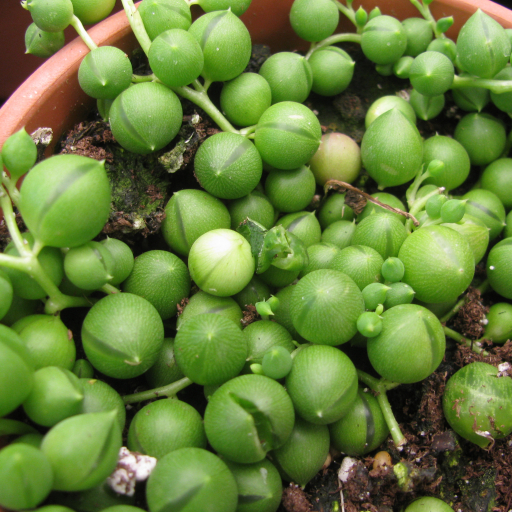
Known globally as the "String of Pearls," this trailing succulent looks more like a piece of living jewelry than a typical houseplant. Native to the arid regions of Southwest Africa, it has evolved to survive harsh droughts by transforming its leaves into fleshy, green marbles. It is a favorite for vertical gardening, as it cascades beautifully over the edges of hanging baskets like a waterfall of beads.
🔍 How to Identify
- 🟢 The "Pearls": Perfectly spherical, pea-like leaves that serve as water reservoirs. Each leaf has a tiny, translucent "window" (a slit) to let light reach the leaf's interior.
- 🌿 Trailing Vines: Extremely thin, thread-like stems that can reach lengths of 3 feet (1 meter) or more in indoor settings.
- 🌸 Cinnamon Blooms: It produces small, white, trumpet-shaped flowers with colorful purple/red stamens. These clusters are often described as smelling like spicy cinnamon or cloves.
🏡 In Your Garden
- 🏜️ Light & Heat Nuance: Because its leaves are so specialized, "pearls" can actually sunburn if left in intense, direct afternoon sun. It thrives best in bright, indirect light—think of it as a plant that loves the morning sun but needs a "parasol" by noon.
- 💧 The "Pucker" Method: Do not water this plant on a calendar schedule. Instead, wait until the pearls lose their shine and start to look slightly shriveled or "puckered." This indicates the water stores are low and it’s safe to give it a deep soak.
- 🪴 Potting Sensitivity: This plant has a very shallow and fragile root system. It hates "wet feet," so it should always be kept in a porous, well-draining cactus mix and a pot with plenty of drainage holes.
⚠️ Safety & Toxicity
- 🚫 Toxic Status: This plant is considered toxic to humans and household pets (cats and dogs).
- 🐾 Details: If ingested, it can cause digestive upset, vomiting, and lethargy. The clear sap inside the leaves can also cause skin irritation or "dermatitis" in humans, so it is best handled with care or kept out of reach of curious children and pets.
✨ Fun Fact
Each "pearl" features a narrow, translucent "epidermal window." This tiny slit acts like a biological skylight, allowing sunlight to enter the center of the leaf for photosynthesis while protecting the rest of the plant from the drying heat of the desert sun!

Detailed Care Instructions
To grow Senecio rowleyanus, also known as "string of pearls," follow these steps:
- Light: This plant prefers bright but indirect sunlight. Place it in a location that receives bright light for at least a few hours a day. Avoid direct sunlight as it can scorch the leaves.
- Temperature: It grows best in temperatures ranging from 60°F to 75°F (15°C to 24°C). Protect it from extreme temperatures and drafts.
- Watering: Senecio rowleyanus is a succulent, meaning it stores water in its leaves. Water it sparingly, allowing the soil to dry out completely between waterings. Overwatering can lead to root rot. During the winter months, reduce watering as the plant goes into dormancy.
- Potting soil: Use a well-draining potting mix suitable for succulents or cacti. Incorporating perlite or pumice into the soil mix can enhance drainage.
- Pot selection: Choose a pot with drainage holes to prevent waterlogging. Senecio rowleyanus does well in hanging baskets or pots with cascading leaves.
- Propagation: This plant is easily propagated through stem cuttings. Simply cut off a healthy stem, remove a few bottom leaves to expose a node, let it callus over for a few days, then place it in moist soil or water until new roots form.
- Fertilizer: Feed the plant once a month during the growing season (spring and summer) with a diluted balanced liquid fertilizer specifically formulated for succulents.
- Pruning: Prune the plant to maintain its shape and encourage branching. Pinch back leggy stems to promote fuller growth.
- Pests and diseases: Senecio rowleyanus is generally resistant to pests and diseases. However, it can be susceptible to mealybugs or aphids. Inspect the plant regularly and treat any infestations promptly with an appropriate insecticidal soap or neem oil.
By following these guidelines, you can successfully grow a healthy Senecio rowleyanus plant.

Place in a bright room that is sun drenched almost all day. Or directly in a south-facing window.

To water this plant, first ensure that the soil is completely dry before watering. When watering, pour a small amount of water into the soil around the base of the plant, avoiding getting water on the leaves or stems. Allow the soil to fully absorb the water, ensuring that it is not left standing in water. Water the plant only when the soil is dry, which may range from every few days to once a week depending on the environment and plant size. Avoid overwatering, as this can lead to root rot and other plant issues.
To fertilize this plant, use a balanced water-soluble fertilizer diluted to half strength every two weeks during the growing season (spring and summer). Do not fertilize during the winter months. Take care not to over-fertilize, as this can lead to burnt roots or even death of the plant.
The ideal soil for growing Senecio Rowleyanus should be well-draining, light, and porous. It should be able to retain water without getting waterlogged, as this can lead to root rot. The soil should have a pH of around 6.0-7.0, which is slightly acidic to neutral. The plant prefers sandy or loamy soil that is rich in organic matter, such as peat moss or compost. It is important to ensure that the soil is not compacted, as this can limit the root growth of the plant. Additionally, the soil should be aerated and fluffy to allow for proper air circulation around the roots. Adding perlite or sand to the soil can help improve drainage and aeration, which can be particularly beneficial for this plant.
To propagate this trailing succulent plant, you will need to carefully remove a healthy stem or several stems from the mother plant. Use a clean and sharp pair of scissors or pruning shears to make a clean cut below a node or a leaf joint. Make sure that the stem is about 4-6 inches long and has a few healthy leaves.
Next, allow the cut end of the stem to callus over for a day or two. This will help prevent rotting when it is planted. Then, prepare a well-draining potting mix using equal parts of perlite, sand, and peat moss. Moisten the mix lightly.
Make a small hole in the potting mix and insert the stem, gently pressing the mix around it. Water the cutting lightly and place it in a bright but indirect light location. Alternatively, you can cover the pot with a plastic bag or a clear plastic container to create a mini greenhouse to increase humidity around the cutting.
Keep the soil evenly moist but not waterlogged and avoid exposing the cutting to direct sunlight. Within a few weeks to a couple of months, the cutting should start developing roots and new growth. Once the roots are established and the plant is growing well, you can transplant it to a larger pot or return it to its original location.
Common pests of the string-of-beads include Mealybugs. Make a habit of checking your string-of-beads frequently for pests so that any infestations can be caught and managed early.








