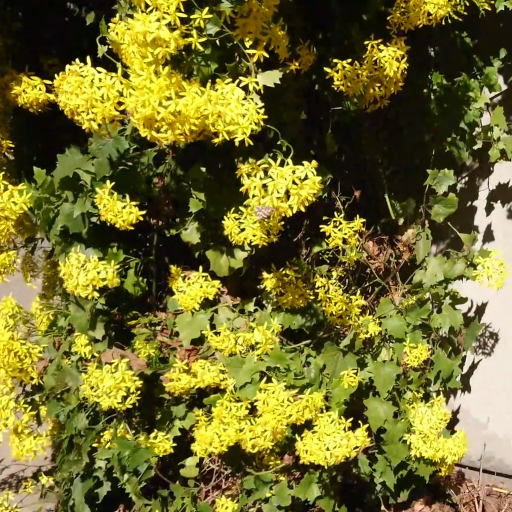
Plant Overview
Often called the Canary Creeper or Natal Ivy, this vigorous South African climber is a master of disguise. While its fleshy, lobed leaves look remarkably like English Ivy, it reveals its true identity in a dramatic "golden waterfall" of bright yellow blooms. It is a favorite for gardeners looking to cover a fence quickly with a lush, succulent-style tapestry.
🔍 How to Identify
- 🍃 The Leaves: Glossy, bright green, and succulent to the touch. They are shaped like ivy leaves with distinct pointed lobes, allowing the plant to blend in until it flowers.
- 🌼 The Blooms: Large, dense clusters of brilliant yellow daisy-like flowers. Unlike true ivy, these flowers emit a sweet, honey-like fragrance that fills the air in late autumn.
- 🧗 The Stems: Long, flexible, and slightly brittle green stems that scramble upward or trail downward, often reaching lengths of 10 to 15 feet if left unchecked.
🏡 In Your Garden
- ☀️ Light Nuance: This creeper is a sun-lover but has a "cool head" preference. It blooms most prolifically in full sun, but in extremely hot climates, it prefers its roots to be in the shade while its "head" reaches for the light.
- 💧 Drought Strategy: Because of its succulent leaves, it stores water efficiently. It is much more likely to die from overwatering than underwatering; ensure the soil is gritty and fast-draining to prevent "wet feet" and root rot.
- ✂️ Containment: It is a fast grower! Without a yearly pruning after the flowers fade, it can easily smother smaller shrubs or heavy-duty garden ornaments.
⚠️ Safety & Toxicity
- 🐾 Toxic to Pets: Like many members of the Senecio family, this plant contains pyrrolizidine alkaloids. It is toxic to dogs, cats, and horses if ingested, potentially leading to liver damage.
- 👶 Child Safety: The bright flowers may be tempting to children. Keep this plant out of reach of curious toddlers, as ingestion can cause stomach upset and more serious systemic issues.
- 🧤 Skin Sensitivity: While not as aggressive as poison ivy, the sap can cause mild skin irritation for those with sensitive skin; wearing gloves while pruning is recommended.
✨ Fun Fact
The Canary Creeper is a vital "winter buffet" for pollinators. Because it blooms in late autumn and early winter when most other plants have gone dormant, it provides a critical source of nectar for bees and butterflies preparing for the cold months ahead.

Detailed Care Instructions
To grow Senecio Tamoides, also known as String of Dolphins or Dolphin Necklace, follow these steps:
- Propagation: The easiest way to grow Senecio Tamoides is through propagation. Take stem cuttings from a mature plant with at least 3-4 pairs of leaves. Use a clean, sharp pair of scissors or pruning shears to make a clean cut just below a pair of leaves.
- Rooting: Once you have your cuttings, allow them to dry for a day or two to form calluses on the cut ends. This helps prevent rots when planted. Fill a small pot with well-draining soil, such as cactus or succulent mix. Insert the cuttings into the soil, burying about an inch of the stem, and gently firm the soil around them.
- Watering: After planting the cuttings, water the soil lightly, ensuring it is moist but not waterlogged. Avoid overwatering, as this can cause root rot. Water the plant whenever the top inch of soil feels dry, usually every 7-10 days.
- Light: Senecio Tamoides prefers bright, indirect sunlight. Place the pot in a location that receives bright, filtered light for at least 4-6 hours a day. Avoid exposing the plant to direct sunlight, as it can scorch the leaves.
- Temperature and Humidity: This plant thrives in average room temperatures between 60-75°F (16-24°C). It can tolerate slightly cooler temperatures but should be protected from frost. Senecio Tamoides appreciates humidity, so you can increase humidity by placing a tray of water nearby or using a room humidifier.
- Fertilizer: Feed your Senecio Tamoides plant with a balanced, water-soluble fertilizer every 4-6 weeks during the growing season (spring and summer). Follow the instructions on the fertilizer package for application rates.
- Pruning: Prune your plant regularly to maintain its shape and control its size. Pinch off new growth tips to encourage branching and fuller growth.
- Potting: Transplant the Senecio Tamoides plant to a slightly larger pot when it outgrows its current container. Use well-draining soil and ensure the pot has drainage holes to prevent waterlogging.
With proper care and attention, your Senecio Tamoides plant should grow and thrive, displaying its unique and beautiful dolphin-shaped leaves.

Place in a bright room that is sun drenched almost all day. Or directly in a south-facing window.

To water this plant, first check the soil moisture. Stick your finger into the soil and if it feels dry up to the first knuckle, it's time to water. Use a watering can or hose with a gentle flow and water the soil around the base of the plant until water flows out of the drainage holes. Do not let the plant sit in standing water. Water the plant when the soil feels dry to the touch, but make sure not to overwater. Overwatering can cause the roots to rot and damage the plant. It's better to underwater than overwater. Lastly, make sure the plant is placed in a pot with drainage holes to ensure proper drainage.
To fertilize this plant, you should use a balanced fertilizer with equal amounts of nitrogen, phosphorus, and potassium. Apply every two weeks during the growing season, but reduce the frequency during the winter months. Dilute the fertilizer according to the package instructions and apply it to the soil around the base of the plant, avoiding the leaves and stem. Ensure that the soil is moist before fertilizing and that excess fertilizer is not retained in the soil to avoid fertilizer burn.
The ideal soil for Senecio Tamoides plant should have good drainage, be rich in nutrients, and have a slightly acidic to neutral pH level. A mixture of organic compost and peat moss can help to improve drainage and retain moisture in the soil. It is important to avoid using heavy soils or those that hold too much water, as this can lead to root rot. Adding perlite or sand to the soil mixture can help to improve drainage and prevent waterlogging. The soil should be well-aerated to provide ample oxygen for the roots. Regular fertilization is recommended to ensure that the plant gets adequate nutrients to thrive.
To propagate this plant, you can take stem cuttings from healthy mature plants. Make sure that the stem is healthy and mature enough to propagate. Cut a stem section that is about 3-5 inches long from the parent plant. Remove any leaves from the lower part of the stem that will be submerged in the soil. Dip the cut end of the stem in rooting hormone (optional). Then plant the stem cutting in moist, well-draining potting soil. Cover the pot with clear plastic wrap or a plastic bag to create a mini greenhouse effect and keep the cutting moist. Place the pot in a bright area but out of direct sunlight. Check the soil moisture regularly and mist the cutting if it appears to be drying out. After a few weeks, new roots should begin to form. Once the plant has established roots, you can remove the plastic and move the plant to a larger pot or in the ground.
Common pests of the canary creeper include Mealybugs, spider mites, aphids, thrips. Make a habit of checking your canary creeper frequently for pests so that any infestations can be caught and managed early.








