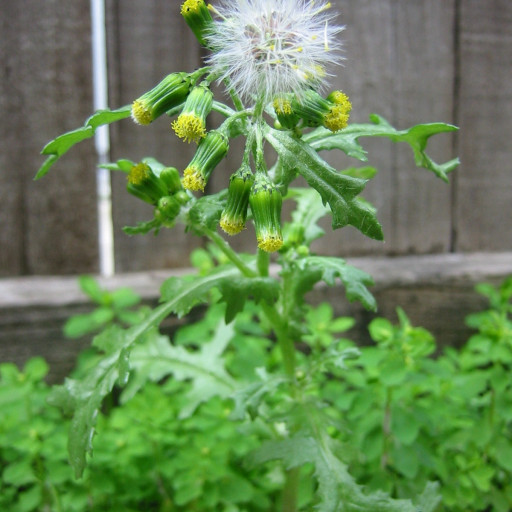
Plant Overview
Often called "Old-man-in-the-spring" due to its fluffy white seed heads, Common Groundsel is one of the most successful "wanderers" in the plant kingdom. While many gardeners view it as a pesky weed, this resilient herb has traveled from Europe to nearly every corner of the globe. It is a pioneer species, meaning it is often the first to colonize bare soil, acting as nature’s quick-fix ground cover.
🔍 How to Identify
- 🌼 The "Petalless" Flower: Unlike daisies, these yellow flower heads consist almost entirely of disk florets. They look like small, tight yellow cylinders tucked into green, black-tipped brackets (bracts).
- 🍃 Jagged Foliage: The leaves are deeply lobed and toothy, arranged alternately along a succulent, slightly purple-tinged stem. They often have a sparse, cobweb-like coating of fine hairs.
- 👨🦳 The "Old Man" Seeds: After flowering, the plant produces a sphere of white, silky tufts (the pappus). These act like tiny parachutes, allowing the wind to carry seeds far away from the parent plant.
🏡 In Your Garden
- 🌱 Disturbed Soil Specialist: If you have recently tilled your garden or dug up a flower bed, expect Groundsel to arrive quickly. It thrives in nitrogen-rich, loose soil and uses its fast life cycle to outpace slower-growing perennials.
- 🔄 Year-Round Presence: In milder climates, this plant is an overachiever. It can complete its entire life cycle—from germination to dropping seeds—in as little as five weeks, leading to multiple generations in a single growing season.
⚠️ Safety & Toxicity
- 🚫 Toxic Status: High Toxicity. Common Groundsel contains pyrrolizidine alkaloids, which are known to cause cumulative liver damage if ingested.
- 🐾 Risk to Animals: It is particularly dangerous for livestock, especially horses and cattle, if it becomes mixed into hay. It is also toxic to household pets and humans; never include it in salads or herbal teas despite its leafy appearance.
✨ Fun Fact
The name Senecio is derived from the Latin word senex, meaning "old man." This refers to the bald receptacle that remains after the fluffy white seeds have blown away, looking much like a hairless scalp!

Detailed Care Instructions
| Humidity | Normal |
| Lighting | Full Sun |
| Toxicity | Poisonous |
| Difficulty | Medium |
| Hibernation | Cold Period |
| Temperature | 15°C - 25°C |
| Hardiness Zones | 5 - 9 |
To grow Senecio vulgaris, also known as common groundsel or old-man-in-the-spring, follow these steps:
- Select a suitable location: Senecio vulgaris prefers well-draining soil and partial to full sun. Choose a spot in your garden or balcony that receives at least 4-6 hours of direct sunlight.
- Prepare the soil: Loosen the soil using a garden fork or spade. Remove any weeds, rocks, or roots from the planting area. If the soil is heavy or clayey, amend it by adding organic matter such as compost or well-rotted manure to improve drainage.
- Sow the seeds: Scatter the seeds of Senecio vulgaris on the prepared soil surface. Do not cover them with soil, as they require light to germinate. Gently press the seeds into the soil to ensure good seed-to-soil contact.
- Water regularly: Keep the soil consistently moist but not waterlogged. Water the area gently using a watering can or hose with a water-spraying nozzle. Avoid overwatering, as it can lead to root rot or fungal diseases.
- Control weeds: Senecio vulgaris is a rapid-growing plant, but it can become invasive. Regularly remove any other weeds that may compete for nutrients, moisture, and sunlight.
- Monitor for pests and diseases: Although Senecio vulgaris is relatively resistant to many pests and diseases, it can occasionally be affected by aphids, powdery mildew, or fungal infections. Inspect the plants regularly and take appropriate measures if any issues arise, such as using insecticidal soap or organic fungicides.
- Harvest or thin the plants: Once Senecio vulgaris reaches maturity, which typically takes about 6-8 weeks after germination, you can harvest its leaves for consumption (if desired). Alternatively, thinning the plants by removing some of them can give the remaining ones more space to grow and thrive.
Remember that while Senecio vulgaris can be grown as a culinary herb in some regions, it is considered a weed in others. Ensure you have permission and follow local regulations before growing this plant, especially if it is invasive in your area.

Place in a bright room that is sun drenched almost all day. Or directly in a south-facing window.

To water this plant, you should make sure to check the soil before watering it to make sure it is dry. Then, slowly pour water around the base of the plant until the soil is moist but not waterlogged. You should avoid getting water on the leaves or stem, as this can cause damage. Depending on the location and temperature, you may need to water this plant more or less frequently, so it is important to pay attention to its individual needs. Additionally, it is important to make sure the plant is getting enough sunlight and is not being over or under fertilized.
To fertilize your plant, you should choose a balanced fertilizer with equal amounts of nitrogen, phosphorus, and potassium. Dilute the fertilizer according to package instructions, then apply it to the soil around the base of your plant. It's best to fertilize during the plant's active growing period, usually in spring and summer, and only once every 4-6 weeks. Be careful not to over-fertilize, as this can cause damage to the plant.
For optimal growth, it is recommended to use a well-draining soil mix with a neutral pH range. The soil should be amended with organic matter such as compost or peat moss to enhance moisture retention. Additionally, the plant requires consistent moisture, so regular watering is necessary. However, it is important not to overwater as this can lead to root rot. Adequate drainage is crucial to keep the plant healthy. Lastly, the plant prefers a bright but indirect light location.
To propagate this plant, select a mature and healthy plant with strong stems and deep green leaves. Cut off a healthy stem with a sterilized knife or blade, making sure to include at least one node and several leaves. Remove the lower leaves from the stem, leaving just a few at the top. Place the stem in a clean glass or jar filled with water, making sure that at least one node is submerged. Change the water every few days to keep it fresh and clear. The cutting should develop roots within a few weeks. Once the roots are about an inch long, carefully remove the stem from the water and plant it in a well-draining soil mixture. Water the newly planted cutting and keep it in a warm, brightly lit location out of direct sunlight. With proper care, the cutting should develop into a healthy plant over time.








