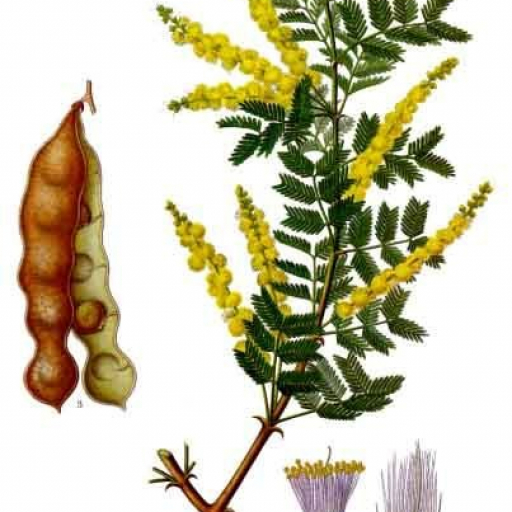
Plant Overview
Known as the "Gum Arabic Tree," Senegalia senegal is a resilient desert survivor that has shaped human history for millennia. From the ancient Egyptians who used its sap for mummification to the modern-day soda in your fridge, this tree is a silent giant of industry. It is a symbol of endurance, thriving in the harsh, arid landscapes of sub-Saharan Africa and the Middle East where few other plants can survive.
🔍 How to Identify
- 🌵 The Triple Threat Thorns: One of its most distinctive features is the way its thorns grow; they usually appear in sets of three at the base of the leaves, with the middle thorn hooked downward and the two side thorns hooked upward.
- 🌿 Feathery Foliage: The leaves are bipinnate, meaning they have a delicate, fern-like appearance. These small, grayish-green leaflets help the tree minimize water loss in scorching heat.
- 🍦 Creamy Flower Spikes: During the blooming season, the tree produces fragrant, pale-yellow or creamy-white flowers that look like fuzzy "bottlebrushes" or elongated spikes.
- 💧 Amber Tears: You may see "tears" of golden, translucent resin seeping from cracks in the bark. This is the famous Gum Arabic, which hardens upon contact with the air.
🏡 In Your Garden
- 🏜️ The Ultimate Drought Warrior: This tree is built for neglect. It thrives in sandy, poor-quality soils and requires very little water once established. In fact, overwatering or heavy clay soil can lead to root rot quite quickly.
- 🌱 A Natural Fertilizer: As a member of the legume family, it possesses a "superpower"—it fixes nitrogen in the soil. This means it actually improves the earth around it, making it a favorite for agroforestry and land restoration projects to prevent desertification.
⚠️ Safety & Toxicity
- 🟢 Status: Generally non-toxic and historically significant as a food additive.
- ⚔️ Physical Hazard: While the sap is edible and used globally (listed as E414 in food ingredients), the tree itself is "armed." The sharp, hooked thorns can cause painful scratches or puncture wounds to gardeners and curious pets.
- 🐾 Pet Safety: The plant is not known to be poisonous to cats or dogs, but its thorns make it a poor choice for high-traffic areas where pets play.
✨ Fun Fact
If you have ever licked a postage stamp, painted with high-quality watercolors, or eaten a gummy candy, you have likely consumed or used Senegalia senegal. Its gum is the "glue" of the food and art world because it is a natural stabilizer that doesn't change the flavor of other ingredients!

Detailed Care Instructions
Here are some tips on how to grow a Senegalia Senegal plant:
- Soil: Senegalia Senegal plants prefer well-draining soil that is rich in organic matter. A mixture of potting soil and sand or perlite can help ensure adequate drainage.
- Light: Senegalia Senegal plants thrive in bright, indirect sunlight. Place them near a sunny window or provide them with a grow light if natural light is limited.
- Watering: Water your Senegalia Senegal plant regularly, allowing the top inch of soil to dry out between waterings. Avoid overwatering, as this can lead to root rot.
- Humidity: Senegalia Senegal plants prefer humidity levels of around 40-60%. You can increase humidity by misting the plant regularly or placing a humidifier nearby.
- Temperature: Senegalia Senegal plants prefer temperatures between 65-75°F (18-24°C) during the day and slightly cooler temperatures at night.
- Fertilizing: Fertilize your Senegalia Senegal plant with a balanced, water-soluble fertilizer every 4-6 weeks during the growing season (spring and summer).
- Pruning: Trim back any dead or leggy growth to encourage new growth and maintain the plant's shape.
With proper care and attention to its specific growing requirements, your Senegalia Senegal plant should thrive and grow successfully.
Senegalia Senegal plants should be watered thoroughly, allowing the water to penetrate the soil and reach the plant's roots. The soil should be kept consistently moist, but not waterlogged, as overwatering can lead to root rot. It is important to allow the top layer of soil to dry out slightly between waterings to prevent waterlogged conditions. During the growing season, typically spring and summer, the plant may require more frequent watering. In contrast, during the winter months, when the plant is dormant, water should be reduced. It is recommended to water the plant at the base to avoid getting the leaves wet, as this can promote fungal diseases. Overall, monitoring the plant's soil moisture levels and adjusting the watering frequency accordingly is essential for the proper care of Senegalia Senegal plants.
To fertilize a Senegalia Senegal plant, use a balanced fertilizer with an N-P-K ratio of 10-10-10. Apply the fertilizer once a month during the growing season, which is typically spring and summer. Be sure to dilute the fertilizer to half the recommended strength to avoid burning the plant's roots. Water the plant thoroughly after fertilizing to help the nutrients penetrate the soil. Avoid fertilizing in the fall and winter when the plant is dormant.
Senegalia Senegal plants prefer well-draining soil that is slightly acidic to neutral in pH. A mix of equal parts sand, perlite, and peat moss is a good option for this plant. This type of soil will help prevent waterlogging and allow for good aeration, which is important for the health of the plant's roots. Additionally, adding some organic matter such as compost can help provide nutrients for the plant to thrive. It is important to avoid heavy, compacted soils that can lead to root rot and other issues for Senegalia Senegal plants. Regularly testing the soil pH and ensuring proper watering practices will also help to maintain a healthy growing environment for this plant.
Senegalia Senegal can be propagated through cuttings or seeds.
To propagate through cuttings, select a healthy branch from the parent plant and cut it at an angle just below a leaf node. Remove any lower leaves and dip the cut end in rooting hormone to encourage root growth. Plant the cutting in a well-draining soil mix and keep it well-watered until roots develop.
To propagate through seeds, collect seeds from the parent plant and sow them in a seed tray filled with well-draining soil. Keep the soil consistently moist and place the tray in a warm, sunny location. Germination may take several weeks, so be patient and continue to care for the seedlings until they are strong enough to be transplanted into individual pots.
Regardless of the propagation method used, it is important to provide the young plants with proper care, including regular watering, sunlight, and nutrients, to ensure their successful growth and development.








