Plant Overview
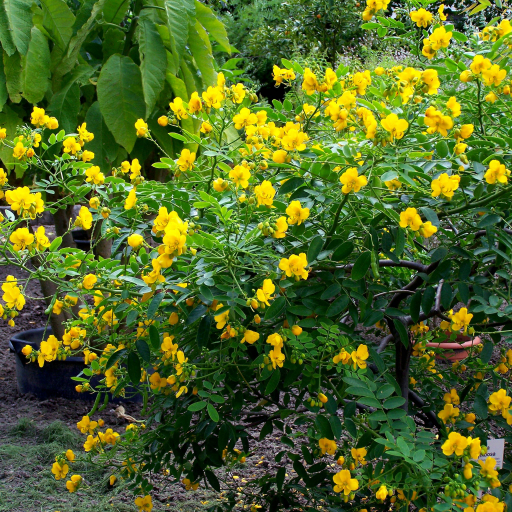
Known as the Argentine Senna or Buttercup Bush, this vibrant South American native is famous for turning gardens into a sea of gold during late summer and autumn. Its name, corymbosa, refers to the way its flowers gather in flat-topped clusters, creating a "bouquet" effect on every branch. In the wild, it is a resilient pioneer species, often found dancing in the breeze along the edges of woodlands and grasslands.
🔍 How to Identify
- 🌼 Buttercup Blooms: Clusters of bright, canary-yellow flowers with five rounded petals and prominent, curved stamens that look like tiny golden hooks.
- 🍃 Pinnate Foliage: Deep green, compound leaves arranged in pairs (usually 2-3 pairs per leaf) with rounded tips, giving the shrub a soft, feathery texture.
- 🌿 Growth Habit: A sprawling, multi-stemmed shrub that can reach up to 6–10 feet tall, often appearing "leggy" if not pruned regularly.
🏡 In Your Garden
- 🦋 The Butterfly Magnet: This plant is a primary host for Cloudless Sulphur butterflies; don't be alarmed if you see small caterpillars munching on the leaves—they are just the next generation of garden visitors.
- ✂️ Pruning for Shape: Because it has a naturally wild and "floppy" growth habit, it benefits greatly from a hard prune in early spring to encourage a denser, more flowery shape.
- ☀️ Sun Seeker: It thrives in heat and is remarkably drought-tolerant once its root system is established, making it a perfect choice for water-wise landscaping.
⚠️ Safety & Toxicity
- 🚫 Toxic if Ingested: While beautiful, all parts of the Argentine Senna—especially the seed pods—contain compounds that act as a strong stimulant laxative.
- 🐾 Pet & Child Safety: Ingesting the seeds or leaves can cause significant stomach upset, vomiting, or diarrhea in dogs, cats, and small children. It is best planted in areas where curious nibblers won't reach it.
✨ Fun Fact
The leaves of Senna corymbosa are "nyctinastic," meaning they exhibit "sleep movements." As the sun sets, the leaflets fold up closely together to conserve moisture and protect themselves from the night air, only to reopen at the first light of dawn!

Detailed Care Instructions
| Humidity | Normal |
| Lighting | Part Sun |
| Difficulty | Easy |
| Hardiness Zones | 9 - 11 |
To successfully grow Senna Corymbosa, also known as the Argentine Senna, follow these steps:
- Climate requirements: Senna Corymbosa thrives in warm climates, ideally with temperatures ranging from 65°F to 85°F (18°C to 29°C). It is best suited for USDA hardiness zones 9 and above.
- Soil conditions: The plant prefers well-draining soil with a neutral pH level of around 6 to 7. Amend heavy clay or sandy soil with organic matter like compost to improve drainage and aeration.
- Planting: Choose a sunny location that receives at least 6 hours of direct sunlight each day. Sow the seeds directly into the ground or start seeds indoors in biodegradable pots a few weeks before the last frost. If starting indoors, transplant the seedlings when they have developed a few sets of true leaves.
- Watering: Senna Corymbosa is drought-tolerant once established. However, during the initial growth stages, provide regular watering to help the plant establish strong roots. Water deeply and allow the soil to dry between watering sessions. Overwatering can lead to root rot.
- Fertilization: Apply a balanced, slow-release granular fertilizer during the growing season to promote healthy growth. Follow the package instructions for proper dosing.
- Pruning: Senna Corymbosa benefits from regular pruning to maintain its shape and stimulate new growth. Prune away dead or damaged branches, and remove any weak or overcrowded growth. It can also be pruned to the desired height if necessary.
- Mulching: Apply a layer of organic mulch, such as wood chips or straw, around the base of the plant. Mulching helps retain moisture, regulate soil temperature, and suppress weed growth.
- Pests and diseases: Senna Corymbosa is relatively resistant to pests and diseases. However, keep an eye out for common garden pests like aphids, caterpillars, or mealybugs. Treat infestations promptly using organic insecticides if necessary.
- Propagation: Propagate Senna Corymbosa through seeds or by taking stem cuttings. Seeds can be collected from mature pods and sown in the desired location. Alternatively, take 4 to 6-inch (10 to 15 cm) stem cuttings from healthy plants, remove the lower leaves, dip the cut ends in rooting hormone, and plant them in a moist potting mix until roots develop.
By following these guidelines, you should be able to successfully grow Senna Corymbosa and enjoy its lovely flowers and foliage.

Place in a bright room that is sun drenched almost all day. Or directly in a south-facing window.

To water the Senna Corymbosa plant, you should consider the following:
1. Pay attention to the soil: Before watering, check the moisture level of the soil in the plant's container or garden bed. Insert your finger or a moisture meter about an inch deep into the soil to determine if it feels dry or slightly damp.
2. Watering frequency: Senna Corymbosa generally prefers regular watering rather than being constantly wet or allowed to dry out completely. Depending on various factors like climate, season, and the plant's growth stage, it typically requires watering every 7-10 days during hotter months, and less frequently during cooler periods.
3. Watering technique: When watering, it is advisable to use a gentle stream of water to prevent excessive soil erosion or damage to the plant's delicate roots. Aim to water directly at the base of the plant, allowing the water to soak deep into the soil.
4. Avoid overwatering: Overwatering can lead to root rot and adversely affect the health of the plant. Therefore, it is important to ensure that the soil is not constantly saturated with water. If the soil feels consistently damp, reduce the frequency of watering or adjust the amount of water given at each watering session.
5. Monitor drainage: Senna Corymbosa prefers well-draining soil to prevent waterlogging. If the plant is potted, ensure that the container has drainage holes to allow excess water to escape. In garden beds, it is advisable to improve the soil's drainage by incorporating organic matter or adding perlite to create a looser soil texture.
6. Pay attention to environmental factors: Factors like temperature, humidity, and sunlight exposure can influence the plant's water needs. Hotter and drier climates may require more frequent watering, while cooler and more humid environments may necessitate less watering.
7. Observing the plant's response: Regularly monitoring your Senna Corymbosa plant's leaves and overall health can give you insights into its watering needs. Look for signs of underwatering, such as wilting or drooping leaves, as well as signs of overwatering, like yellowing leaves or root rot. Adjust your watering schedule accordingly based on these observations.
Please note that these guidelines are general recommendations, and it's always best to consider the specific requirements of your Senna Corymbosa plant, as certain environmental factors and individual plant differences may affect its water needs.
To fertilize the Senna Corymbosa plant, start by choosing a balanced, slow-release fertilizer with an NPK ratio of around 10-10-10 or similar. Follow the instructions on the fertilizer packaging for the size of your plant and pot.
In general, apply the fertilizer during the active growing season, which is usually spring and summer. Dilute the fertilizer according to the recommended dosage and water your plant thoroughly before application to prevent fertilizer burn.
To fertilize, pour the diluted fertilizer around the base of the plant, being careful not to get it on the leaves or stem. Ensure the soil is evenly moist but not waterlogged. After fertilizing, water the plant again to help the nutrients penetrate the soil.
Repeat this fertilization process every 4-6 weeks during the growing season to support healthy and vigorous growth. Remember to adjust the frequency and dosage according to the specific instructions provided on the fertilizer packaging for your Senna Corymbosa plant.
When caring for the Senna Corymbosa plant, it is important to choose the appropriate soil that promotes healthy growth and development. The ideal soil type for this plant should be well-draining and rich in organic matter. This will ensure proper moisture retention while also preventing waterlogging that can be detrimental to its roots.
A suitable soil composition for Senna Corymbosa consists of a mixture of loam, sand, and organic matter. Loam provides a well-balanced combination of sand, silt, and clay, offering good drainage while retaining moisture and nutrients. Sand, on the other hand, improves drainage and prevents the soil from becoming compacted. Adding organic matter, such as compost or well-rotted manure, enriches the soil with essential nutrients, enhances moisture retention, and promotes beneficial microbial activity.
Additionally, it is recommended to slightly acidify the soil for Senna Corymbosa, with a pH level between 6.0 and 7.0. This can be achieved by incorporating organic matter into the soil mix. This particular pH range ensures optimal nutrient availability and uptake by the plant, supporting its overall health.
Before planting, ensure the soil is thoroughly prepared by removing any weeds, rocks, or debris that may impede root growth. Loosen the soil to a depth of at least 12 inches, creating a loose and friable texture that will allow the plant to establish its roots easily.
In summary, the best soil for Senna Corymbosa is a well-draining mixture of loam, sand, and organic matter, slightly acidified to a pH level between 6.0 and 7.0. This will provide an ideal growing environment for the plant, enabling it to thrive and flourish.
To propagate Senna corymbosa, follow these steps:
- Start by collecting mature seeds from the plant. Look for dry seed pods on the plant, typically brown or tan in color. Gently shake the pods to check if the seeds are rattling inside. If so, they are likely ready for collection.
- Remove the seeds from the pods and clean them. It is important to remove any remaining plant material or debris. You can do this by rubbing the seeds between your fingers or using a fine sieve.
- Prepare a potting mix for sowing the seeds. Use a well-draining mixture that consists of equal parts of peat moss, perlite, and sterile potting soil. Fill seed trays or small pots with this mix.
- Moisten the potting mix before sowing the seeds. Ensure it is damp but not waterlogged.
- Sow the seeds on the surface of the potting mix and gently press them into the soil. Do not bury them too deep, as they require light to germinate.
- Place the pots or trays in a warm and well-lit location, but avoid direct sunlight. Ideal temperatures for germination range between 70-80°F (21-27°C).
- Mist the seeds with water regularly to maintain moisture levels. Ensure the potting mix remains consistently moist but not overly saturated.
- Germination typically occurs within 2-4 weeks, although it can sometimes take longer. Be patient and continue to provide the necessary care.
- Once the seedlings have developed 2-3 sets of true leaves, they can be transplanted into individual containers or larger pots. Use a similar potting mix as mentioned earlier.
- Place the seedlings in a sunny location, gradually exposing them to direct sunlight. This will help them acclimate to the outdoor conditions.
- Water the seedlings regularly, ensuring the soil remains evenly moist. However, avoid overwatering to prevent root rot.
- After the seedlings have established and grown larger, they can be transplanted into the desired garden location. Choose a spot with well-draining soil and full sun to partial shade.
By following these steps, you should be able to successfully propagate Senna corymbosa from seeds.








