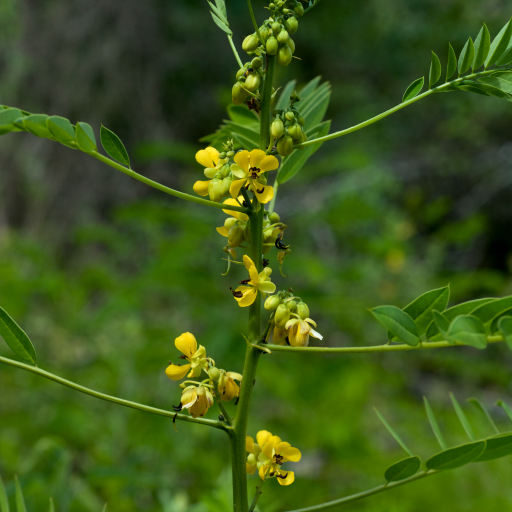
Plant Overview
Commonly known as Maryland Wild Senna or the "Butterfly Magnet," this stately perennial is a cornerstone of the North American prairie garden. With its architectural foliage and clusters of sunny yellow blossoms, it brings a touch of the wild meadow's golden hour right to your backyard. Historically, it was a staple in medicinal gardens, prized for its potent digestive properties and its ability to attract a shimmering cloud of wings.
🔍 How to Identify
- 🌼 Speckled Blooms: Features clusters of bright yellow, five-petaled flowers with dark, almost black anthers that look like tiny burnt matchsticks in the center.
- 🌿 Pea-like Foliage: Large, compound leaves made up of 10 to 20 oval leaflets, giving the plant a soft, fern-like appearance despite its tall, sturdy height.
- 🫘 Winter Seed Pods: In late summer, flowers turn into long, flat, dark brown pods that linger through the winter, rattling gently in the wind.
🏡 In Your Garden
- 📍 The Taproot Rule: This plant develops a deep, tenacious taproot. While this makes it incredibly drought-tolerant and resilient, it hates being moved. Ensure you choose its "forever home" in your garden before planting.
- 🦋 A Nursery for Sulphurs: It is a primary host plant for the Cloudless Sulphur and Sleepy Orange butterflies. If you see bright green caterpillars munching the leaves, don't reach for the pesticide—they are your future garden residents!
- 🌧️ Rain Garden Champion: Because it naturally grows in moist meadows and along riverbanks, it is an excellent choice for rain gardens or areas of your yard that stay slightly damp.
⚠️ Safety & Toxicity
- 🐾 Status: Mildly toxic if ingested in large quantities.
- 🤢 Details: The plant contains anthraquinones, which are powerful natural laxatives. While not usually life-threatening, eating the leaves or seed pods can cause significant stomach upset for curious pets or small children.
✨ Fun Fact
- 🐝 The Secret Vibration: Senna marilandica uses "buzz pollination." Its pollen is locked tightly inside the flowers, and only certain bees (like bumblebees) can release it by vibrating their bodies at a specific frequency to shake the pollen loose!

Detailed Care Instructions
To grow Senna marilandica plants, follow the steps below:
- Obtain Senna marilandica seeds or seedlings: You can either collect seeds from existing plants or purchase them from a reputable nursery or online store.
- Choose the right location: Senna marilandica prefers full sun to partial shade. Select a spot in your garden or landscape that receives at least 6 hours of direct sunlight per day.
- Prepare the soil: Senna marilandica prefers well-draining, loamy soil. Add organic matter like compost or well-rotted manure to improve soil fertility and drainage.
- Plant the seeds or seedlings: If using seeds, scarify them by gently scratching the seed coat with sandpaper or soaking them in hot water overnight to improve germination. Plant the seeds about 1/4 inch deep in the prepared soil. If using seedlings, dig a hole slightly larger than the root ball and place the plant in it.
- Water regularly: Keep the soil moist but not waterlogged. Water the plants regularly, especially during dry spells or when they are establishing themselves. Avoid overwatering, as Senna marilandica is drought-tolerant and excessive moisture can lead to root rot.
- Mulch the area: Apply a layer of organic mulch, such as wood chips or straw, around the base of the plants. Mulching helps retain soil moisture, suppresses weed growth, and protects the roots from extreme temperatures.
- Provide support if needed: Senna marilandica can grow tall and may benefit from staking or support. Install stakes or a trellis when the plants are young to prevent them from bending or toppling over.
- Prune when necessary: Senna marilandica may benefit from occasional pruning to maintain a desired shape, remove dead or damaged branches, and promote new growth. Prune during the dormant season or right after flowering.
- Fertilize sparingly: Senna marilandica generally does well without heavy fertilization. If the plants show signs of nutrient deficiency, you can apply a balanced, slow-release fertilizer according to the package instructions.
- Monitor for pests and diseases: Senna marilandica is generally resistant to pests and diseases. However, keep an eye out for any issues such as aphids, caterpillars, or leaf spot diseases. Treat as necessary using organic or chemical controls.
By following these steps, you should be able to grow Senna marilandica plants successfully. Enjoy their beautiful flowers and watch them attract pollinators to your garden.

Place in a bright room that is sun drenched almost all day. Or directly in a south-facing window.

To water this plant, you should first check the moisture level in the soil by sticking your finger about an inch deep into the soil. If the soil feels dry, it's time to water. Give the plant a deep watering, soaking the soil until water runs out of the bottom of the pot or the soil feels thoroughly moist. Watering frequency will depend on factors such as the size of the plant and the amount of light it receives, but generally, you'll want to water once or twice a week. Be careful not to overwater, as this can lead to root rot.
To fertilize a Senna Marilandica plant, use a balanced, slow-release fertilizer with nitrogen, phosphorus, and potassium. Apply the fertilizer once a year in the spring or early summer, following the manufacturer's instructions for application rate and method. Avoid over-fertilizing, as excessive nutrients can damage the plant or make it more susceptible to pests and diseases. Water the plant thoroughly before and after fertilization to ensure proper absorption of the nutrients.
Senna marilandica grows best in well-drained soil that is rich in organic matter. The ideal pH range is slightly acidic to neutral, between 6.0 and 7.0. The plant prefers soil that is moist but not waterlogged, and it is tolerant of drought once established. It is important to avoid using heavy, compacted soil or soil that is prone to waterlogging, as this can lead to root rot and other problems. Adding a layer of mulch around the base of the plant can help to conserve moisture and regulate soil temperature, while also suppressing weed growth. Soil amendments such as compost or aged manure can be added to the planting hole or worked into the soil around the plant to improve soil fertility and structure.
To propagate this plant, first, choose a healthy and mature plant to take cuttings from. Using a clean and sharp pair of scissors or gardening shears, take several cuttings from the plant's stem, making sure each cutting is at least four inches long and has a few leaves attached to it.
Next, prepare a well-draining potting mix and moisten it with water. Make a hole in the soil with your finger or a pencil and gently insert the cuttings into the soil, making sure to bury only the lower half of the cutting. Firmly press the soil around the cuttings to keep them in place, and water the potting mix thoroughly.
Place the pot in a location with bright, indirect sunlight and keep the soil moist but not waterlogged. Over time, the plant should start to develop new roots and grow new leaves. Once the roots have established, the new plant can be transplanted into its permanent home.
It is important to note that Senna Marilandica plants are toxic if ingested and should not be consumed by humans or animals. It is also important to wear gloves when handling the plant, as it contains compounds that can cause skin irritation.








