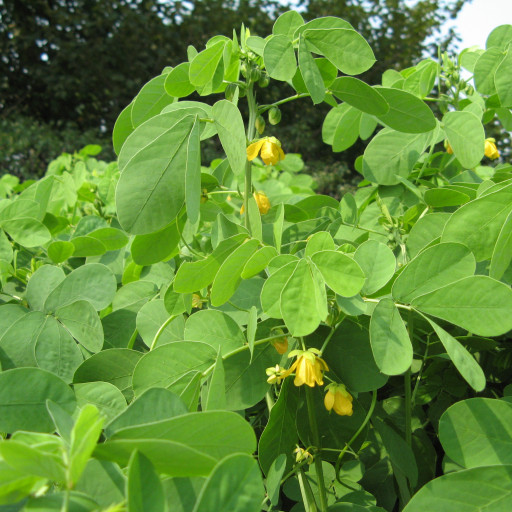
Plant Overview
Often called Sicklepod or Coffee-weed, Senna obtusifolia is a resilient traveler that has spread from the Americas across the globe. While many gardeners view it as a stubborn weed due to its ability to thrive in poor soil, its buttery-yellow blooms and distinctive "sickle" seed pods give it a unique, wild charm. In some cultures, its seeds are even toasted and brewed, earning it a place in both the medicine cabinet and the pantry.
🔍 How to Identify
- 🍃 The Leaves: It features compound leaves usually arranged in three pairs of leaflets. Each leaflet is teardrop-shaped with a rounded, "obtuse" tip, which is exactly how the plant earned its scientific name.
- 🌼 The Blooms: Small, five-petaled yellow flowers that usually hang in pairs from the leaf axils. They have a delicate, waxy texture and often appear "nodding" or partially closed.
- 🫛 The Pods: This is the plant's most iconic feature. The seed pods are long, slender, and strongly curved downward like a scimitar or a sickle. They start green and turn a papery brown as they mature.
🏡 In Your Garden
- ☀️ Sun Seeker: This plant is an absolute sun-worshiper. It thrives in disturbed soil, roadsides, and open fields where it can soak up intense heat without much competition from larger trees.
- ⛏️ The Taproot Trap: If you find this in your garden and want to remove it, act while it is a seedling. It develops a deep, sturdy taproot very quickly, which makes it incredibly drought-resistant but nearly impossible to pull out by hand once it matures.
⚠️ Safety & Toxicity
- 🚫 Livestock Alert: This plant is a significant concern for farmers. If cattle, horses, or goats graze on the leaves or seeds, it can cause "Sicklepod poisoning," leading to muscle degeneration and heart issues.
- 🐾 Pet Safety: Keep curious dogs and cats away. The entire plant, especially the seeds, contains anthraquinones. If ingested, it acts as a potent stimulant laxative and can cause severe abdominal pain and vomiting.
✨ Fun Fact
☕ The "Coffee" Substitute: In parts of the Southern United States and Africa, the roasted seeds have historically been used as a caffeine-free coffee substitute. While it lacks the "kick" of real coffee, the roasted seeds produce a dark, nutty brew that was once a staple during times of harvest shortages.

Detailed Care Instructions
| Lighting | Full Sun |
| Hardiness Zones | 7A - 11 |
To grow Senna obtusifolia (also known as coffee senna or sicklepod), you can follow these steps:
- Obtain seeds: Obtain seeds from a reputable nursery or store. Senna obtusifolia is an annual plant, so you will need to replant it from seeds each year.
- Prepare the soil: Choose a sunny location with well-draining soil. Senna obtusifolia tolerates a wide range of soil types but prefers fertile soil. If the soil is heavy clay or compacted, amend it with organic matter like compost or aged manure to improve drainage and nutrient content.
- Sow the seeds: Sow the seeds directly into the soil after the last frost date in your area. Plant the seeds about 1/4 to 1/2 inch deep and 2-3 inches apart. You can sow multiple seeds in one spot and thin them out later.
- Water: Keep the soil evenly moist but not waterlogged. Water the plants regularly, especially during dry periods. Avoid overwatering, as Senna obtusifolia prefers slightly drier conditions compared to other plants.
- Thin the seedlings: Once the seedlings emerge, thin them out so that they are spaced about 6 to 12 inches apart. This will give each plant enough space to grow and develop fully.
- Fertilize: Apply a balanced, water-soluble fertilizer or slow-release granular fertilizer according to the package instructions. Senna obtusifolia generally benefits from moderate fertilization.
- Mulch: Apply a layer of organic mulch around the plants to help suppress weeds and retain soil moisture. Mulching also helps to maintain a more even soil temperature.
- Pruning: As the plant grows, you may want to prune it occasionally to maintain a more compact and bushy shape. Pruning also encourages new growth and helps to control the size of the plant.
- Harvest seeds: In late summer or early fall, allow some of the seed pods to mature and turn brown on the plant. Harvest these pods before they split open, as they contain the seeds. Collect the seeds and allow them to dry for future planting or sharing with others.
Senna obtusifolia can self-seed easily, so if you leave some seed pods on the plant, it may come back on its own next year. It is also important to note that Senna obtusifolia contains toxic compounds in its seeds and leaves, so exercise caution when handling the plant.

Place in a bright room that is sun drenched almost all day. Or directly in a south-facing window.

To properly water this plant, you should first ensure that the soil has completely dried out before watering. When it is time to water, you should water deeply and thoroughly, allowing the water to soak into the soil. Avoid getting water on the leaves, as this can lead to fungal problems. It is important to not overwater, as this can lead to root rot and other issues. You should also ensure that the pot has proper drainage to prevent water from sitting in the bottom and causing problems.
To fertilize this plant, use a balanced, slow-release fertilizer. Apply the fertilizer during the growing season, which is typically in the spring and summer. Follow the manufacturer's instructions on how much fertilizer to use, as over-fertilizing can cause damage to the plant. Water the plant immediately after fertilizing to help distribute the nutrients evenly throughout the soil. Avoid fertilizing during the dormant season, as the plant will not be actively growing and cannot use the nutrients.
The Senna obtusifolia plant prefers well-draining soil that is rich in organic matter and has a slightly acid pH level. It also requires soil that has good water-holding capacity to ensure that it does not dry out too quickly. It is recommended to mix in compost or other forms of organic matter into the soil to increase its nutrient content. Additionally, the plant prefers soil that is not too compacted, as it can impede root growth and drainage. Overall, the best soil for the Senna obtusifolia plant is a loose, fertile, and well-draining soil that is kept moist but not waterlogged.
Propagation of this plant can be done through seeds. To begin, obtain fresh seeds from a mature plant. Before planting the seeds, make sure that the soil is moist, and add some fertilizers if needed. Sow the seeds on the soil surface and cover it lightly with soil. Keep the soil moist but not too wet, and place it in a warm and bright location. Seeds will typically germinate within a few weeks.
Another way of propagating this plant is by stem cuttings. To do this, select a healthy stem from the parent plant, and cut it just above a leaf node. Remove any leaves from the stem, leaving only a few at the top. Dip the end of the stem into rooting hormone and plant it into a pot of moist soil. Keep the soil moist and the cutting in a warm and bright location. A new plant will develop roots in a few weeks.
Grafting can also be used to propagate this plant. This requires more skill and experience, and involves attaching a cutting of the desired plant onto a rootstock of a different plant. This method should only be attempted by experienced gardeners or horticulturists.
Common pests of the sicklepod include Mealybugs, spider mites, whiteflies. Make a habit of checking your sicklepod frequently for pests so that any infestations can be caught and managed early.








