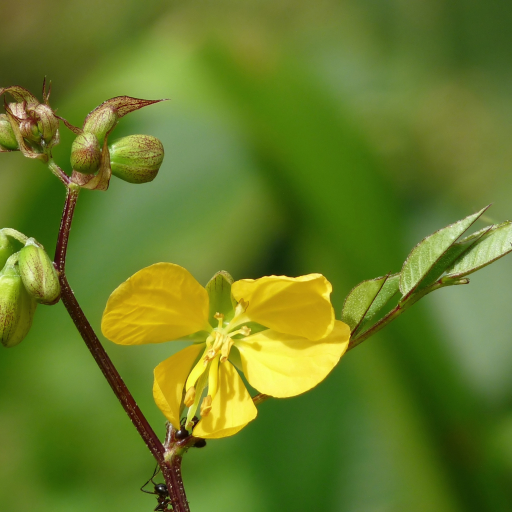
Plant Overview
Often called the Coffee Senna or Styptic Weed, this hardy shrub is a citizen of the world’s tropical regions. Known for its bright, sun-catching yellow flowers and distinctive upward-curving pods, it has a history of being used as a survivalist coffee substitute. However, don't let its caffeinated nickname fool you—this plant hides a potent chemical punch beneath its golden exterior.
🔍 How to Identify
- 🌿 The Foliage: Large, feathery, compound leaves with 4–6 pairs of pointed leaflets. If you crush them, they emit a strong, slightly unpleasant "stinky" odor.
- 🌼 The Flowers: Clusters of five-petaled, buttery-yellow blossoms that bloom at the ends of the branches, lacking a traditional fragrance but shining vividly against the dark green leaves.
- 🫛 The Seed Pods: Slender, flat pods that are slightly curved upward (resembling a sickle), reaching up to 5 inches long and turning dark brown as they mature.
🏡 In Your Garden
- 🦋 Butterfly Haven: It serves as a vital host plant for the Cloudless Sulphur butterfly. Don't be alarmed if you see small green caterpillars munching on the leaves—they are simply using the plant as a nursery!
- 🌱 Soil Improver: As a member of the legume family, it works with soil bacteria to "fix" nitrogen. This means it actually improves the nutrient quality of the ground where it grows, often thriving in poor, sandy soils where other plants struggle.
- ☀️ Sun & Space: This plant loves the spotlight and requires full sun. It grows rapidly and can become "leggy" or weedy if not pruned back, so give it plenty of room to breathe.
⚠️ Safety & Toxicity
- 🚫 Toxic Status: High. While historically used in traditional medicine, the raw seeds and leaves are toxic to both humans and animals.
- 🐾 Pet & Livestock Warning: It is particularly dangerous for cattle, horses, and goats, causing severe muscle wasting and heart issues if grazed. Keep curious pets away, as ingestion can lead to significant digestive distress and weakness.
✨ Fun Fact
☕ During the American Civil War, when coffee supplies were cut off by blockades, people in the Southern United States roasted the seeds of Senna occidentalis to create a "Mogdad Coffee." While it looked and smelled remarkably like the real thing, it lacked caffeine and was often used more out of desperation than for its flavor!

Detailed Care Instructions
To grow Senna occidentalis, commonly known as coffee senna or sicklepod, follow these steps:
- Obtain seeds: You can purchase Senna occidentalis seeds online or find them in local nurseries or garden centers.
- Prepare the planting area: Choose a sunny location with well-draining soil. Clear out any weeds or grass from the planting area.
- Germination treatment (optional): Coffee senna seeds have a hard outer coating that can slow down germination. To help with germination, you can slightly nick or scarify the seed coat with a knife or sandpaper, or soak the seeds in warm water overnight before planting.
- Plant the seeds: Sow the seeds directly into the prepared soil. Plant them about 1 inch deep and space them approximately 6 inches apart.
- Watering: Keep the soil consistently moist but not waterlogged. Water the seeds gently to avoid washing them away.
- Care and maintenance: Once the seedlings emerge, thin them out if they are overcrowded, leaving the healthiest plants.
- Fertilization: Apply a balanced slow-release fertilizer according to the package instructions, typically during the growing season. This will help support healthy growth and flowering.
- Weeding: Regularly remove any competing weeds around the plants to allow them to grow unhindered.
- Pruning (optional): You can trim back long branches or leggy growth to encourage bushier growth, but it's not necessary for the plant's overall health.
- Pests and diseases: Monitor your plants for any signs of pests or diseases such as aphids or root rot. If needed, treat with appropriate organic or chemical controls.
- Flowering and seed production: Senna occidentalis typically blooms from late summer to fall, producing clusters of yellow flowers followed by seed pods. Allow some seed pods to mature and dry on the plant if you wish to collect seeds for future plantings.
- Harvesting seeds (optional): To collect seeds, wait until the seed pods turn brown and dry on the plant. Then, remove the pods and extract the seeds.
Remember, Senna occidentalis can be invasive in some regions, so it's important to check if it is suited to your area and follow any local regulations.

Place in a bright room that is sun drenched almost all day. Or directly in a south-facing window.

To water this plant, it is important to first check the soil moisture level by sticking a finger into the soil to a depth of at least two inches. If the soil feels dry to the touch, it is time to water the plant.
When watering, it is important to avoid getting water on the leaves and foliage, as this can promote the growth of fungal diseases. Instead, aim to water directly at the base of the plant, allowing the water to soak into the soil and reach the roots.
It is also important not to overwater this plant, as excessive moisture can lead to root rot and other issues. Water only when the soil feels dry to the touch and allow the top layer of soil to dry out between waterings.
In general, this plant prefers well-draining soil and regular watering during the growing season. However, it can tolerate periods of drought once established, making it a fairly low-maintenance plant in terms of watering requirements.
For optimal growth of this plant, it is recommended to fertilize it once every four to six weeks during the growing season, which is typically from early spring to late summer. A balanced fertilizer with equal parts nitrogen, phosphorus, and potassium is suitable for this plant. The fertilizer should be applied to the soil around the base of the plant, and then watered in thoroughly. Be careful not to over-fertilize, as this can harm the plant.
To grow Senna Occidentalis plant successfully, it is essential to use well-draining soil that contains a balanced ratio of organic matter, sand, and clay. This type of soil should be porous enough to allow air and water to penetrate through it easily, ensuring that the roots of the plant receive the proper amount of nutrients and moisture. Planting Senna Occidentalis in heavy, compacted soil can lead to poor drainage and nutrient deficiency, ultimately causing the plant to suffer and die. Additionally, it is important to avoid using soil that has been treated with pesticides or other chemicals, as these can be harmful to the plant and can even contaminate nearby soil and water sources. Instead, opt for organic or natural fertilizers and pest control methods to keep Senna Occidentalis healthy and thriving.
To propagate this plant, first, obtain mature seeds from a healthy and thriving plant. Once you have gathered seeds, prepare a suitable potting mix with good drainage and sow the seeds at a depth of around 1-2 cm deep. Water the soil to keep it moist, but do not overwater. The seeds should ideally germinate within 2-3 weeks, but it may take longer in colder temperatures.
As the plant grows, it is important to keep it in a well-lit area, ideally receiving direct sunlight for a few hours a day. Ensure that the soil always stays moist but not waterlogged. As the plant grows larger, it may need to be transplanted into a larger pot to provide enough space for roots to develop.
Once the plant has established roots and is growing well, it can be propagated through stem cuttings. Select a healthy, mature stem and cut a 6-8 inch piece from it. Remove the lower leaves and plant the cutting in a pot containing suitable potting mix. Water the soil, taking care not to overwater, and keep it in a warm and bright location. The cutting should develop roots in around 3-4 weeks, after which it can be transplanted to a larger pot or directly into the garden.
Overall, propagating this plant is relatively simple and requires only basic gardening skills, making it an ideal plant for beginners.








