Plant Overview
Known as the "Fried Egg Plant" or "Mandingba," Senna reticulata is a vibrant tropical pioneer that looks like a burst of sunshine. Native to the damp lowlands of Central and South America, this plant is famous for its rapid growth and its ability to "reclaim" land, often being the first to sprout in cleared Amazonian rainforest areas.
🔍 How to Identify
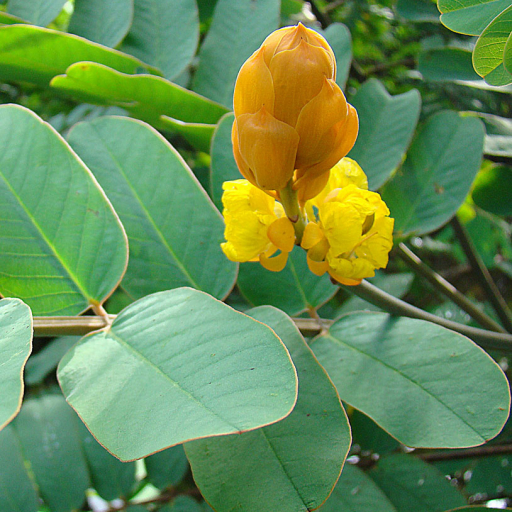
- 🍳 The "Fried Egg" Bloom: Its most iconic feature is the cluster of bright yellow flowers. The uncurled buds are a deep orange-yellow, looking remarkably like egg yolks surrounded by paler "whites" as they open.
- 🌿 Leathery Foliage: The leaves are large, pinnate (feather-shaped), and have a distinctively smooth, almost waxy texture. They often fold up slightly during the night or in heavy rain.
- 📏 Growth Habit: It typically grows as a large shrub or a small, multi-stemmed tree. In the right conditions, it can skyrocket to several meters tall in just a single season.
- 🫘 Seed Pods: After the flowers fade, it produces long, flat, dark brown pods that hang in clusters, rattling slightly in the wind when dry.
🏡 In Your Garden
- 🚀 The Ultimate Pioneer: Because it is a "pioneer species," it grows incredibly fast. This makes it excellent for quick privacy screens, but be warned: it can become "leggy" if not pruned back regularly to encourage bushier growth.
- 💧 Thirst for Humidity: While it is tough, it thrives in high-humidity environments and soil that stays consistently moist. It is often found near riverbanks in the wild, so it won't tolerate long droughts well.
⚠️ Safety & Toxicity
- 🤢 Digestive Irritant: Like many members of the Senna family, the leaves and seeds contain anthraquinones, which have a powerful laxative effect.
- 🐾 Pet & Child Safety: Ingestion can cause stomach upset, vomiting, or diarrhea in dogs, cats, and small children. It is best placed in a part of the garden where it won't be snacked on.
- 👐 Skin Sensitivity: Some gardeners report mild skin irritation when handling the sap or bruised leaves; wearing gloves during pruning is a smart move.
✨ Fun Fact
In South American folk medicine, Senna reticulata is nicknamed "Saragundi." Its leaves are often crushed and used in traditional baths to treat skin infections and ringworm due to its natural antifungal properties!

Detailed Care Instructions
Growing Senna reticulata plants involves the following steps:
- Climate and soil requirements: Senna reticulata plants thrive in warm, tropical climates. They prefer well-draining soils, rich in organic matter.
- Propagation: Senna reticulata can be grown from seeds or cuttings. Seeds should be soaked in warm water for 24 hours before sowing to enhance germination. Cuttings can be taken from existing plants.
- Planting: Choose a suitable location with full sun exposure. Prepare the soil by removing weeds and loosening it. Dig a hole slightly larger than the root ball of the plant and place the sapling in it, making sure the roots are spread out. Backfill the soil and gently press it down.
- Watering: Senna reticulata plants require regular watering, especially during the dry season. Keep the soil moist but not waterlogged. Water deeply, allowing the water to penetrate the root zone.
- Fertilizing: Apply a balanced, slow-release fertilizer to provide essential nutrients to the plant. Follow the instructions on the fertilizer package for dosage and application frequency.
- Pruning: Prune Senna reticulata plants to control their size and shape. Remove any dead, diseased, or damaged branches. Pruning also helps stimulate new growth and flower production.
- Mulching: Apply a layer of organic mulch, such as straw or wood chips, around the base of the plant. Mulch helps retain moisture, suppress weed growth, and regulate soil temperature.
- Pests and diseases: Monitor the plant for common pests like aphids, whiteflies, and caterpillars. Treat infestations promptly with appropriate insecticidal sprays or organic remedies. Senna reticulata plants are generally resistant to diseases.
- Harvesting: Senna reticulata plants can be harvested for their leaves, which are commonly used for medicinal purposes. Wait until the plant is at least two years old before harvesting. Prune the leaves carefully, allowing the plant to regrow.
Remember to research local regulations and obtain necessary permits or permissions for growing Senna reticulata plants, as it may be considered an invasive species in certain areas.
To provide appropriate care and watering for Senna Reticulata plants, follow these guidelines:
- Understand the plant's water requirements: Senna Reticulata plants prefer regular watering but are also tolerant of periods of drought.
- Observe the soil moisture: Before watering, check the soil moisture to ensure it has dried out slightly. Insert your finger into the soil up to the first knuckle - if the soil feels dry at this depth, it is time to water.
- Watering frequency: Water the plant deeply once every 1-2 weeks during the growing season, allowing the water to penetrate the root zone. Adjust the frequency according to environmental conditions; for instance, increase watering during hot and dry periods.
- Watering method: Avoid overhead watering as it might promote fungal growth. Instead, use a watering can or drip irrigation directly at the base of the plant. This ensures the water reaches the root zone while minimizing wetting the foliage.
- Water volume: Provide enough water to moisten the soil to a depth of at least 6-8 inches. This allows the roots to absorb water effectively and promotes deeper root growth.
- Drainage considerations: Senna Reticulata plants prefer well-draining soil, so ensure the pot or the planting area has adequate drainage holes. Excessive water retention can lead to root rot or other diseases.
- Adjust watering during dormancy: As Senna Reticulata plants enter their dormant period, reduce watering frequency. During this time, the plant requires less water to sustain itself.
- Monitor moisture levels: Regularly check the soil moisture to avoid both overwatering and underwatering. During periods of drought, the soil may dry out faster, so adjust watering accordingly.
Remember to combine regular watering with other essential care practices like providing appropriate sunlight, fertilizing, and pruning to maintain a healthy and flourishing Senna Reticulata plant.
To properly fertilize the Senna Reticulata plant, follow these instructions:
- Start by selecting a balanced, water-soluble fertilizer with equal amounts of nitrogen (N), phosphorus (P), and potassium (K). A ratio like 10-10-10 or 20-20-20 would work well.
- Dilute the fertilizer according to the instructions on the packaging. Usually, a concentration of 1 tablespoon of fertilizer per gallon of water is recommended.
- Water the Senna Reticulata plant thoroughly before applying the fertilizer. This step ensures that the plant is adequately hydrated and prevents the roots from getting burned by the concentrated fertilizer solution.
- Carefully pour the diluted fertilizer solution around the base of the plant, avoiding direct contact with the foliage. Apply enough solution to moisten the soil evenly but avoid over-saturation or creating a puddle.
- Give the plant a good rinse with plain water after fertilizing to remove any fertilizer residue that may have accidentally come into contact with the leaves or stems.
- Repeat the fertilization process every 4-6 weeks during the growing season, typically from spring to late summer. Adjust the frequency or concentration of fertilization based on the specific needs and response of the Senna Reticulata plant.
- Monitor the plant's overall health and growth throughout the fertilization period. If you notice any signs of over-fertilization, such as burned or yellow leaves, reduce the concentration or frequency of fertilization accordingly.
- Always follow the recommended dosage and guidelines provided by the fertilizer manufacturer, as different brands or formulations may have specific instructions that should be followed.
Remember, it's essential to exercise caution and follow the instructions precisely to avoid excess fertilization, which can harm the plant.
To cater to the specific soil requirements of Senna Reticulata, it is important to choose a suitable soil type. This plant thrives well in well-draining soil that allows excess water to escape easily, preventing waterlogging. The ideal soil composition for Senna Reticulata comprises a mixture of sand, loam, and clay in a balanced ratio, ensuring adequate drainage and moisture retention.
Sand helps to improve soil aeration and drainage, allowing excess water to drain away. Its coarse texture prevents the soil from becoming compacted, promoting root growth and preventing water stagnation.
Loam, which is a mixture of sand, silt, and clay, provides good drainage while also retaining essential moisture for the plant. It creates an ideal balance between water-holding capacity and permeability.
Clay helps in nutrient retention and water retention, allowing the plant to access nutrients for longer periods. However, excessive clay content can lead to waterlogging and suffocate the plant's roots, so the soil should not be overly heavy with clay.
It is also beneficial to enrich the soil with organic matter, such as compost or well-rotted manure, as it improves soil structure, enhances nutrient availability, and promotes microbial activity.
Furthermore, maintaining an optimal pH level is crucial for the health of Senna Reticulata. It generally prefers slightly acidic to neutral soil, with a pH ranging between 6.0 and 7.5. Regular soil testing can help monitor and adjust the pH level accordingly.
In summary, the ideal soil for Senna Reticulata should be well-draining, loosely textured, and rich in organic matter. It should maintain a balanced moisture level while allowing excess water to drain away. Avoiding heavy clay soils and ensuring an appropriate pH level contribute to the successful growth and development of this plant.
To propagate the Senna Reticulata plant, you can follow these steps:
- Start by collecting mature seeds from a healthy and well-established Senna Reticulata plant. The seeds are typically contained in elongated pods that turn brown and dry out when ripe. Make sure to discard any damaged or discolored seeds.
- Prepare a well-draining potting mixture by combining equal parts of perlite, vermiculite, and peat moss or coco coir. This will create a suitable medium for the seeds to germinate.
- Fill small pots or seed trays with the potting mixture and moisten it slightly by watering lightly. It should be evenly moist but not overly saturated.
- Plant the Senna Reticulata seeds in the prepared pots or seed trays. Bury the seeds about 1/2 inch deep and gently cover them with the potting mixture. Leave enough space between the seeds to allow for growth.
- Place the planted seeds in a warm and bright location, preferably with indirect sunlight. Maintain a consistent temperature between 70 to 85°F (21 to 29°C). You can use a seedling heat mat to provide bottom heat if necessary.
- Keep the potting mixture slightly moist by watering regularly, ensuring that it doesn't dry out completely. However, avoid overwatering, as excessive moisture can cause the seeds to rot.
- Within a few weeks, the Senna Reticulata seeds should germinate, and small seedlings will emerge. As they grow, make sure to provide them with ample light, either natural or artificial, to facilitate vigorous growth.
- Once the seedlings have developed several sets of true leaves and are about 3 to 4 inches tall, they can be transplanted into larger pots or directly into the garden. Gradually harden off the seedlings by exposing them to outdoor conditions for a few hours each day before planting them outside.
- Choose a suitable planting location for your Senna Reticulata plant. It prefers a spot with full sun exposure and well-draining soil. Ensure that the area allows enough space for the plant to grow as it reaches its mature height of around 6 to 10 feet.
- Dig a hole that is slightly wider and deeper than the root ball of the seedling. Place the seedling in the hole, backfill it with soil, and tamp it down gently. Water thoroughly after planting to help settle the soil and eliminate any air pockets around the roots.
- Continue to water the Senna Reticulata plant regularly, especially during periods of drought, to keep the soil consistently moist. However, avoid overwatering, as it can lead to root rot.
By following these propagation steps, you can successfully grow Senna Reticulata plants and enjoy their vibrant and showy flowers in your garden.








