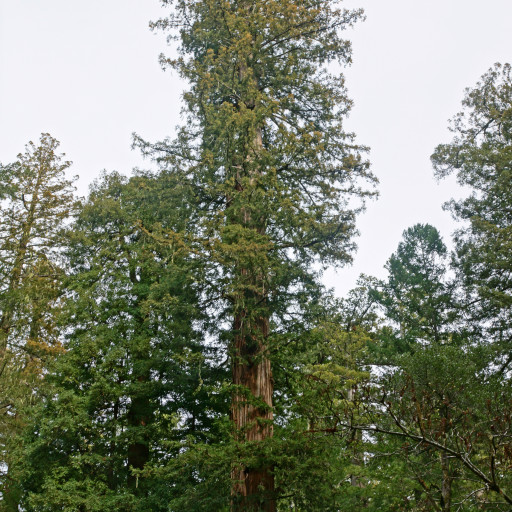
Plant Overview
Known as the "Living Skyscraper," the Coast Redwood is the tallest living organism on Earth. These prehistoric giants have graced the Pacific Coast for over 20 million years, creating cathedral-like forests that feel frozen in time. While they can grow to over 380 feet in the wild, they are also beloved by enthusiasts as majestic landscape anchors or even challenging bonsai subjects.
🔍 How to Identify
- 🌲 The Foliage: Look for flat, needle-like leaves arranged in two rows along the stems. They are a deep, waxy green on top with two distinct white "racing stripes" of stomata on the underside.
- 🧱 The Bark: The bark is its most famous suit of armor. It is thick, deeply furrowed, and fibrous with a distinct reddish-brown hue. It feels surprisingly soft or "spongy" to the touch.
- 🪵 The Cones: Despite the tree's massive size, its woody cones are surprisingly tiny—usually only about an inch long, roughly the size of a large olive.
🏡 In Your Garden
- 🌫️ The Fog Drinker: These trees are masters of moisture. In their natural habitat, they "drink" the coastal fog through their needles. If growing one at home, they appreciate high humidity and struggle in dry, desert-like heat.
- 🤝 Intertwined Roots: Redwoods do not have deep taproots. Instead, they grow shallow, wide-reaching root systems that intertwine with the roots of other redwoods. This "holding hands" technique is what allows such tall trees to withstand powerful coastal gales.
- 🌱 Soil Preference: They thrive in deep, moist, and slightly acidic soil. Because they are heavy feeders, they prefer a forest-floor mimicry—lots of organic mulch to keep their roots cool and damp.
⚠️ Safety & Toxicity
- ✅ Status: Generally non-toxic and safe.
- 🐾 Details: The Coast Redwood is not known to be poisonous to dogs, cats, or horses. However, the sheer size of a mature tree means that "widow-makers" (large falling branches) are a physical hazard during high winds.
✨ Fun Fact
Coast Redwoods are masters of cloning! If a parent tree is damaged or falls, dormant buds at the base of the trunk will sprout, creating a perfect circle of genetically identical saplings known as a "Fairy Ring" or "Cathedral Circle."

Detailed Care Instructions
| Color | Non-Flowering |
| Soil Ph | Slightly Acidic |
| Humidity | Normal |
| Lighting | Full Sun |
| Soil Type | Moist, Rich, Humusy, Well-Drained |
| Bloom Time | Non-Flowering |
| Difficulty | Medium |
| Plant Type | Evergreen |
| Hibernation | Cold Period |
| Mature Size | 60 To 100 Ft. Tall, 35 Ft. Wide In Cultivation |
| Native Area | Western United States |
| Sun Exposure | Full Sun |
| Hardiness Zones | 7-9 |
To grow Sequoia sempervirens, also known as the coast redwood, you can follow these steps:
- Obtain seeds or young plants: You can purchase seeds or young plants from a local nursery or online. Make sure you are obtaining them from a reliable source.
- Prepare the soil: Coast redwoods prefer soil that is well-draining but also retains moisture. Amend the soil with organic matter, such as compost, to improve its water-holding capacity. The ideal pH range for coast redwoods is 5.5 to 6.5.
- Planting: If you have seeds, follow the specific instructions on the packet for planting depth and spacing. If you have young plants, dig a hole that is slightly wider and deeper than the plant's root ball. Place the plant in the hole and backfill with soil, gently firming it around the base of the plant.
- Watering: Keep the soil consistently moist but avoid waterlogging. Redwoods require regular watering, especially during dry spells or in the summer. Use a soaker hose or drip irrigation to provide slow, deep watering.
- Mulching: Apply a layer of mulch around the base of the plant to help retain moisture, suppress weeds, and protect the roots. Organic mulch, such as bark chips or compost, is ideal.
- Sunlight: Coast redwoods prefer full sun but can tolerate partial shade. Choose a location in your garden that receives at least 6 hours of direct sunlight per day.
- Pruning: Redwoods typically don't require pruning unless there are dead or damaged branches. Prune selectively during the dormant season to maintain a healthy shape and remove any unwanted growth.
- Fertilization: Redwoods are relatively low-maintenance plants and don't require heavy fertilization. However, you can apply a balanced slow-release fertilizer in early spring or early autumn to provide essential nutrients.
- Protection from pests: Redwoods are generally resistant to pests and diseases. However, you may need to protect young plants from browsing animals, such as deer, with fencing or other deterrents.
- Patience: Coast redwoods are slow-growing trees, so it may take several years to see significant growth. Be patient and provide consistent care to help your Sequoia sempervirens thrive.
Remember to check with your local gardening authorities or experts for specific care advice tailored to your region's climate and conditions.

Place in a bright room that is sun drenched almost all day. Or directly in a south-facing window.

Sequoia Sempervirens require regular watering to survive. They prefer moist, well-draining soil and should be watered deeply, allowing the water to penetrate the root zone. It is important to avoid overwatering, as this can lead to root rot and other fungal diseases. The frequency of watering will depend on factors such as the climate, soil type, and age of the plant. It is recommended to check the moisture level in the soil before watering, using a moisture meter or by sticking your finger into the soil. If the soil feels dry to the touch, it's time to water. During hot and dry periods, it may be necessary to water the plant more frequently to prevent dehydration.
To fertilize this plant, apply a slow-release nitrogen-based fertilizer in the spring. Spread the fertilizer evenly around the base of the tree, avoiding the trunk. Water the plant thoroughly after application. Repeat every other year for trees under 6 years old, and every 3-4 years for mature trees. Avoid excessive fertilization, as it can cause excessive growth and weaken the plant.
The ideal soil type for the Sequoia Sempervirens plant is a well-draining soil that is rich in organic matter. It should have a slightly acidic pH level of between 5.5 and 6.5. The soil should be kept consistently moist, but not waterlogged, as the plant does not tolerate drought well. Adding a layer of mulch around the base of the plant can help retain moisture and improve soil quality over time. It is important to avoid using soil that is heavy in clay, as this can lead to excess moisture retention and root rot.
To propagate this plant, you will need to collect seeds from mature cones that have fallen to the ground. Once you have collected the seeds, soak them in water for 24 hours to help them germinate.
Next, plant the seeds in well-draining soil in a location with full sun to partial shade. It is important to keep the soil consistently moist, but not waterlogged, as the seeds germinate.
Once the seedlings have grown to a few inches tall, they can be transplanted into larger containers or into their permanent outdoor location. It is important to provide them with regular water and fertilizer until they are established.
Alternatively, you can propagate this plant through cuttings taken from established trees. Take a cutting from the tip of a branch and remove all but the top few leaves. Dip the bottom of the cutting in rooting hormone and plant it in well-draining soil in a container. Keep the soil moist and provide bright, indirect light. Once the cutting has rooted, it can be transplanted into its permanent location.
Propagation through division is also possible, but this is typically not recommended for this plant as it can be difficult to divide without damaging the root system.








