Plant Overview
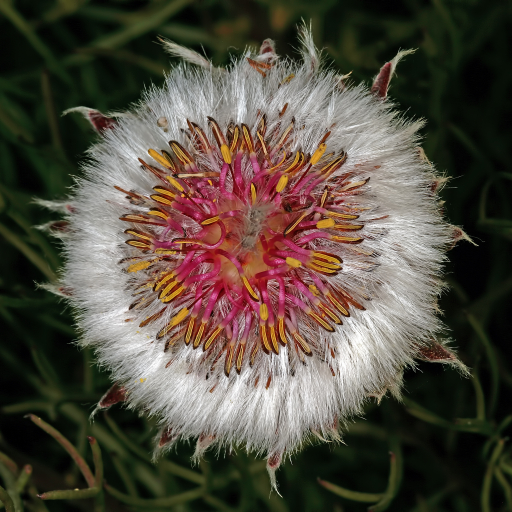
Often called the Spindly Spiderhead, this South African beauty looks like it was plucked straight from a botanical fairytale. Found naturally in the fynbos of the Western Cape, it belongs to the same family as the majestic King Protea but carries a much more delicate, ethereal charm. Its soft, misty appearance makes it a favorite for "moonlight gardens" and high-end boutique floral arrangements.
🔍 How to Identify
- 🌿 The Foliage: Features fine, needle-like leaves that are deeply divided, giving the entire shrub a soft, feathery texture similar to certain heathers.
- 🌸 The Bloom: Small, globe-shaped flower heads are covered in silky, mauve-to-pink bracts. They have a fuzzy, "spidery" look when fully open.
- 📏 Growth Habit: A low-growing, woody shrub that usually stays compact and sprawling, making it an excellent ground-cover option for rockeries.
🏡 In Your Garden
- 🧪 Specialized Roots: This plant uses "proteoid" roots to survive in nutrient-poor soil. Because of this, it is highly sensitive to phosphorus; using standard garden fertilizers can actually poison the plant.
- 🌬️ Fresh Air is Key: It thrives in full sun but demands excellent air circulation. In humid or stagnant air, the dense, feathery foliage can become prone to fungal infections.
- 💧 Drainage Needs: It hates "wet feet." It requires sandy, acidic soil that mimics the rocky slopes of its South African home.
⚠️ Safety & Toxicity
- ✅ Safe Status: Serruria phylicoides is generally considered non-toxic to humans and common household pets.
- 🧤 Skin Sensitivity: While not poisonous, the fine, woody stems can occasionally cause minor mechanical irritation to very sensitive skin if handled roughly during pruning.
✨ Fun Fact
The genus Serruria was named in honor of Joseph Serrurier, a famous 18th-century professor of botany at Utrecht. Despite their delicate look, these plants are "fire-adapted"—in the wild, they often rely on the heat and smoke of bushfires to trigger the germination of their seeds!

Detailed Care Instructions

Place in a bright room that is sun drenched almost all day. Or directly in a south-facing window.

Some plants require more regular watering than others, which should be done every few days. It's critical to maintain the soil moist all of the time. The water requirements of the same plant placed in pots with varying sizes will differ. Because the water in the smaller pot evaporates faster than the water in the larger pot, it will require more watering. Regardless of pot size, the surface should constantly be maintained moist.








