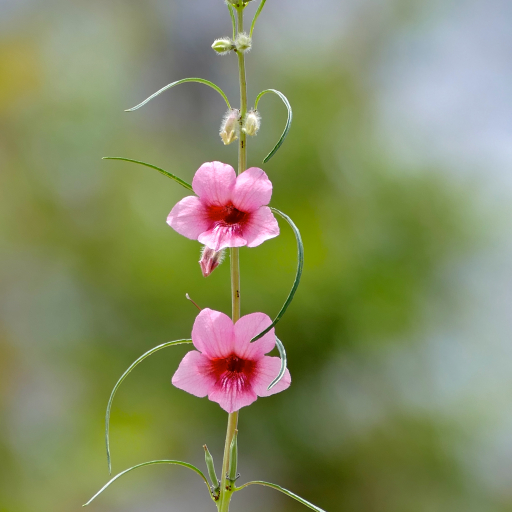
Plant Overview
Often called the Winged-seed Sesame, this elegant African native is a wild cousin of the common sesame found on your morning bagel. It stands tall with striking, bell-shaped flowers that look like they belong in a royal cottage garden rather than a dry savannah. While its seeds are smaller than commercial varieties, they carry a unique architectural beauty that has fascinated botanists and foragers for centuries.
🔍 How to Identify
- 🌸 Foxglove Flowers: The blossoms are tubular and pendulous, typically a soft pink or lilac with deep purple "nectar guide" spots inside the throat to attract bees.
- 🍃 Variable Foliage: This plant practices "heterophylly," meaning it has two leaf shapes. The lower leaves are deeply lobed (like fingers), while the upper leaves are narrow, simple, and sleek.
- 🌬️ Winged Capsules: The hallmark of the species is the seed pod. When it splits, it reveals seeds with distinct, papery wings at both ends, designed to catch the breeze.
🏡 In Your Garden
- ☀️ Sun Seeker: This plant is a true child of the sun. It thrives in intense heat and actually prefers "lean" or sandy soil that drains quickly, mimicking its native African plains.
- 💧 Taproot Sensitivity: Because it develops a long, sturdy taproot to find water deep underground, it hates being transplanted. If you grow it, sow the seeds exactly where you want them to stay.
- 🐝 Pollinator Magnet: Its deep, bell-like flowers are specifically shaped for heavy-bodied bees, making it a fantastic choice for supporting local biodiversity in hot, dry climates.
⚠️ Safety & Toxicity
- ✅ Generally Safe: Sesamum alatum is not known to be toxic to humans. In many regions, the leaves are cooked as a vegetable and the seeds are pressed for oil.
- 🐾 Pet Watch: While not listed as a toxic plant for cats or dogs, the stems can be quite hairy. If a curious pet munches on them, the texture might cause minor mouth or throat irritation.
✨ Fun Fact
The "wings" on the seeds are a brilliant evolutionary trick called anemochory. Unlike culinary sesame, which relies on humans or gravity to spread, Sesamum alatum seeds can travel long distances by "flying" on the wind to find new patches of soil!

Detailed Care Instructions
To grow Sesamum Alatum (wild sesame) plant, follow these steps:
- Climate and soil requirements: Sesamum Alatum is a warm-season annual plant that prefers tropical and subtropical areas. It thrives in well-drained soil with a pH level between 6.0 and 7.2.
- Select a planting location: Choose a sunny spot in your garden or outdoor space that receives at least six hours of direct sunlight each day.
- Prepare the soil: Loosen the soil to a depth of 6 to 8 inches and remove any weeds or debris. Mix in organic compost or well-rotted manure to improve soil fertility and drainage.
- Sowing seeds: Sow Sesamum Alatum seeds directly into the prepared soil at a depth of 1/2 to 1 inch. Space the seeds 6 to 12 inches apart, leaving a distance of 2 to 3 feet between rows.
- Watering: Keep the soil evenly moist but not waterlogged. Water the plants regularly, especially during dry periods. Avoid overhead watering to prevent leaf diseases.
- Fertilization: Sesamum Alatum benefits from regular applications of a balanced organic fertilizer. Follow the recommended dosage and instructions on the fertilizer package.
- Weed control: Remove any weeds that compete with the Sesamum Alatum plants for nutrients and moisture. Be careful not to damage the plant's shallow root system while weeding.
- Pest and disease management: Monitor the plants for common pests like aphids and caterpillars. If necessary, use organic insecticidal soap or neem oil to control infestations. Proper spacing and good air circulation can help prevent fungal diseases.
- Harvesting: Sesamum Alatum plants typically mature within 90 to 120 days after sowing. The seeds are ready to harvest when the seed pods turn yellow-brown and start to split open. Cut the seed heads from the plants and place them in a dry, well-ventilated area to dry completely.
- Seed processing: Once the seed heads are dry, rub them together to separate the seeds from the pods. Winnow the seeds by pouring them from one container to another in front of a fan to remove any remaining debris.
By following these steps, you should be able to successfully grow Sesamum Alatum plants in your garden or outdoor space.

Place in a bright room that is sun drenched almost all day. Or directly in a south-facing window.
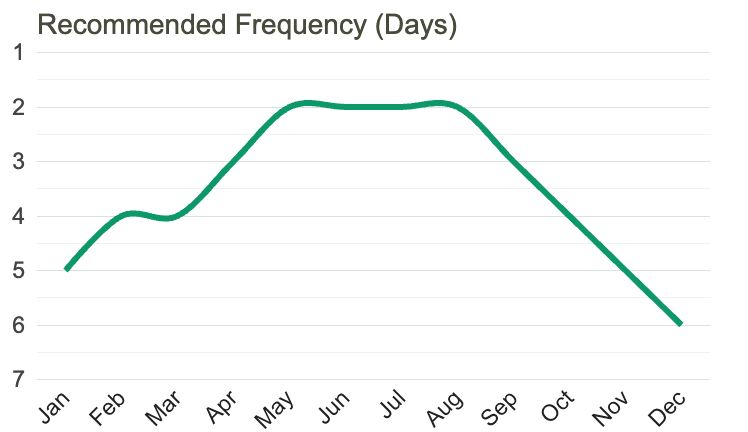
To water this particular plant, it is important to first assess the moisture level of the soil. The frequency and amount of watering will differ depending on the soil type, humidity, temperature and light conditions. Generally, this plant prefers well-draining soil with moderate to low moisture levels. Overwatering can cause root rot and under-watering can lead to wilting and damage to the leaves. It is recommended to water the plant deeply once a week or as needed depending on the moisture level of the soil. When watering, it is best to avoid wetting the foliage and moistening the soil around the roots instead. This plant requires regular watering, especially when it is in its growing phase, and may need additional watering during hot and dry weather conditions. It is important to monitor the plant and adjust the watering schedule accordingly to ensure optimal growth and health.
To fertilize the Sesamum Alatum plant, start by selecting a balanced fertilizer with equal parts nitrogen, phosphorus, and potassium. Apply the fertilizer at a rate of one teaspoon per square foot of soil every four weeks during the growing season. Water the plant before fertilizing to prevent burning the roots, then apply the fertilizer evenly around the base of the plant. Avoid getting any fertilizer directly on the foliage. After applying the fertilizer, water the plant thoroughly and wait a day or two before resuming regular watering.
Sesamum Alatum plant generally prefers soil that has good drainage and moderate fertility. The ideal soil should be sandy loam or loamy sand with a pH range of 6.0 to 7.5. The soil should also be well aerated to allow for proper root development and to prevent waterlogging. Additionally, it is important to avoid using soil that is too compact or heavy in texture, as this can inhibit the growth of the plant. When planting Sesamum Alatum, it is best to mix the soil with organic matter such as compost or well-rotted manure to improve soil fertility and structure. Overall, the soil should be well-draining, loosely textured, and able to hold moisture without becoming waterlogged.
To propagate Sesamum Alatum plant, you will need to collect seeds from mature plants. Once you have harvested the seeds, you can plant them in well-draining soil in a sunny location. Plant the seeds about 1 inch apart and water them well. Once the seedlings have emerged, thin them out to about 6 inches apart. You can also propagate Sesamum Alatum plant using stem cuttings. Take a 4- to 6-inch stem cutting from a mature plant and remove the lower leaves. Dip the end of the stem in rooting hormone and plant it in moist, well-draining soil. Keep the soil moist and place the cutting in a bright, but indirect, location. After a few weeks, the cutting should develop roots and can be transplanted to a permanent location.








